


When it comes to the development of mobile apps, business customers require the finest available techniques and solutions that address market needs. As businesses get more sophisticated, they provide their own preferences for greater reach.
If you’re looking for an enterprise application, cross platform development would be a perfect option. Cross-platform app developers can create an excellent cross-platform app that runs smoothly on multiple platforms. Being based on a single code, the app will speed up the development timeframes and reduce the expenses incurred by separate native apps.
If you are impressed with the whole idea of mobile cross-platform development, you should learn more about it. What hides behind this modern trend?

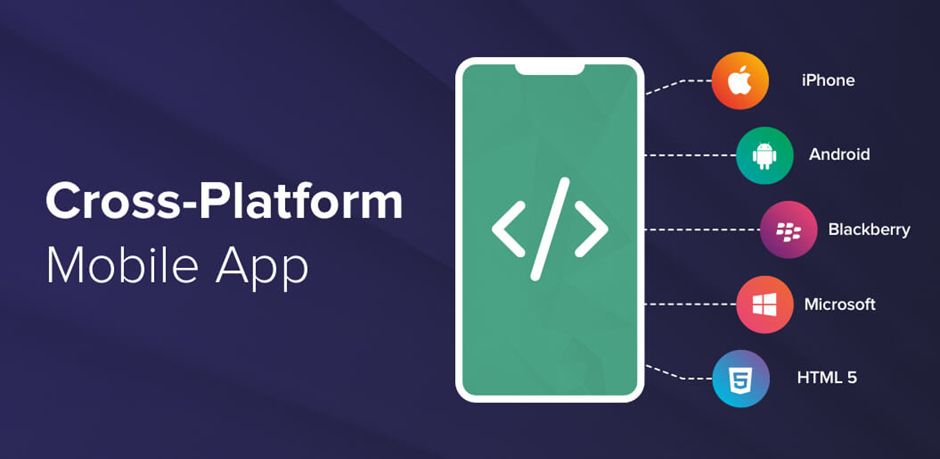
In Simple Terms about Cross-Platform Mobile Development
A cross-platform strategy helps everyone develop an app that will be compatible with major operating systems (OS) like iOS, Android, macOS, and Windows. Just look at Twitter, TickTock, and Facebook, which happen to be classic examples of cross-platforms. Their functionality is similar to native apps set up on your smartphone by default. The major difference can be observed at the technical level. Depending on the OS, developers have to use a specific programming language. Java and Kotlin are mainly used for Android, while Swift and Objective-C are intended for iOS.
While creating two native apps may be costly, cross-platform development may be an excellent solution. Those start-uppers who don’t have much cash in their pockets can have a smoother beginning. Moreover, they can reach as many users as possible in a short time.
Benefits and Pitfalls of Cross-Platform Mobile Apps Development
The growing popularity of cross-platform mobile development makes developers search for possible pros and cons. This knowledge is required to assess the whole potential of cross-platforms.


Pros of Cross-Platform App Development
Cross-platform app development can provide plenty of competitive advantages that will help address some of the business challenges. Let’s see some of them!
- Wide market research – Many businesses have to deal with the dilemma of choosing between Android and iOS. Choosing either one means losing part of the potential users. With cross-platform development, you can cover a wider audience.
- Faster development capabilities – To develop and launch an app, developers just use a single codebase for different platforms. Thus, the app development takes from 50% to 80% less time to meet the deadline.
- Lower development cost – A single codebase makes the app development process less complicated. So, no additional investments are required.
- Maintenance and updates – Cross-platform mobile apps don’t need extra work during and after the development process. They can be simply maintained across several platforms, including iOS, Android, and others. All modifications can be completed in a matter of minutes.
- Smart cloud integration – All cross-platform apps are based on cloud technologies. Their development frameworks have lots of instruments for cloud integration. For example, ready-to-use plugins are useful for strengthening apps’ features and customizing their design.
Cons of Cross-Platform App Development
Cross-platform app development has a bunch of drawbacks that need to be considered by businesses. Let’s see some of them!
- Performance challenges – Cross-platform apps have a more complex code compared to native apps. This may lead to integration issues due to possible communication problems between the native and non-native elements of the target device.
- Poor code performance and limited development instruments – The cross-compliance of code at the development level can lead to potential problems in the compiled code. The app starts working slowly, especially if the selected development instrument can’t adjust the generated code.
- Poor UX and UI design – Visually attractive features, 3D graphics, and sound effects are integrated into native apps. Meanwhile, cross-platform apps can’t use the integrated features provided by mobile devices, so their user experience can be slightly poorer.
- Poor customization and native features integration – Development frameworks don’t necessarily support the major features, including those related to hardware functionality, local settings, and integrated storage access.
Is a Cross-Platform Approach Suitable for Development of Your App?
When you try to make your business work at the mobile level, you start searching for various solutions. It won’t be an exaggeration to say that iOS and Android cross platform development has become one of the most advanced options. The final decision depends on your business goals:
- Enter the market here and now.
- Test your business idea with the least amount of effort.
- Reach out to a wider audience.
- Compensate for the lack of resources (time, money, human resources).
- Educe your expenses to the minimum.

No one can offer you a universal solution. You need to weigh all pros and cons of the cross-platform app development for your particular case.
So, if you are at a crossroads, don’t hesitate to ask professionals for assistance. If this approach is right for you, you will be able to get down to business pretty soon.
Conclusion
If you want to develop an app specifically for your business, you should make your goals clear. What exactly do you expect from the app? Which result do you want to see in the end? Can cross-platform app development address your corporate goals? These are the questions to be answered for the sake of your business.
Cross-platform app development is fast, cheap, and easy. It is a great instrument to explore the start-up idea or introduce it to investors before investing money in native app development. In fact, it works perfectly for business apps.