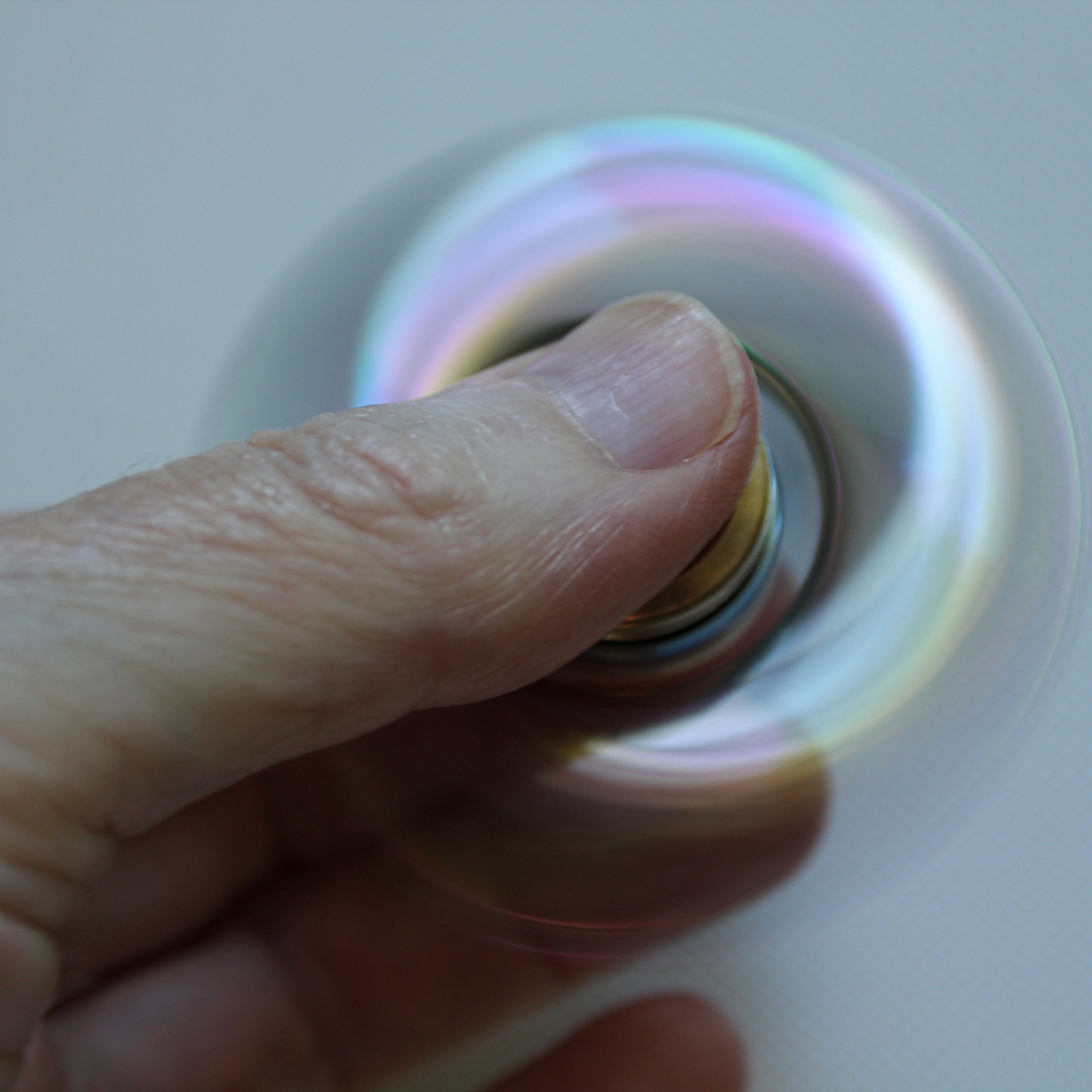
Long stretches of screen time and back-to-back meetings wear down focus faster than most people admit, and a small tactile break at your desk can genuinely help reset your attention. Office toys and fidget tools have moved well past the novelty stage: plenty of well-known brands now make products specifically designed to relieve stress, keep hands busy during calls, or give your brain a quick, low-effort distraction between tasks. Here are six worth keeping on your desk in 2026.
Tangle Creations Tangle Jr.
Tangle Jr. is a set of 90-degree curved segments that click together into a continuous loop you can twist, bend, and reshape endlessly without ever fully coming apart. It’s silent, which makes it one of the better fidget options for open offices or video calls where a clicking or clacking toy would be distracting. The compact size fits easily in a desk drawer or pocket, and because it has no batteries or small detachable pieces, it holds up well to years of daily handling. Tangle has built an entire product line around this shape, including textured and weighted versions for people who want more resistance.
Antsy Labs Fidget Cube
The Fidget Cube, originally funded through Kickstarter and now sold by Antsy Labs, packs six different tactile mechanisms into one small cube: clickable buttons, a joystick, a spinning disc, worry stone divots, gears, and a switch. It’s a good pick for people who fidget in more than one way depending on their mood or stress level, since each face offers something different. The buttons do produce an audible click, so it’s better suited to a private office or a desk away from shared quiet zones than an open call area.
Spin Master Kinetic Sand
Kinetic Sand, made by Spin Master, is a moldable sand that stays cohesive and never fully dries out, so it can be squeezed, shaped, and reshaped indefinitely without leaving a mess on your desk. A small tin of it makes a surprisingly effective stress reliever during long calls, since the repetitive squeezing motion is calming without requiring visual attention. It’s marketed largely as a kids’ product, but plenty of offices keep a tin around precisely because it’s mess-contained and doesn’t need charging, batteries, or maintenance of any kind.
Rubik’s Cube
The original Rubik’s Cube, now produced under the Spin Master-owned Rubik’s brand, remains one of the most recognizable desk toys in the world, and it doubles as light mental exercise rather than pure fidgeting. Working through a few twists between tasks can act as a short cognitive reset, distinct from the purely tactile relief of a fidget cube or Tangle. Newer versions include speed-cube variants with smoother, faster turning mechanisms favored by competitive solvers, which also happen to feel more satisfying for casual desk use.
Buddha Board
A Buddha Board is a flat panel you paint on with plain water using the included brush; the design appears dark and vivid, then slowly fades as the water evaporates, leaving a blank surface again. It’s less about spinning or clicking and more about a slow, meditative motion, which makes it a good fit for people who find restless fidget toys distracting rather than calming. There’s no mess, no ink, and no cleanup, just water, which makes it easy to keep on a desk without worrying about spills near a keyboard.
Crayola Silly Putty
Silly Putty has been a staple stress reliever for decades, and Crayola’s version remains widely available and inexpensive. It can be stretched, bounced, molded, and even used to lift newsprint images, which gives it more variety than a typical stress ball. It’s compact enough to keep in a desk drawer, doesn’t dry out under normal use, and its low price makes it an easy, low-commitment option for anyone testing whether a fidget habit actually helps their focus before investing in a pricier tool.
Which office toy works best really depends on what kind of break you need. For silent, repetitive motion during calls, a Tangle Jr. or Kinetic Sand is hard to beat. If you want more variety in one object, the Fidget Cube covers several fidgeting styles at once. And if you’re after a genuine mental reset rather than a physical outlet, a Rubik’s Cube or a slow-drying Buddha Board session can do more for your focus than a coffee break. Pair any of these with a well-organized desk setup — our guide on office refurbishment tips and our piece on how an ergonomic chair can improve productivity both cover other small changes that add up over a workday.
Do fidget toys actually help with focus at work?
For many people, a simple repetitive motion like twisting a Tangle or squeezing kinetic sand can reduce restlessness during calls or reading, freeing up attention for the task at hand rather than competing with it. Results vary by person, so it’s worth trying a low-cost option first.
What’s the quietest office toy for open workspaces?
Tangle Jr., Kinetic Sand, and a Buddha Board are all silent in normal use, which makes them better suited to shared desks or video calls than clicking toys like the Fidget Cube.
Are these office toys appropriate for a professional desk?
Most of the options here are compact, mess-free, and subtle enough for a professional setting. Buddha Board and Rubik’s Cube in particular read more as calm desk objects than obvious toys.
How much do stress-relief desk toys typically cost?
Prices vary widely, from a few dollars for Silly Putty or a basic Tangle to around twenty to thirty dollars for a Fidget Cube, Kinetic Sand tin, or Buddha Board, making most of these an easy, low-risk purchase.