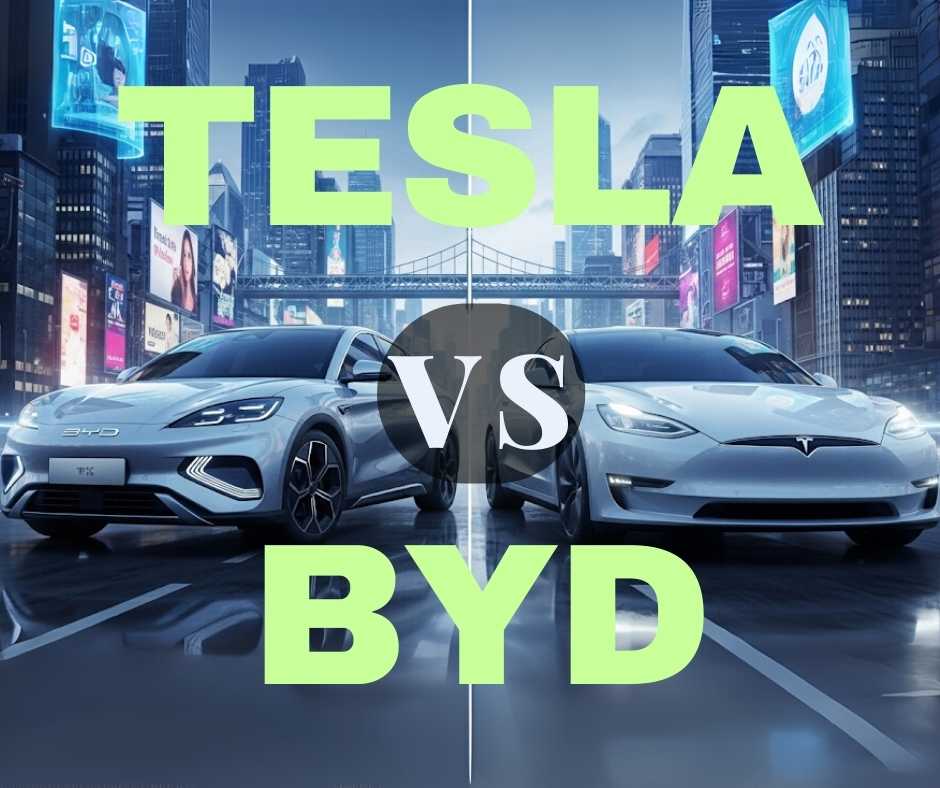
The U.S. EV market is undergoing a dramatic shift in 2025. For years, Tesla has dominated the electric vehicle industry, capturing the imagination of consumers and investors alike. But now, BYD’s surge in the U.S. market is turning heads and challenging Tesla’s long-held dominance. With innovative technology, competitive pricing, and an aggressive market strategy, BYD is making significant inroads into the American EV scene.
The U.S. EV Market Landscape in 2025
The electric vehicle market in the United States has grown steadily, but the competition is intensifying. Tesla continues to hold a strong presence, yet its market share has seen slight declines due to increasing alternatives and supply chain challenges. Meanwhile, BYD’s entry into the U.S. market is marked by rapid sales growth, advanced EV technology, and a strategy that directly appeals to cost-conscious consumers seeking long-range vehicles.
Tesla: Still Leading or Losing Its Grip?
Tesla’s reputation for innovation and performance has kept it at the forefront of the U.S. EV market. Models like the Model 3 and Model Y remain bestsellers. However, Tesla faces challenges: rising competition, increasing production costs, and global market saturation. Analysts now question whether Tesla can maintain its dominance as newcomers like BYD expand aggressively.
BYD’s Rapid Rise in the U.S. Market
BYD’s U.S. market presence has grown quickly thanks to its strategic pricing, long-range battery technology, and expanding charging infrastructure. Vehicles like the BYD Han EV combine affordability with high performance, appealing to a broad segment of American buyers. BYD also benefits from global production efficiency, allowing it to compete directly with Tesla on both price and features.
Comparing Tesla and BYD: Technology, Sales, and Strategy
| Feature | Tesla | BYD | Notes / Insights |
|---|---|---|---|
| Top Models in U.S. | Model 3, Model Y, Model S | Han EV, Atto 3 | Tesla has a broader lineup; BYD focuses on popular mid-size EVs |
| U.S. Market Share 2025 | ~38% | ~5–7% (growing rapidly) | Tesla leads, but BYD is expanding quickly |
| Base Price (USD) | $39,000 – $120,000 | $35,000 – $50,000 | BYD is generally more affordable |
| Range (EPA est.) | 272–405 miles | 250–375 miles | Comparable, Tesla slightly higher on top models |
| Charging Network | Tesla Supercharger network | Public fast chargers, growing network | Tesla has an advantage in U.S. charging infrastructure |
| Battery Tech | Lithium-ion, proprietary packs | Blade Battery (LFP), high safety | BYD blade battery is safer and long-lasting |
| Autopilot / ADAS | Full Self-Driving (FSD) available | Advanced driver-assist features, not full autonomy | Tesla leads in autonomous tech |
| Global Sales 2025 | ~1.8M units | ~4.6M units | BYD surpassing Tesla globally |
| U.S. Availability | Nationwide | Limited to select states initially | BYD expanding distribution gradually |
| Innovation / Strategy | Brand prestige, software, autopilot | Affordable long-range, rapid scaling | BYD targeting price-sensitive U.S. buyers | When comparing Tesla and BYD, several factors stand out: