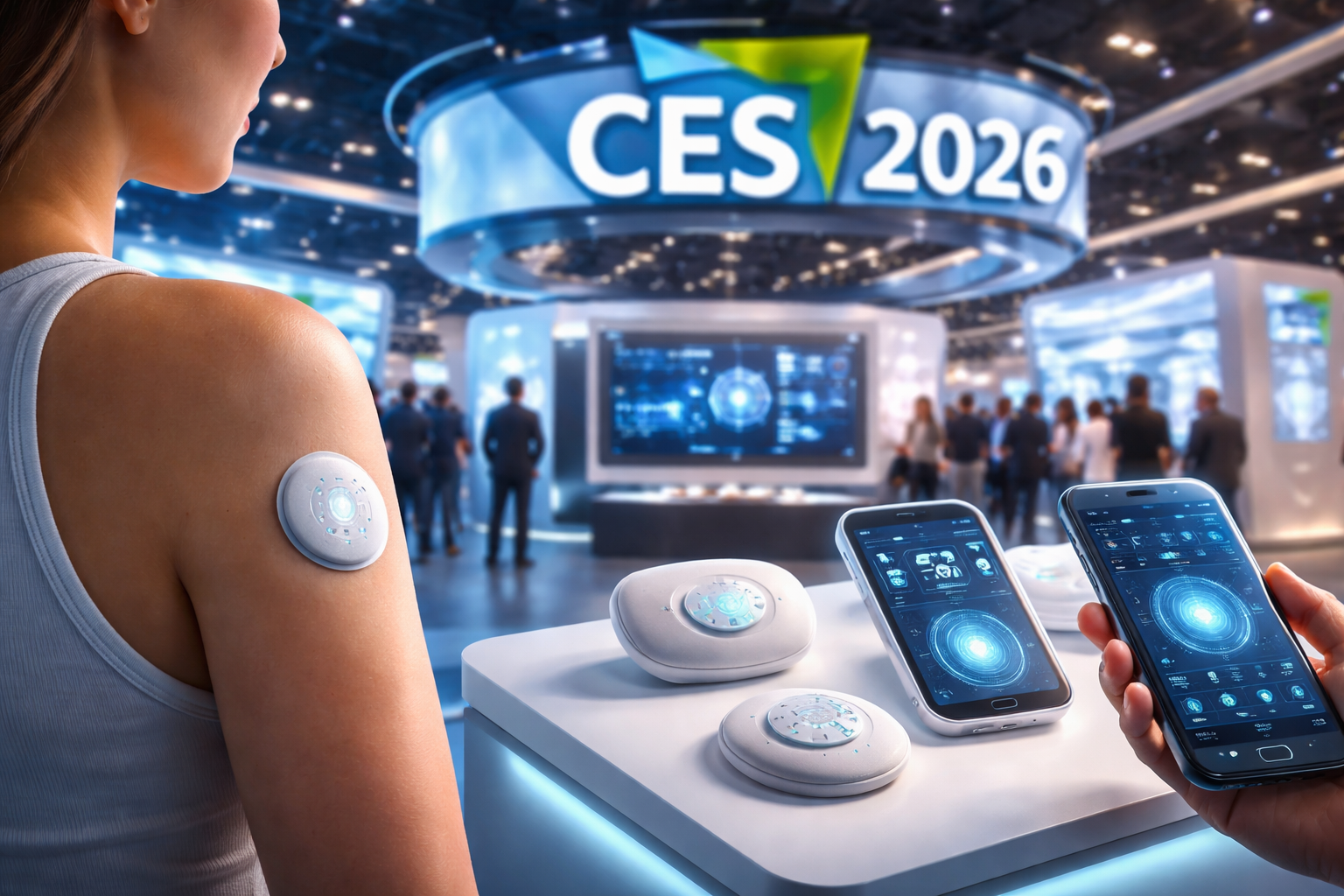
CES 2026 marked a defining moment for digital health. While previous editions of CES showcased wearable gadgets and wellness trackers, this year signaled something far more structural. Skin patch health monitors emerged as a validated healthcare hardware category, pointing to a future where continuous physiological monitoring becomes the backbone of medical records and preventive care.
Across health-tech showcases, startup pavilions, and innovation award demos, one pattern was clear: healthcare is moving away from episodic measurements and toward always-on biological insight. Skin-applied patches — capable of capturing biochemical, metabolic, and hormonal signals — are now being positioned not as accessories, but as infrastructure.
Why Skin Patch Health Monitors Dominated CES 2026
Unlike smartwatches or rings, skin patch health monitors are designed to work passively. They sit directly on the skin, operate continuously, and capture raw biological signals without requiring user interaction.
At CES 2026, these devices were no longer framed as experimental concepts. Instead, they were presented as production-ready platforms built for real-world healthcare use cases such as chronic disease management, women’s health, metabolic monitoring, and remote patient care.
This shift reflects a broader transformation in healthcare delivery. Rather than relying on occasional doctor visits or manual testing, healthcare systems are increasingly prioritizing continuous, real-time data streams that reflect how the body behaves day to day.
Official CES coverage highlighted digital health as one of the fastest-growing innovation categories at the event, reinforcing the momentum behind non-invasive and continuous monitoring technologies.
Source: https://www.ces.tech
Non-Invasive Monitoring Becomes the New Standard
One of the most important themes at CES 2026 was the emphasis on non-invasive monitoring. Skin patch health monitors demonstrated how critical biomarkers can now be tracked without blood draws, needles, or finger pricks.
These patches collect signals such as:
- Sweat biomarkers (electrolytes, lactate, cortisol)
- Glucose and metabolic trends
- Body temperature and hydration levels
- Stress and recovery indicators
- Hormonal fluctuations
By eliminating invasive procedures, skin patch technology lowers barriers to adoption and enables long-term, continuous usage. This is particularly important for populations managing chronic conditions, metabolic disorders, or age-related health challenges.
The U.S. Food and Drug Administration has also signaled growing support for digital health and continuous monitoring technologies, further accelerating adoption pathways.
Source: https://www.fda.gov/digitalhealth
How Skin Patch Health Monitors Are Redefining Medical Records
Traditional medical records function as static snapshots — updated only during clinic visits or hospital stays. CES 2026 demonstrated that this model is becoming outdated.
Skin patch health monitors enable continuous data capture, transforming medical records into living systems that evolve in real time. When integrated with AI platforms and electronic health record systems, patch-generated data allows clinicians to detect early warning signs, personalize treatment plans, and intervene proactively.
This evolution supports:
- Earlier disease detection
- Reduced hospital readmissions
- Remote and home-based care models
- Preventive, insurance-aligned healthcare
Healthcare leaders at CES positioned skin patch monitoring as a foundational layer for hospital-at-home programs and scalable remote care infrastructure.
Startups at CES 2026 Advancing Skin Patch Health Monitoring
Several startups showcased at CES 2026 validated the maturity and commercial readiness of skin patch technology.
Point Fit
Point Fit presented a non-invasive skin patch capable of analyzing sweat biomarkers such as lactate, cortisol, and electrolytes. The platform demonstrated how sweat-based sensing can provide insights into metabolic health, hydration, and physical stress without drawing blood.
The company’s PF-Sweat Patch received recognition at CES 2026 for innovation in wearable health sensing, highlighting the growing credibility of biochemical monitoring through the skin.
Source: https://pointfittech.com
CES Innovation Award reference:
https://www.ces.tech/ces-innovation-awards
Peri
Peri introduced a hormone-monitoring wearable designed to support perimenopause and long-term women’s health. The device focuses on continuous physiological tracking to help users understand symptoms such as sleep disruption, temperature changes, and stress patterns.
Peri’s CES 2026 presence marked an important expansion of skin patch technology into femtech and underserved healthcare segments, where continuous monitoring can significantly improve quality of life.
Source: https://www.myperi.co
Media coverage:
https://www.irishtimes.com
Sensura
Sensura showcased a non-invasive health monitoring platform emphasizing continuous glucose and metabolic trend analysis. While not limited to a single form factor, Sensura’s CES demonstrations reinforced the role of skin-contact sensors combined with AI analytics in managing metabolic health.
The platform aims to eliminate finger pricks while providing actionable glucose insights — a major advancement for diabetes and preventive metabolic care.
Source: https://www.prnewswire.com
Ecosystem Convergence: Patches, Wearables, and AI
CES 2026 also revealed a broader ecosystem trend. Skin patch health monitors are increasingly being positioned as the raw signal layer in a multi-device health stack.
In this emerging model:
- Skin patches capture continuous biochemical and physiological signals
- Wearables such as rings and watches provide contextual data
- AI platforms analyze, correlate, and interpret signals
- Digital health systems turn insights into clinical action
This convergence suggests that patches will supply the foundational data, while AI and software platforms build predictive, personalized healthcare experiences on top.
Why CES 2026 Confirmed Skin Patches as Healthcare Infrastructure
CES 2026 made one message clear: skin patch health monitors are no longer optional enhancements. They are being designed as core components of modern healthcare systems.
These platforms support:
- Predictive and AI-driven medical records
- Preventive and value-based care models
- Reduced clinical workload through automation
- Scalable monitoring outside hospital settings
As reimbursement models evolve and healthcare economics prioritize prevention, skin patch monitoring is expected to see rapid adoption across hospitals, insurers, and enterprise health platforms.
The Strategic Outlook
The implications from CES 2026 extend far beyond hardware innovation. Healthcare is transitioning from visit-based treatment to continuous care, and skin patch health monitors are becoming the most scalable hardware layer enabling that shift.
As medical records evolve into real-time, predictive systems and healthcare systems move closer to prevention-first models, skin patch monitoring will move from CES show floors into everyday clinical workflows and consumer health ecosystems.
CES 2026 did not just introduce new devices — it validated skin patch health monitors as the foundation of future digital health infrastructure.