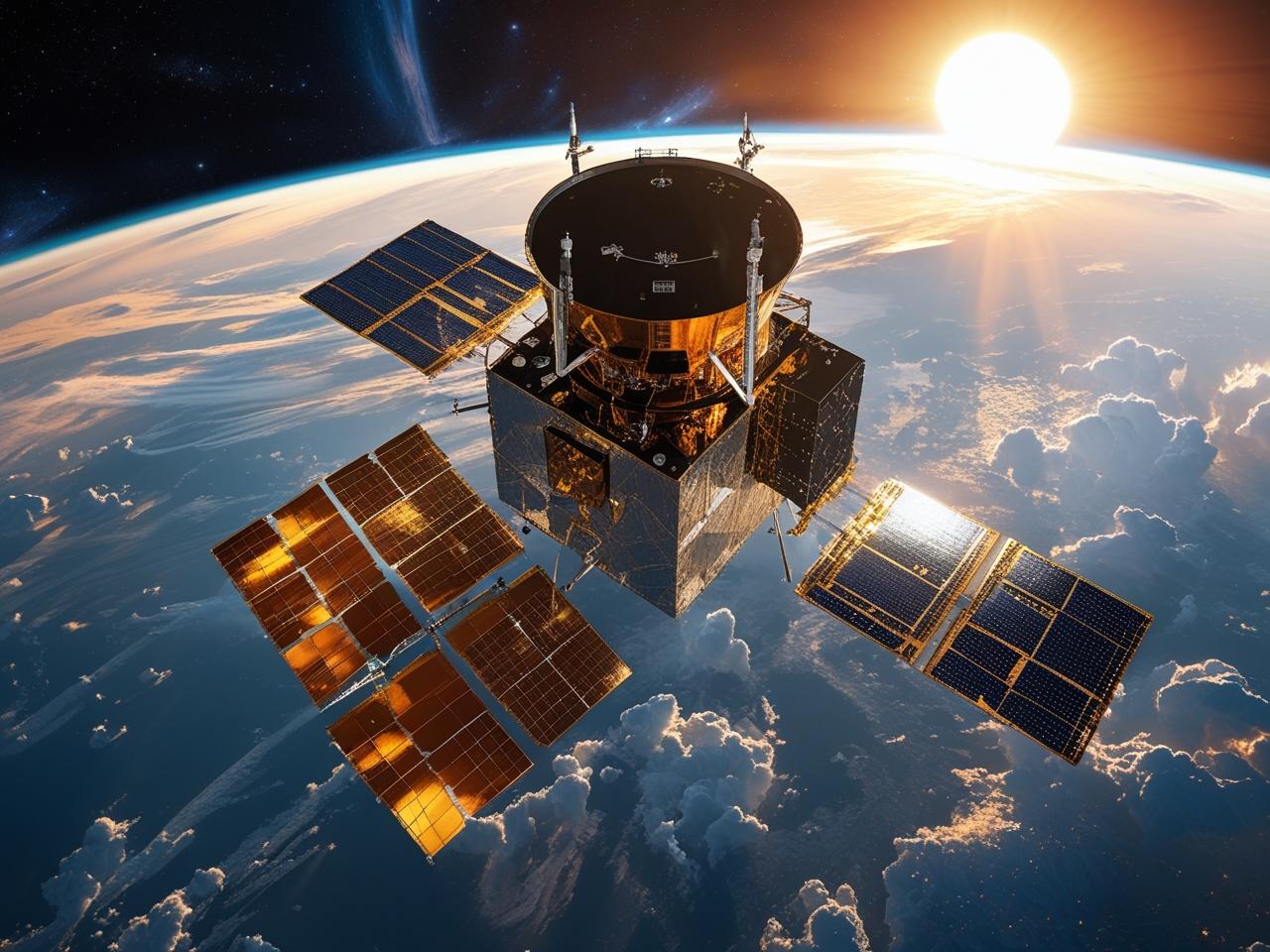
On July 30, 2025, the Indian Space Research Organisation (ISRO) and NASA achieved a major milestone in global space exploration. The two agencies jointly launched the NASA-ISRO Synthetic Aperture Radar (NISAR) satellite — hailed as the world’s most expensive and advanced Earth observation mission — from the Satish Dhawan Space Centre in Sriharikota, Andhra Pradesh.
This $1.5 billion satellite launch represents not just an investment in cutting-edge radar technology but a shared commitment to tackling climate change, natural disasters, and resource mapping from space.
What Is NISAR and Why It Matters
NISAR (pronounced “nee-sar”) stands for NASA-ISRO Synthetic Aperture Radar. This satellite mission is the first to use a dual-frequency radar system (L-band and S-band) designed to observe nearly every inch of Earth with unmatched accuracy and frequency.
Its primary focus is to monitor:
- Land and ice deformation
- Vegetation biomass
- Forest cover and loss
- Sea level changes
- Earthquake and landslide zones
- Agricultural productivity
- Coastal and oceanic activity
In short, NISAR is engineered to become a real-time environmental and disaster monitor for the entire planet.
Key Technical Highlights
- Launch Date: July 30, 2025
- Launch Site: Satish Dhawan Space Centre, Sriharikota, India
- Launch Vehicle: ISRO’s GSLV-F16 (Geosynchronous Satellite Launch Vehicle)
- Weight: Approx. 2,800 kilograms
- Orbit Type: Sun-synchronous orbit (~747 km altitude)
- Radar System:
- L-band radar by NASA (penetrates forest canopies and ice)
- S-band radar by ISRO (measures finer surface deformations)
This radar combo provides unmatched capability for 3D imaging, surface motion tracking, and ecosystem dynamics.
India and US: A Growing Space Partnership
The NISAR mission reflects deepening cooperation between India and the United States in the field of space science and Earth monitoring. Both countries have contributed significantly to the project:
- NASA provided the L-band radar, satellite communication systems, and ground data reception systems.
- ISRO developed the S-band radar, satellite bus, and handled launch operations.
The data collected by NISAR will be open source, enabling scientists, policymakers, and researchers globally to use it for climate modeling, resource management, and disaster mitigation.
Cost Breakdown and Funding
At over $1.5 billion, NISAR is the most expensive Earth observation satellite ever developed. The financial responsibility was shared between the two agencies:
- NASA’s share: Around $1.2 billion
- ISRO’s share: Approx. $300 million
While costly, the mission is expected to pay off through climate resilience planning, improved disaster response systems, and support for sustainable land and ocean resource use.
What Happens Next?
NISAR is expected to begin full operations by early 2026. The satellite will orbit Earth every 12 days, collecting terabytes of data on tectonic shifts, glacier dynamics, deforestation, crop health, and more.
For India, the NISAR data will be critical in monitoring Himalayan glacier melt, managing agricultural cycles, and preparing for monsoonal shifts and floods. For the US, it will aid in wildfire mapping, urban planning, and coastline surveillance.
The NISAR satellite launch 2025 is more than just a space mission—it’s a symbol of international scientific unity. In an age where climate change, natural disasters, and land degradation are intensifying, this India-US collaboration proves that space tech can be used to protect the planet.
As countries push for sustainable development and accurate environmental forecasting, missions like NISAR show how space research can lead to actionable insights here on Earth.
Related Reading & Resources
Stay tuned to Welp Magazine for more updates on space tech, climate monitoring, and international collaborations in science. Also check out our recent coverage on:
- The Automation Leap: Are No-Code Tools Killing Entry-Level Jobs?
- Digital Nomad Visas 2025: What Companies Should Know