StarCloud Launches the First Orbital AI Data Centers
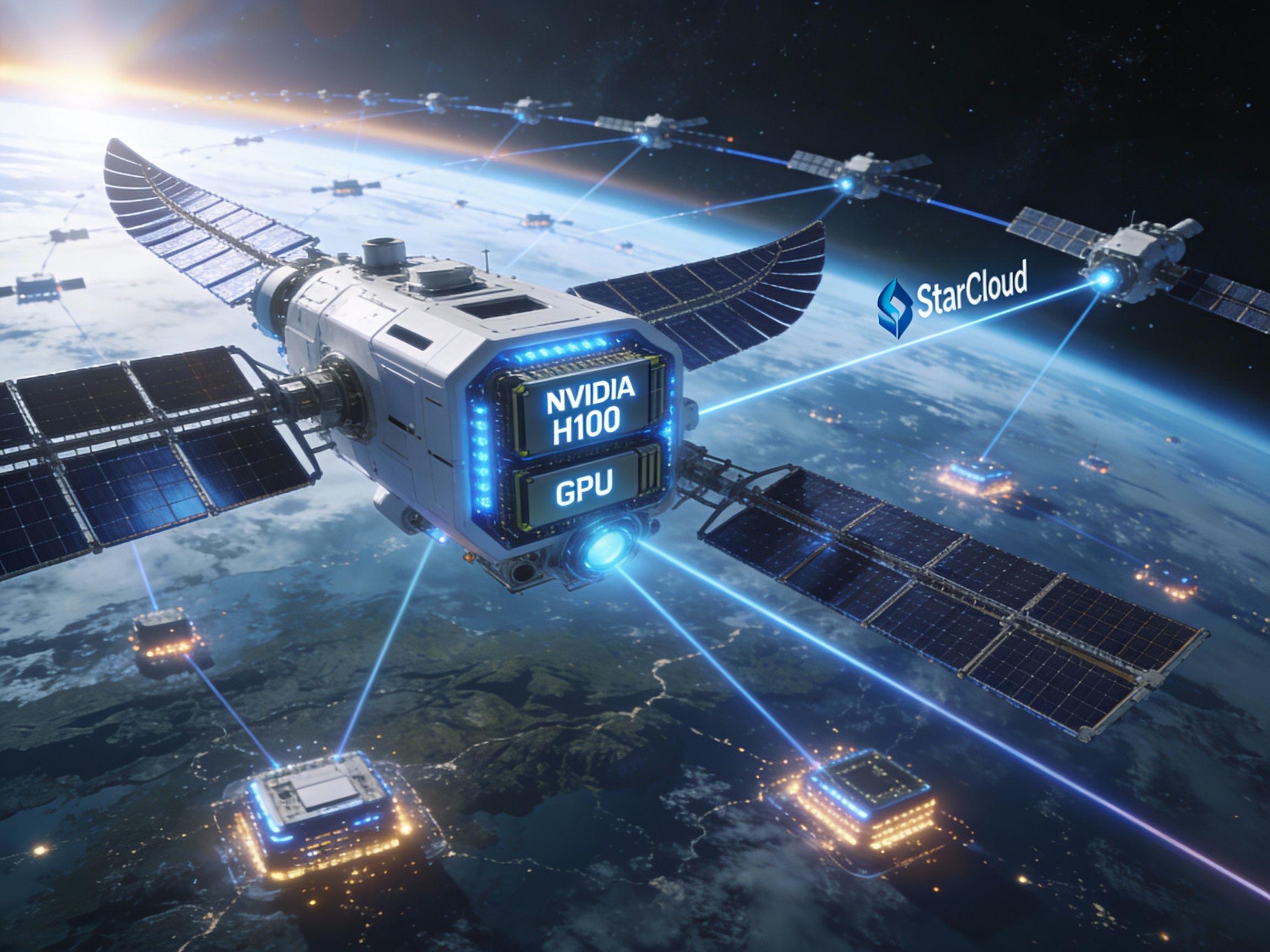
In early November 2025, StarCloud, a Washington-based startup focused on space technology, successfully launched a satellite into low Earth orbit carrying a high-performance Nvidia H100 GPU. This GPU is one hundred times more powerful than any chip previously used in space.
From orbit, the satellite ran Google’s Gemma AI model and even sent a playful message to Earth reading Greetings Earthlings. This marks the first time advanced artificial intelligence has been processed from space and demonstrates the potential for StarCloud orbital data centers to transform global computing infrastructure.
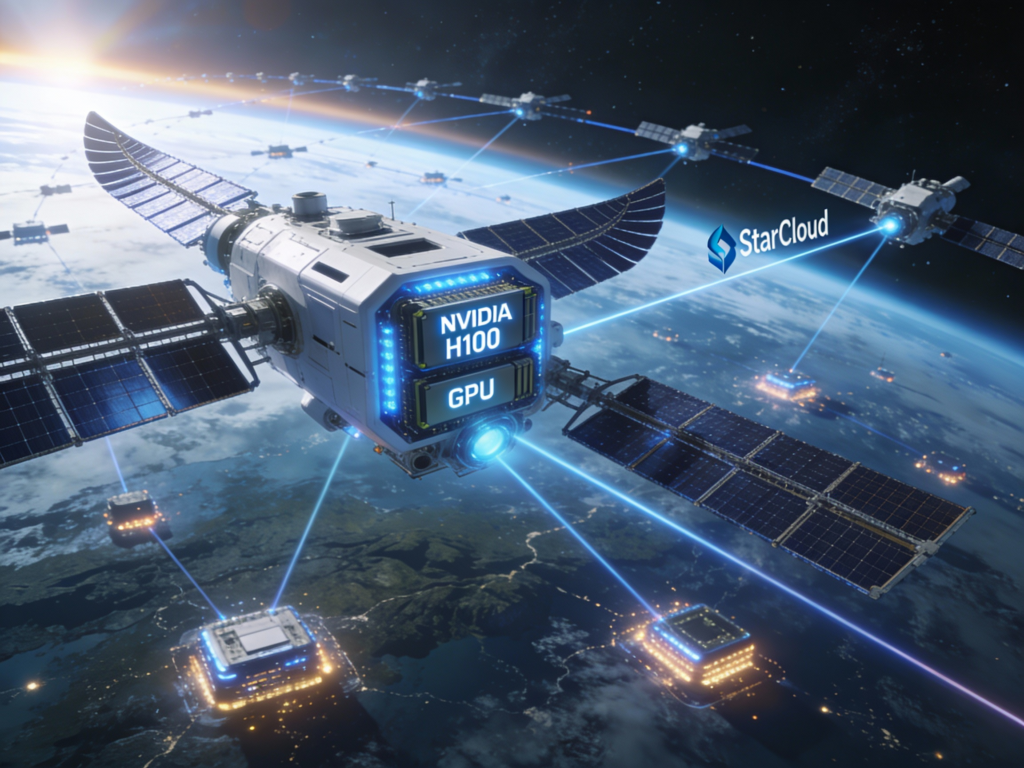
What Are Orbital Data Centers
An orbital data center is a facility located in space that hosts powerful computing hardware capable of running AI workloads, storing large datasets, and processing cloud computing tasks. Unlike traditional Earth-based data centers that rely on electricity grids, air or water cooling, and large land areas, orbital data centers operate using continuous solar energy, radiative cooling into the vacuum of space, and do not require water for cooling. This innovation allows data centers to function sustainably without the environmental constraints faced by terrestrial facilities.
Satellite data centers are smaller, specialized units capable of running specific workloads, while orbital data centers are designed to perform extensive computing tasks similar to those on Earth but from space. StarCloud’s mission is to demonstrate that these systems can reliably operate in orbit, paving the way for future space-based computing networks.
Why Space-Based Data Centers Matter
Earth’s data centers are facing increasing challenges. They consume substantial electricity and water, generate carbon emissions, and require vast land resources. AI workloads are growing rapidly, intensifying these challenges. Orbital data centers offer a solution by using solar power available 24 hours a day, eliminating water use, reducing carbon emissions, and avoiding disruptions from weather events. This makes them an environmentally sustainable alternative that also ensures continuous operation.
StarCloud’s Historic AI Demonstration
StarCloud’s StarCloud-1 satellite demonstrated the feasibility of AI in orbit by running Google’s Gemma model successfully. The satellite also trained smaller AI models such as NanoGPT, highlighting the capability to perform complex computing tasks in space. The event was not only a technical achievement but also a symbolic milestone that confirmed the reliability of orbital computing hardware.
The company is now planning to expand to a five-gigawatt orbital data center powered entirely by solar energy. This scale surpasses the output of the largest power plants on Earth and indicates the immense potential of orbital infrastructure for high-performance AI computing.
Comparing Earth and Orbital Data Centers
Earth-based data centers rely on grid electricity and water for cooling and require large land areas. They face environmental challenges including carbon emissions and limited scalability. Orbital data centers rely on solar energy, use radiative cooling, do not require water, and can be scaled more easily in space. They are also less vulnerable to natural disasters, offering a more resilient and sustainable computing solution.
Investment and Market Potential
StarCloud orbital data centers are attracting attention from investors and space technology companies. Experts predict that orbital computing could become a multibillion-dollar market by 2035 as demand for sustainable, high-performance AI workloads grows. Early investment opportunities exist for companies willing to explore the intersection of space technology, cloud computing, and sustainable infrastructure. StarCloud’s success places it at the forefront of this emerging industry.
Learn more about StarCloud’s mission at StarCloud official website and explore our internal technology insights for additional context on AI infrastructure innovations.
The Future of Computing
StarCloud orbital data centers represent a significant step forward in computing infrastructure. By moving high-performance workloads into space, StarCloud is demonstrating a new paradigm where cloud computing is not constrained by Earth’s environmental and physical limitations. The potential for scalable, sustainable, and resilient AI and cloud infrastructure has implications for technology development, business strategy, and investment opportunities worldwide.
Stay ahead in space technology and innovation. Follow Welp Magazine for the latest updates on AI breakthroughs, orbital computing, and global tech trends.