By Laura Anderson, Welp Magazine. Published and last updated October 23, 2026.
Tesla Optimus production is officially underway. Tesla says the first production-quality humanoid robots are now rolling off a line in Fremont, California. That line sits in a space once used to build electric vehicles.
Then came the twist. Musk promised 20,000 robots a week by the end of 2027, yet the same day Tesla reported a 43% drop in profit. So is this the start of a robot revolution, or an expensive bet? Here is what is confirmed, what is a claim, and what is still unknown.
Quick Facts: Tesla Optimus Production
- What happened: Tesla said on October 21, 2026 that Tesla Optimus production has started at its Fremont, California factory.
- Where: A space once used to build electric vehicles.
- The big claim: Elon Musk says Tesla can make 20,000 Optimus robots per week by the end of 2027.
- The reality check: Musk calls it “early production” and expects a slow, bumpy ramp.
- The cost: Tesla’s Q3 profit fell 43% to $787 million as spending on Optimus, AI and autonomy rose.
What Is Happening With Tesla Optimus Production?
Tesla announced the news in its third-quarter shareholder letter on October 21, 2026. The company wrote that the robots coming off the line are the first production-quality bots it has manufactured. It added that the current process is suitable for a commercial product.
Musk called it “early production” on the earnings call. He said the ramp will be slow and “somewhat bumpy” because the robot is such a radically new product. That is a rare dose of caution from a company known for big promises.
Can Tesla Really Build 20,000 Optimus Robots a Week?
Musk claims Tesla will make 20,000 Optimus robots per week by the end of 2027. That works out to roughly one million a year. For comparison, the Fremont line is designed for one million robots a year, and most of it is reportedly in place.
However, reaching that rate is a different story. Reports from the call say it could take at least another year, and possibly longer. Therefore, treat 20,000 a week as a target, not a schedule.
| Claim or fact | Detail | Status |
|---|---|---|
| Tesla Optimus production start | Fremont, California, October 2026 | Confirmed by Tesla |
| Production target | 20,000 robots per week by end of 2027 | Musk claim |
| Fremont line capacity | Designed for one million robots a year | Reported, mostly in place |
| Outside customer deliveries | Around end of 2027 | Reported, not confirmed |
| AI5 chip integration | Around April 2027 | Reported target |
What Is Still Missing From the Tesla Optimus Robot?
Musk was open about the gaps. He said the design still needs tweaks. The robot has to be safe, reliable and durable, so it cannot wear out after a month. He also said there is a lot of work left on the AI for it to be truly useful on open-ended tasks.
- Safety: A robot working near people must pass strict checks.
- Durability: Parts have to last far longer than a prototype.
- AI skill: Doing a set task is easier than handling open-ended work.
- The hand: Call summaries say the hand, especially the fingers, is the hardest electromechanical challenge.
How Much Will the Tesla Optimus Cost?
Tesla has not announced a retail price. Cost and price are different things, so be careful with the headlines.
- Tesla’s long term goal: A production cost around $20,000 per robot once volumes reach one million a year.
- An outside estimate: Counterpoint Research estimated the early unit cost above $60,000 at volumes under 10,000 units.
- The hand alone: Counterpoint says a dexterous hand makes up nearly 20% of the bill of materials.
In short, the gap between a $60,000 early cost and a $20,000 goal shows how much the ramp matters.
Tesla Profit Falls 43% as Optimus Spending Rises
Tesla Optimus production arrived alongside weak results. Net income dropped 43% to $787 million, down from $1.37 billion a year earlier. Revenue was flat at $28.04 billion, compared with $28.09 billion in the third quarter of 2025.
| Metric | Q3 2026 | Note |
|---|---|---|
| Net income | $787 million | Down 43% year over year |
| Total revenue | $28.04 billion | Roughly flat |
| EV deliveries | 486,532 vehicles | About 6,000 more than Q2 |
| Energy and storage revenue | $2.8 billion | Down 16%, blamed on tariff related refunds |
| Services revenue | $4.6 billion | Up 33% |
Spending on AI, autonomy and Optimus took a big bite out of profit. Reports also say operating expenses rose 39% to $4.8 billion and research spending rose 69%. Lower regulatory credit sales added pressure.
What Else Did Tesla Say on the Earnings Call?
Executives were bullish on Full Self-Driving. Even so, the unsupervised version was delayed again. Ashok Elluswamy said Tesla suspects around the second quarter of next year for the first customer cars to join a robotaxi fleet. In April, Musk had said the unsupervised version would “probably” arrive in the fourth quarter of 2026.
Why Tesla Optimus Production Matters Beyond Tesla
A humanoid robot has to move, see and decide in the real world. That is a hard AI problem. If Tesla Optimus production scales, it could pressure rivals and push down robot prices. If it stumbles, it will show how far the hype has run ahead of the hardware.
This also connects to the bigger AI race. See how Google is pushing frontier models in our Gemini 4 Argon report, and read how Musk’s other big reveal went in our Tesla flying car and Roadster story. Robots also need huge computing power, as we explain in data center heat waves and where servers go next.
What Will the Tesla Optimus Robot Actually Do?
This is the question everyone asks. Will it be a domestic helper? The honest answer is: not yet. Coverage of the Q3 call describes the first customers as industrial buyers. Their jobs are dangerous, repetitive tasks that run around the clock. Home robots come later.
We did not find a direct statement from Musk on household chores or a date for home use. So any claim about a robot butler in 2027 is speculation, not a Tesla commitment.
| Job type | What Optimus is expected to do | Status |
|---|---|---|
| Factory work | Move parts, load machines, handle repetitive tasks | First target, early production |
| Warehouse and logistics | Carry and sort items | Expected early use, not yet shown at scale |
| Dangerous tasks | Work where humans face risk | Pitched as a key benefit |
| Open-ended tasks | Handle new tasks without a script | Musk says AI work remains |
| Household help | Chores and basic home tasks | Later stage, no confirmed date |
Musk was candid about the gap. He said the robot still needs work on the AI before it is truly useful for open-ended tasks. He also said Tesla wants its demo videos to show Optimus doing tasks that are not preprogrammed.
How Is the Tesla Optimus Robot Built? Inside the Hardware
Tesla has not published a full official spec sheet for the production robot. Most details below come from third-party analysts and trackers, so treat them as provisional. We mark what is Tesla-sourced and what is not.
| Part | What reports say | Source type |
|---|---|---|
| Size and weight | About 173 cm tall and roughly 57 kg | Third-party, unconfirmed |
| Hands | 22 degrees of freedom per hand, with actuators moved into the forearm and driven by tendons | Third-party, unconfirmed |
| Body actuators | Rotary and linear actuators. Linear ones use planetary roller screws. Rotary ones use harmonic reducers. Joint counts vary by source | Third-party, unconfirmed |
| Battery | About 2.3 kWh | Third-party, unconfirmed |
| Vision | Cameras plus a neural network, with no lidar | Third-party, unconfirmed |
| Chip | AI5 integration targeted around April 2027, about 10 times the compute of AI4 | Reported, Tesla target |
The hand is the standout. Call summaries say it is the hardest electromechanical challenge. Counterpoint Research estimates a dexterous hand makes up nearly 20% of the robot’s bill of materials. That is why Tesla Optimus production depends so heavily on getting the hand right.
How Is Tesla Making Optimus? From EV Floor to Robot Line
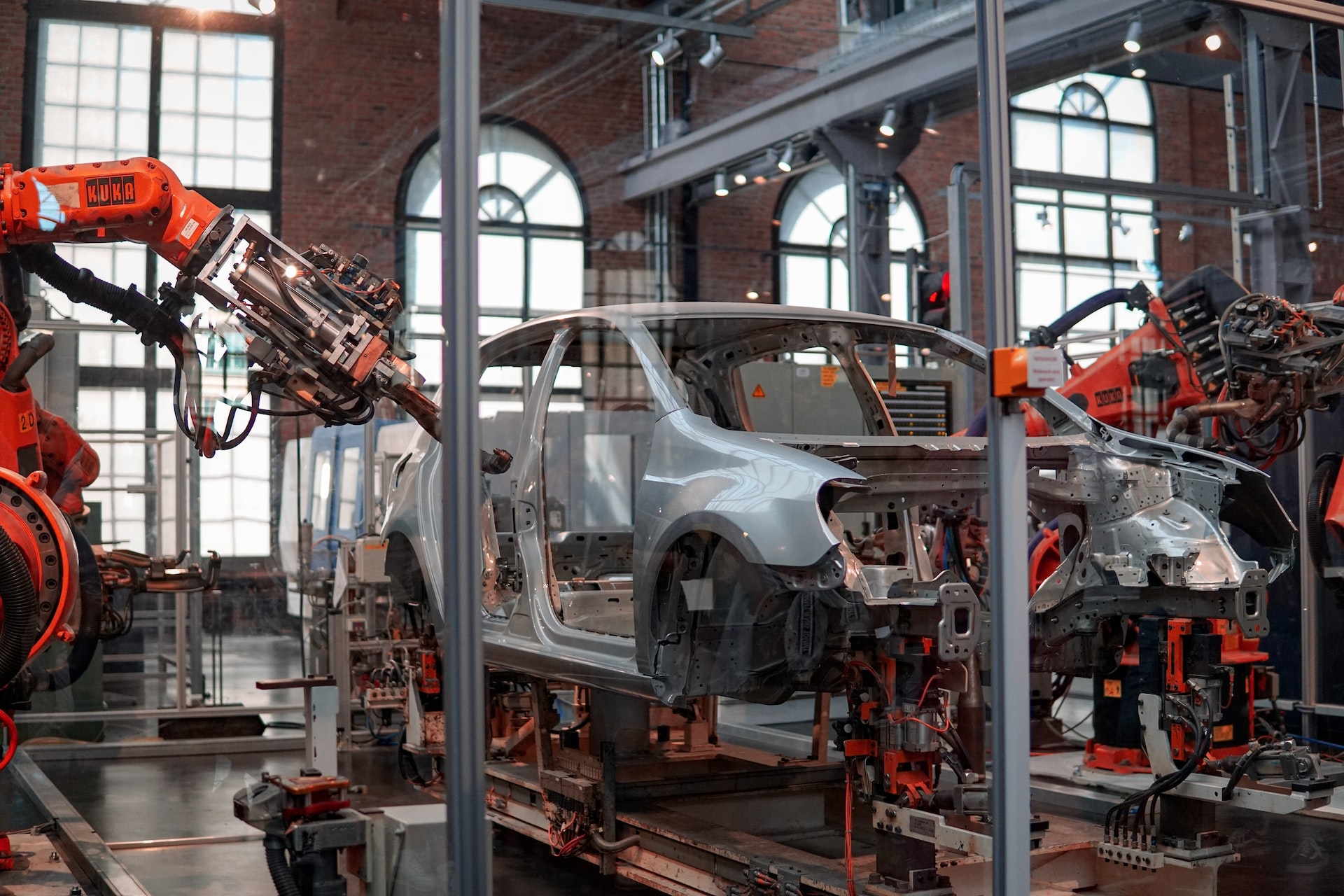
Tesla Optimus production is happening in Fremont, in space once dedicated to making electric vehicles. Tesla says the line is designed for one million robots a year, and most of it is reportedly in place. In its letter, Tesla says the current process is suitable for a commercial product.
- Step 1, parts: Actuators, hands, structure and electronics come together on the line.
- Step 2, assembly: The robots are built on a factory floor adapted from EV production.
- Step 3, AI training: Reports say Tesla trains Optimus partly by having humans remotely control robots in its lab.
- Step 4, iteration: Tesla says it will keep changing the hardware and the manufacturing process.
One caution applies here. Remote human control has caused controversy. A past showroom demo appeared to show a robot guided by a human operator. Tesla has said its AI learns from humans remotely controlling the bots. Watch for demos that show full autonomy.
What Has Elon Musk Said Recently About Optimus and Robots?
- October 21, 2026 (Q3 call): Musk called it “early production” and said the ramp will be slow and bumpy because it is such a radically new product.
- Same call, on quality: He said the robot must be safe, reliable and long lasting, so it cannot wear out after a month.
- Same call, on volume: He claimed Tesla can make 20,000 robots per week by the end of 2027.
- September 2025 (X post): He said about 80% of Tesla’s value would eventually come from Optimus. He gave no timeframe.
- Earlier remarks: Musk has said humanoid robots should outnumber humans at least one to one, which implies 10 billion or more robots. Analysts remain skeptical.
These statements show a pattern. Musk sets very large goals, and timelines have repeatedly slipped before. That is why we label his numbers as claims until Tesla shows output and independent tests.
Tesla Optimus Production Timeline: What Has Happened and What Is Next
| When | Milestone |
|---|---|
| September 2025 | Musk says Optimus could be about 80% of Tesla’s value |
| October 21, 2026 | Tesla says Optimus production has started in Fremont |
| Around April 2027 | AI5 chip integration targeted |
| End of 2027 | 20,000 per week claim and possible outside deliveries |
What to Watch Next
- Whether Tesla shares real weekly output numbers.
- A confirmed price or lease model for Optimus.
- Safety data and independent testing.
- The AI5 chip timeline, targeted for around April 2027.
- Outside customer deliveries, possibly around the end of 2027.
Official Sources and Further Reading
Read Tesla’s own third-quarter shareholder letter and the original TechCrunch report. For more robotics and AI, browse our AI coverage.
About the Author and Our Editorial Standards
Laura Anderson covers AI, robotics and technology for Welp Magazine, part of Fair Media Group. We start from primary documents, such as company letters and filings. Then we cross check with independent reporting. We label claims as claims, and we update articles when facts change. This article was last updated on October 23, 2026.
How We Reported This
This article draws on Tesla’s Q3 2026 shareholder letter, TechCrunch, TokenPost, Counterpoint Research and earnings call summaries, as of October 23, 2026. Some figures differ slightly between sources, and we note where they do. This is not investment advice.
References and Further Reading
- TechCrunch: Tesla starts Optimus robot production in California as profit falls 43%
- Tesla: Q3 2026 shareholder update
- Quartz: Tesla Q3 2026 earnings and Optimus production
- Motley Fool: Tesla Q3 2026 earnings call transcript
- Wikipedia: Optimus (robot)
- Not a Tesla App: Q3 2026 earnings call recap
- Fortune: Musk on Optimus and the Tesla master plan
Frequently Asked Questions About Tesla Optimus Production
Has Tesla Optimus production started?
Yes. Tesla announced on October 21, 2026 that Tesla Optimus production has begun at its Fremont, California factory. Musk described it as early production with a slow ramp.
How many Optimus robots will Tesla make?
Musk claims Tesla can reach 20,000 Optimus robots per week by the end of 2027. That is about one million a year. Reports say the ramp could take at least a year, and possibly longer.
How much does the Tesla Optimus cost?
Tesla has not announced a retail price. Tesla’s long term goal is a production cost near $20,000 per robot. A Counterpoint Research estimate puts the early unit cost above $60,000. These numbers describe cost, not price.
When can companies buy Tesla Optimus robots?
One report says Tesla could start delivering Optimus to outside companies around the end of 2027. Tesla has not confirmed a firm date.
What can the Tesla Optimus robot do today?
Musk says the robot still needs work on safety, reliability and AI before it can handle open ended tasks. Tesla describes the first units as production quality, not finished.
Why did Tesla profit fall 43%?
Tesla reported $787 million in net income, down from $1.37 billion a year earlier. Revenue was flat at about $28 billion, while spending on Optimus, AI and autonomous driving rose sharply.
What is the hardest part of building a humanoid robot?
Reports from the earnings call say the hand, especially the fingers, is the hardest electromechanical challenge. Counterpoint estimates a dexterous hand makes up nearly 20% of the robot’s bill of materials.
What will the Tesla Optimus robot do at home?
Tesla has not confirmed a household timeline. Early customers are expected to be industrial, using Optimus for dangerous and repetitive work. Home help is described as a later stage.
How is the Tesla Optimus robot built?
Third-party reports describe a roughly 173 cm, 57 kg humanoid with 22 degree of freedom hands, rotary and linear actuators, a battery of about 2.3 kWh and camera based vision. Tesla has not published a full spec sheet, so these figures are provisional.
What did Elon Musk say about Optimus recently?
On the Q3 2026 call, Musk called Tesla Optimus production early, said the ramp will be slow and bumpy, and claimed 20,000 robots a week by the end of 2027. He also said the AI still needs work for open ended tasks.