U.S. Tech Giants React to H-1B Visa Fee Hike 2025
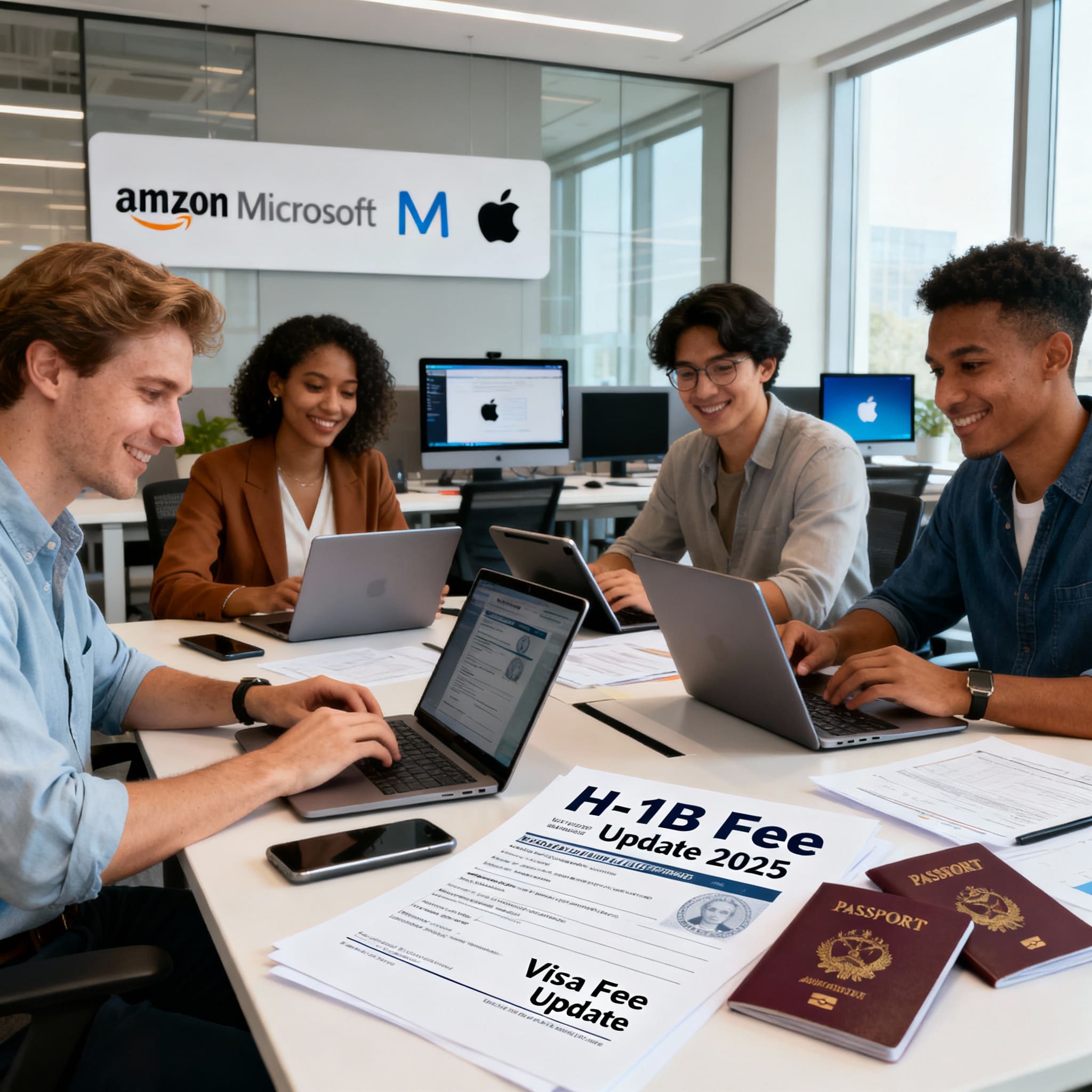
The H-1B visa fee hike 2025 has sent waves across the U.S. technology industry. With a new annual fee of $100,000 per visa, major tech giants like Amazon, Microsoft, Meta, and Apple are rapidly adjusting hiring strategies. The U.S. tech companies H-1B reaction highlights how these firms are ensuring access to top international talent while managing rising costs.
Why H-1B Visas Are Crucial for U.S. Tech
The H-1B visa program enables companies to hire highly skilled international professionals in specialized roles like software engineering, cloud computing, AI research, and data analytics. These positions are vital for sustaining innovation and maintaining competitiveness on a global scale.
Losing access to such talent could slow product development, impede AI breakthroughs, and impact cloud services.
For official guidance, visit the USCIS H-1B Visa Program
How Major Tech Companies Are Responding
The fee hike has forced companies to re-evaluate budgets and workforce strategies:
- Amazon: Over 10,000 H-1B approvals in H1 2025, emphasizing compliance and timely reentry for international staff.
- Microsoft: Secured more than 5,000 approvals and continues recruiting global talent while balancing costs.
- Meta Platforms: Adjusting recruitment and sponsorship plans to accommodate higher fees.
- Apple: Exploring alternative strategies to avoid disruptions in research and development teams.
These steps reflect a proactive approach to sustain innovation amid rising visa costs. According to the Times of India (do-follow), top U.S. tech companies continue prioritizing H-1B hiring despite higher fees.
Impact on Innovation and Global Talent
The H-1B visa fee hike 2025 could influence talent availability and innovation in multiple ways:
- Reduced interest from international professionals seeking U.S. employment.
- Increased operational costs for tech firms.
- Potential slowdowns in AI, cloud, and software innovation.
- Startups facing challenges retaining specialized talent.
This highlights the importance of the U.S. tech companies H-1B reaction and their lobbying for favorable policies.
Strategic Adjustments by Tech Companies
To counter the effects of the H-1B visa fee hike 2025, firms are taking several steps:
- Expanding remote work for international employees to lower relocation costs.
- Recruiting in countries with lower operational expenses.
- Lobbying for exemptions for critical roles in AI, software, and cloud infrastructure.
- Streamlining visa and immigration processes to reduce delays.
Amazon and Microsoft are leading the way with these strategies to maintain access to global talent.
Industry Outlook and Policy Debate
Experts suggest the H-1B visa fee hike will remain a key topic in U.S. immigration policy discussions. While intended to generate revenue, tech companies warn that excessive fees may discourage international talent, slow innovation, and hurt competitiveness. Policymakers and industry leaders are actively exploring solutions that balance costs with innovation needs.
Frequently Asked Questions (FAQs)
Q: Which companies have the highest H-1B approvals in 2025?
Amazon, Microsoft, Meta, TCS, and Apple lead in H-1B approvals during the first half of 2025 (Times of India).
Q: How much is the new H-1B visa fee?
$100,000 per visa annually, effective September 21, 2025.
Q: Will this affect current H-1B holders?
Yes. Companies recommend ensuring timely reentry and compliance. Guidance: USCIS H-1B Visa Program .
Q: How are tech companies adjusting hiring strategies?
Expanding remote work, regional hiring, lobbying for fee exemptions, and optimizing visa workflows.
The H-1B visa fee hike 2025 is reshaping U.S. tech hiring. Amazon, Microsoft, Meta, and Apple are adapting strategically to ensure access to top global talent. Remote work, streamlined hiring, and lobbying for exemptions are helping firms maintain innovation and competitiveness in the global tech market.
Follow Welp Magazine for updates on technology, business strategies, and global innovation stories shaping tomorrow.