Table of Contents
- What Is Perplexity Computer?
- How Perplexity Computer Works as a Digital Worker
- The 19-Model Engine That Powers Perplexity Computer
- Perplexity Computer vs Claude vs OpenClaw: What Is Different?
- Perplexity Computer Pricing and Access for Max Subscribers
- Perplexity Computer and the Bigger Platform Strategy
- Frequently Asked Questions About Perplexity Computer
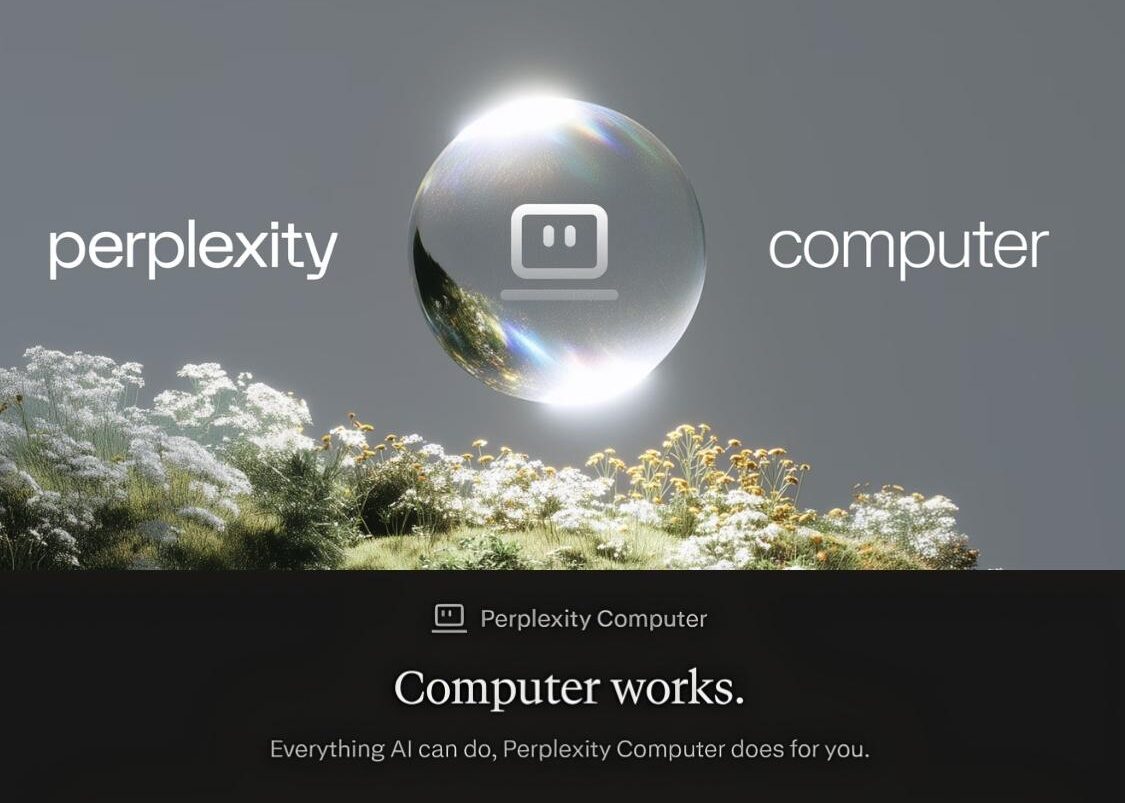
Perplexity Computer is the most ambitious product Perplexity AI has ever built. Launched on February 25, 2026, it is not a chatbot, not a smarter search engine. It is a general purpose digital worker that takes your goal and executes the entire project on its own.
CEO Aravind Srinivas had kept the team quiet for two months. When the announcement landed on X, there was no slow build. He wrote: “Computer unifies every current capability of AI into a single system.”
That is a large claim. The product is built to match it.
What Is Perplexity Computer? The AI Digital Worker Explained
Perplexity Computer functions as a fully autonomous digital worker. You describe an outcome. The system plans it, assigns tasks, runs them in parallel, troubleshoots failures, and delivers results without waiting for your next message.
It can run for hours. It can run for months. It remembers everything it has already done.
This is a fundamental shift from how AI tools have worked until now. Every chatbot you have used required you to drive. You wrote the prompt. You checked the output. You wrote the next prompt. You were the project manager. The AI was the assistant who needed constant direction.
Perplexity Computer removes you from that loop entirely.
[Internal link: Read our breakdown of how AI agents are changing enterprise workflows]
How Perplexity Computer Works as a Multi-Model Digital Worker
When you give Perplexity Computer a goal, such as “build a portfolio dashboard” or “track real estate launches and generate monthly reports,” the system does not start typing immediately.
It first breaks the goal into tasks and subtasks. Then it assigns each one to a specialised sub-agent running inside its own isolated compute environment. Each environment has its own browser, filesystem access, and hundreds of tool integrations.
These agents run in parallel, not one after another. If a task hits a wall or fails, the system automatically spawns additional agents to troubleshoot. You do not intervene. It keeps going.
Persistent memory means the system remembers your past work across sessions. Projects do not reset. Context does not disappear. You can start something today and let Perplexity Computer continue running it while you sleep.
The 19-Model Engine That Powers Perplexity Computer
Most AI tools rely on a single model for everything. One model handles reasoning, writing, coding, research, and image generation all at once. That means every task gets handled by one set of strengths and one set of weaknesses.
Perplexity Computer routes work across 19 specialised models, choosing the best one for each task automatically.
The current model lineup inside Perplexity Computer includes:
Opus 4.6 powers reasoning and overall coordination. Gemini handles research tasks. Nano Banana manages image generation. Veo 3.1 covers video. Grok takes on lightweight operations. ChatGPT 5.2 is used for long context recall and search.
Srinivas described the philosophy by borrowing from Steve Jobs: “Musicians play their instruments, I play the orchestra.” Perplexity Computer is the conductor. The 19 models are the orchestra.
Users can also choose which models power specific subtasks and set spending caps to control token costs across a project.
[External link: Read Perplexity’s official announcement → perplexity.ai]
Perplexity Computer vs Claude vs OpenClaw: What Actually Changes?
Perplexity Computer vs Claude
Anthropic’s Claude, especially the Opus line, is respected for strong reasoning and long context understanding. It writes code well, analyses documents, and handles complex problems with accuracy.
But Claude still waits. It operates in a conversational loop. The user provides each instruction. The AI responds. The user continues.
Perplexity Computer plans the full workflow before execution begins, runs tasks in parallel, and manages dependencies across agents without checking in at every step.
Perplexity Computer vs OpenClaw
OpenClaw, OpenAI’s open source autonomous agent, runs locally on a user’s machine. It offers deep system-level access to emails, files, and applications. Developers who want full local control and maximum configuration flexibility may prefer it.
Perplexity Computer is cloud-based and centrally managed. The company controls integrations, safeguards, and infrastructure. For enterprise teams that need clear governance and accountability, that structure is a practical advantage.
[Internal link: See our comparison of top AI agent platforms in 2026]
Perplexity Computer Pricing and Access for Max Subscribers
Perplexity Computer launched on the web for Max subscribers on February 25, 2026.
Rollout to Pro and Enterprise tiers is planned after initial load testing, with no confirmed date yet.
Pricing runs on a credit-based model. Max subscribers receive 10,000 credits per month as part of their existing plan. At launch, all new and existing Max users receive a one-time bonus of 20,000 credits, which expire 30 days after being granted.
Users set spending caps per project and choose which models handle specific subtasks, giving full control over how credits are spent across a Perplexity Computer workflow.
[External link: Check Perplexity Max subscription pricing → perplexity.ai/pro]
Perplexity Computer and the Bigger Platform Strategy
Perplexity Computer is not a standalone product. It follows Comet, the company’s AI-native browser, and Comet Assistant, its personal agent layer. These were not experiments. They were steps toward a unified platform where persistent memory, task tracking, deep research, and multi-model orchestration all work from the same foundation.
Srinivas described the endpoint plainly. When AI can coordinate a filesystem, command line tools, real-time internet access, and personal connectors, he said, “AI essentially becomes the Computer, running things on the cloud as you sleep.”
For a company that started as an AI-powered answer engine in 2022, that is a significant distance to have covered in four years. Perplexity is no longer positioning itself as a smarter search bar. It is positioning Perplexity Computer as the system that handles the work that search was always just the starting point for.
The company has also launched a live page showing active Computer tasks, giving users a real-time view of what the system is capable of in practice.
Frequently Asked Questions About Perplexity Computer
1.What is Perplexity Computer? Perplexity Computer is a multi-model AI system launched by Perplexity AI on February 25, 2026. It functions as a general purpose digital worker that researches, designs, codes, deploys, and manages entire projects end to end without requiring step-by-step human input.
2.How many AI models does Perplexity Computer use? Perplexity Computer orchestrates 19 different AI models. These include Opus 4.6 for reasoning, Gemini for research, Nano Banana for image generation, Veo 3.1 for video, Grok for lightweight tasks, and ChatGPT 5.2 for long context recall and search.
3.Who can access Perplexity Computer right now? As of February 25, 2026, Perplexity Computer is available on the web to Max subscribers only. Access for Pro and Enterprise users will follow after load testing.
4.How does Perplexity Computer pricing work? Perplexity Computer uses a credit-based model. Max subscribers receive 10,000 credits per month. At launch, all new and existing Max users also get a one-time bonus of 20,000 credits valid for 30 days. Users control spending caps and model selection per project.
5.How is Perplexity Computer different from ChatGPT or Claude? ChatGPT and Claude operate in a conversational loop where the user provides each instruction. Perplexity Computer plans a full multi-step workflow upfront, runs tasks in parallel using specialised sub-agents, and executes projects autonomously over long timeframes without waiting for the next prompt.
6.Is Perplexity Computer cloud-based or local? Perplexity Computer is fully cloud-based, running on Perplexity’s managed infrastructure. This differs from open source alternatives like OpenClaw, which run locally on a user’s machine.
7.Does Perplexity Computer remember past sessions? Yes. Perplexity Computer includes persistent memory and tracks tasks across sessions. It remembers previous work and continues long-running projects without restarting from the beginning.
8.Can Perplexity Computer manage multiple projects at the same time? Yes. Perplexity Computer is built to handle hundreds of active projects at once. Users can start new tasks and allow the system to continue running existing workflows in the background simultaneously.
Follow Welp Magazine to stay ahead of the curve and discover the companies and technologies shaping the future of global tech. 🌍