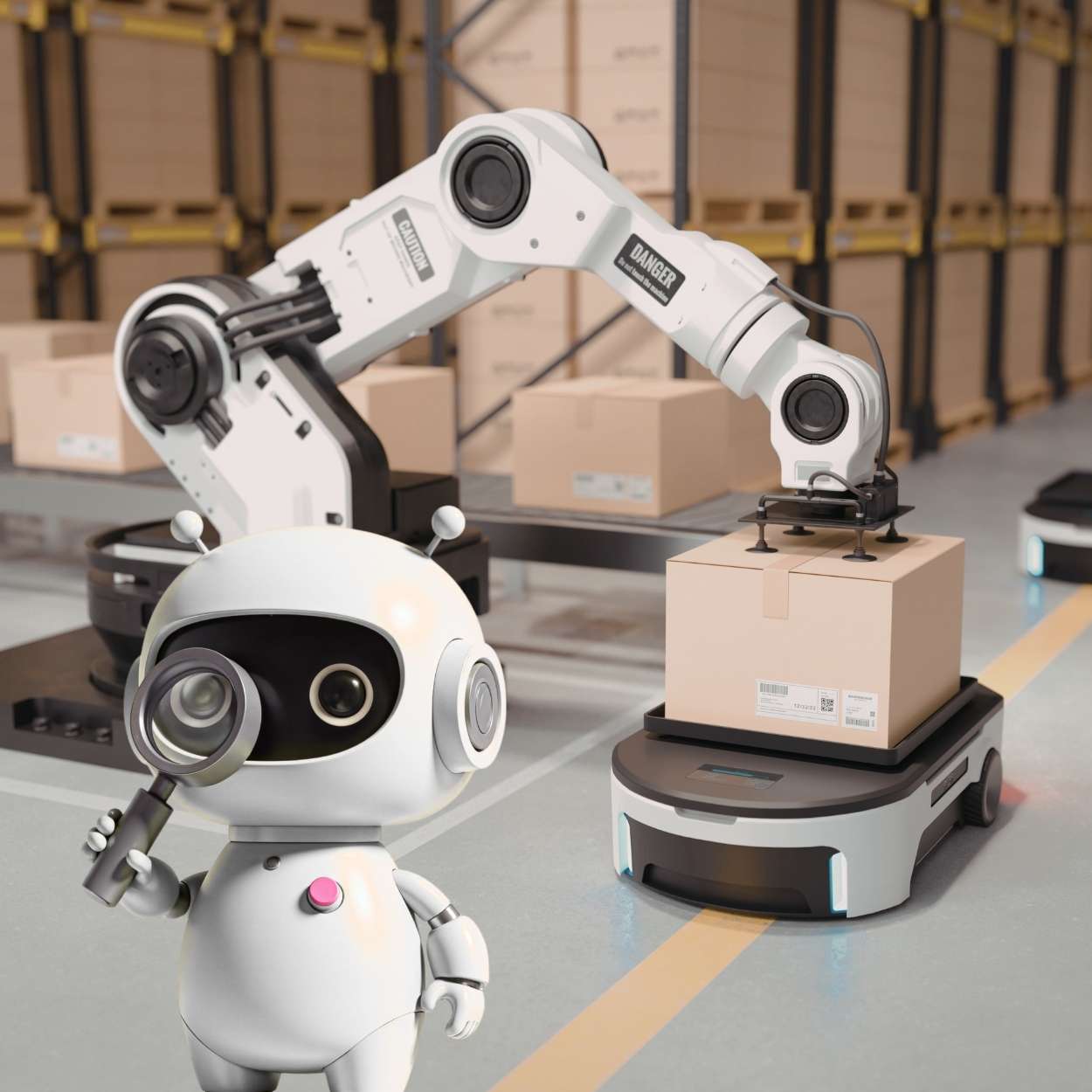
An evidence-based analysis of China’s robotics revolution separating deployment reality from viral video hype
Based on investigative reporting across 11 Chinese robotics companies in 5 cities
Executive Summary
While social media showcases Chinese robots performing backflips and martial arts, the ground truth reveals a more nuanced picture. Recent on-site investigations across China’s robotics ecosystem—from Shanghai to Beijing, Hangzhou to Hefei expose the gap between viral marketing and actual commercial deployment, while simultaneously revealing an industrial transformation already underway.
Key Findings:
- China accounts for over 50% of global factory robot installations annually
- Approximately 140 Chinese firms are developing humanoid robots
- Government investment includes a £100 billion fund for strategic technologies
- Current humanoid capabilities remain far below public perception
- Narrow-task automation is already eliminating specific job categories
- A new workforce of “robot trainers” is emerging as the hidden labor force behind AI
The Manufacturing Reality: What Robots Can Actually Do Today
Current Deployment Status
At Guchi Robotics’ Shanghai facility, the company’s machines perform three specific tasks in automotive final assembly:
- Wheel installation
- Dashboard mounting
- Window installation
According to founder Chen Liang, these automated systems represent only 20% of final assembly automation. The remaining 80% continues to require human workers due to task complexity and environmental variability.
Real-World Performance Data:
At a Huawei electric vehicle factory in Hefei, Guchi’s dashboard installation system operates with three robotic arms that complete the task “in seconds.” However, observation of the broader assembly line reveals:
- Workers still manually handle component sorting from flow racks
- Assembly operators jump in and out of car shells with drills and tools
- Tasks requiring contextual decision-making remain entirely human-operated
Chen Liang’s assessment: “One worker has to manage so many different types of components, and each one needs to be grasped differently… It’s a pretty complicated job.”
The Capability Gap: Testing Retail Deployment
Direct observation of Galbot’s G1 retail robot at a Beijing shopping mall provides measurable performance data:
Task: Retrieve a bottled drink from a shelf and place it on a counter
Observed Performance:
- Robot successfully identified and grasped the bottle
- Placement height was imprecise
- Bottle bounced “a few centimeters to the side” upon release
- Human supervisor remained present throughout operation
Assessment: The system functions as what one observer characterized as “essentially a glorified, semi-competent vending machine.”
However, footage from February 2026 showed the same robot model with upgraded dexterous hands, moving “much faster and more assuredly than before,” indicating rapid iterative improvement cycles.
The Technical Bottleneck: Why the ‘ChatGPT Moment’ Hasn’t Arrived for Robots
Vision-Language-Action Models Explained
Unlike pre-programmed industrial robots, next-generation humanoids rely on Vision-Language-Action (VLA) models designed to operate in “unfamiliar and fluid environments.”
The Core Challenge: Data scarcity.
As explained by a senior Galbot engineer: Before deep learning, industrial roboticists “trained their machines by hand. Programmers wrote explicit instructions for every movement.” VLA models require massive datasets of physical world interactions—data that doesn’t yet exist at scale.
Two Data Collection Methods
1. Teleoperation (Manual Training)
At Leju Robotics’ Beijing training center, approximately 100 human operators guide robots through repetitive tasks:
- Each operator performs 15 different tasks daily
- 10 repetitions per task
- 8-hour shifts
- Tasks include: wiping tables, organizing cutlery, moving glasses, sorting boxes
Each sequence records “visual information, hand positioning, torque, depth” creating “action sequences” for VLA training.
2. Simulated Environments
As the Galbot engineer described: “It’s like Avatar. I don’t have to physically step on to the battlefield, I just lie in my pod, and can simulate it all.”
Virtual environments allow companies to generate training data without physical robot-hour constraints.
Commercial Deployment: Where Automation Is Already Working
Measurable Job Displacement
General Motors Case Study:
At Guchi Robotics’ Shanghai warehouse, a General Motors “manufacturing optimization” team tested wheel-installation machines for shipment to Canada.
According to the GM engineer overseeing the project: “To be grim, anything that eliminates people from the production line is basically my job.”
Quantified Impact: Purchase of the Guchi machines would eliminate 12 assembly operators at a single factory.
GM sets annual job-reduction targets for this division, requiring elimination of a set number of factory workers across all North American plants. (GM confirmed it implements technology for safety and efficiency improvements, “particularly for physically demanding or repetitive tasks,” but did not confirm specific job-reduction targets.)
Current Commercial Applications
Unitree Robotics (Hangzhou):
- Shipped over 5,500 humanoid robots in 2025
- Primary customers: research labs and universities (Oxford, Carnegie Mellon, UC San Diego, Boston Dynamics)
- Retail price: Starting at approximately $1,600
- Comparable American machines: Tens of thousands of dollars
Galbot Robotics (Beijing):
- Deployed in 10 Beijing pharmacies for 24-hour medication dispensing
- Unit cost: 700,000 yuan (£76,000)
- Powered by Nvidia chips
Leju Robotics (Beijing):
- Kuavo humanoids deployed in Chinese EV factories
- Tasks: Unstacking cardboard boxes, basic pick-and-place operations
- Data collection: 100 hours of training sequences publicly released for international research
The Strategic Divergence: US vs. China Approaches
American Strategy: General-Purpose Humanoids
US companies pursue the “sci-fi vision of a machine that can do anything a human can do.”
Advantages:
- Deeper venture capital funding
- Less immediate commercial pressure
- Focus on fundamental research breakthroughs
Chinese Strategy: Task-Specific Specialization
As articulated by Harry Xu, robotics researcher at Tsinghua University: “We commercialise one generation of robots. Then we build the next generation.”
Structural Advantages Identified:
- Supply Chain Density: The Yangtze River Delta (Shanghai) and Pearl River Delta (Shenzhen) contain such concentrated hardware supplier networks that “robot-makers can sometimes walk next door for a replacement part.”
- Iteration Speed: Tweaking a robot prototype takes “less than a day in Shenzhen, but weeks in Silicon Valley, where parts may need to cross multiple states or oceans.”
- Volume: According to Chen Liang: “We might have 1,000 [engineers] who can do this work, and they might have 100.”
Cost Structure: According to a Boston Dynamics developer, Unitree’s hardware is “highly advanced and remarkably cheap” due to these structural conditions.
The Hidden Workforce: Robot Training as the New Manufacturing Job
Teleoperation Labor Market
Worker Profile (Leju Robotics Beijing facility):
- Source: Vocational training programs in Shandong province
- Educational background: “Big data” and “internet” vocational majors
- Age demographic: Late teens to early 20s
- Gender distribution: Roughly equal men and women
- Recruitment: Labor dispatch companies (same system used for iPhone assembly and pandemic enforcement)
Compensation Structure:
- Salary range: 6,000-10,000 yuan per month (~$825-$1,375)
- Comparable to: Full-time delivery drivers
- Job requirements: No degree necessary
Working Conditions:
Direct observation at the training facility: One worker in a VR headset maneuvered a robot hand around a potato, “lifting it slowly from a table and lowering it into a basket.” Another worker logged each action into a database. When a water-pouring sequence failed, spilling liquid, the human partner “stood up from the desk and cleaned up the mess. Then they did the action sequence again.”
Industry Perspective on Labor Transition
Ulrik Hansen, Co-founder of Encord (Silicon Valley data services company):
“For every 15 to 20 robots, you need a person to manage those robots… The new jobs would outnumber those that are lost.”
However, Hansen did not provide specifics on what happens to workers who won’t end up managing robots.
Chen Liang’s Assessment:
When asked about social consequences, Chen acknowledged discussions of contingency plans:
- Higher-skilled workers: Could train next-generation robots
- Lower-skilled workers: No clear plan articulated
His recommendation for current vocational students in advanced manufacturing: “They definitely need to change careers.”
Government Integration: The Public-Private Infrastructure Model
Municipal Competition for Robotics Startups
Documented Cases:
- Leju Robotics: Received over 10,000 square meters of factory space from Beijing district government as part of joint venture agreement—delivered two months before site visit
- PsiBot: Co-founder Viktor Wang reported “multiple unsolicited offers from municipal governments eager to help him establish training centers”
Geographic Distribution:
- Hangzhou: Unitree
- Shanghai: AgiBot
- Beijing: Galbot
- Shenzhen: UBTech
Wang’s observation: “It’s not just Beijing—Suzhou, Shanghai, Wuhan, everyone is willing to put money behind these projects.”
Policy Framework
Under President Xi Jinping, China has shifted from “market-driven innovation” language to the Chinese Communist party’s “unified leadership” in setting technology priorities.
Deployment Velocity:
Normalized advanced technology rollouts observed:
- Chongqing: Thousands of drones forming images above Yangtze River
- Chengdu: Humanoid traffic enforcement robots
- Wuhan, Shenzhen, Beijing: Driverless taxi services
Conclusion: Implications for Global Industry
What the Evidence Shows
- Narrow automation is commercially viable today – Specific tasks (wheel installation, dashboard mounting) are being successfully automated in production environments
- General-purpose humanoids remain years away – Even simple tasks like reliable drink retrieval or screw alignment present significant technical challenges
- Job displacement is already measurable – Documented cases show 12-person teams being eliminated by single robotic systems
- China’s manufacturing ecosystem provides structural advantages – Supply chain density and iteration speed create competitive moats beyond pure innovation
- A new labor category is emerging – Robot training/teleoperation represents a transitional workforce, though its long-term viability remains uncertain
The Strategic Question
The divergence between US general-purpose ambition and Chinese task-specific execution may produce complementary rather than competitive outcomes:
- Scenario A: US achieves general-purpose breakthrough, China supplies interim solutions
- Scenario B: Task-specific robots prove economically superior to general-purpose designs
- Scenario C: Hybrid model where both approaches serve different market segments
What Remains Unknown
- Long-term employment absorption capacity for displaced workers
- Actual deployment costs vs. human labor at scale
- VLA model effectiveness in uncontrolled real-world environments
- Political sustainability of current subsidy models
- Western regulatory response to Chinese automation technology
Follow Welp Magazine for grounded insights on how Robotics is moving from conversation to execution.