What It Means for the Future of Space Technology?
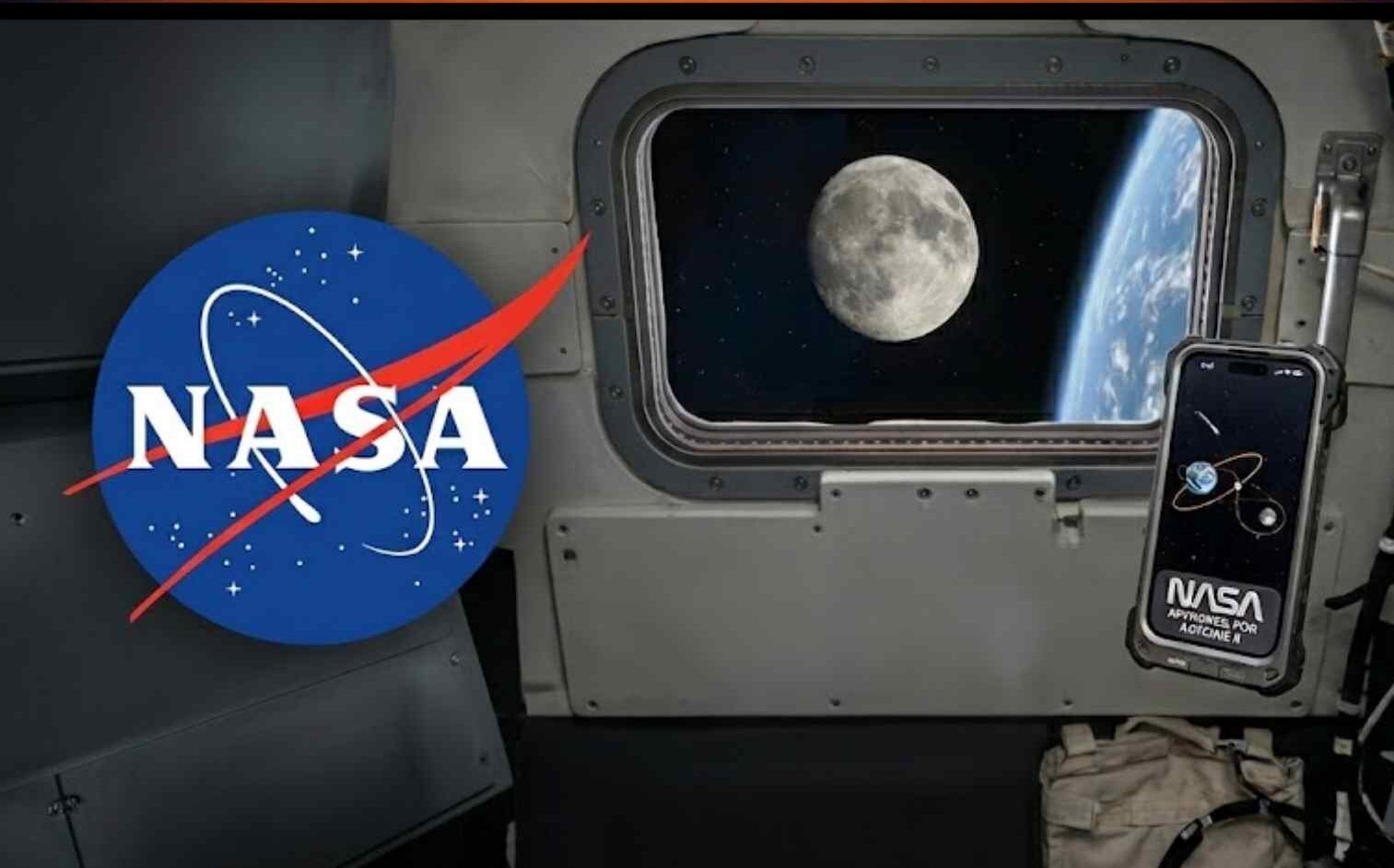
When NASA approved the iPhone 17 Pro Max for the Artemis II mission, it quietly disrupted one of the most rigid industries in the world.
Space technology has always been conservative, slow moving, and deeply risk averse. Every component is traditionally custom built, tested for years, and designed at enormous cost. So bringing a consumer smartphone into deep space is not a small upgrade. It is a strategic signal.
This decision tells us one thing clearly. The gap between consumer innovation and space grade engineering is closing faster than expected.
The Real Reason NASA Chose a Smartphone
This was never about convenience or publicity. It was about performance efficiency and adaptability.
Modern smartphones now integrate multiple high end systems into a single compact device. Advanced camera sensors, onboard processing, thermal management, and durable materials are no longer exclusive to specialised equipment.
NASA recognised that the iPhone could deliver reliable imaging capabilities without adding extra payload complexity. In space missions, weight, volume, and energy consumption directly impact mission economics. A single multi purpose device reduces all three.
This is operational efficiency in its purest form.
The Hidden Risks Most People Miss
Sending a phone into space sounds simple until you look at the physics.
In microgravity, small failures become critical hazards.
A cracked screen does not drop to the floor. It becomes floating debris that can damage eyes, skin, or even enter the respiratory system. That alone can compromise crew safety.
Battery chemistry is another challenge. Lithium ion cells behave differently under radiation exposure and extreme conditions. Thermal runaway in space is not just a device failure. It is a mission risk.
Even adhesives and internal materials are scrutinised. If they release gases in a sealed spacecraft, they can contaminate the entire life support system.
This is why NASA does not approve devices. It qualifies them like flight hardware.
Inside the Four Layer Testing Strategy
NASA followed a structured validation model that reflects decades of aerospace discipline.
The first layer focused on material integrity. Every component, from glass to internal bonding agents, was analysed for durability and stability.
The second layer identified hazard scenarios. Engineers mapped out what happens if the device fails in different ways.
The third layer built mitigation strategies. Instead of eliminating the device, NASA engineered ways to control its behaviour.
The final layer validated real world feasibility through simulation and controlled testing.
This is not product testing. This is risk engineering at mission scale.
What “Space Mode” Really Means
The iPhone used in Artemis II is not the same as the one in your pocket.
All wireless systems are permanently disabled. No signals, no interference, no risk to navigation systems.
The device is physically secured at all times. In microgravity, even a small object can become a moving hazard, so containment is critical.
Its function is intentionally limited. It operates as a controlled imaging tool rather than a multi purpose device.
In simple terms, the smartphone is transformed from a consumer product into a specialised instrument.
Why This Matters More Than It Seems
This moment is not about photography. It is about infrastructure evolution.
For the first time, a mass produced device has crossed into deep space qualification without being redesigned from scratch.
That changes the economics of future missions.
If consumer devices can meet baseline safety requirements with minor modifications, space agencies can reduce development cycles, lower costs, and accelerate innovation timelines.
This also opens doors for private space companies and startups that rely on rapid iteration instead of long hardware cycles.
The Bigger Strategic Shift
Apple Inc. was not directly involved in this process, which makes the story even more powerful.
NASA validated the device independently. That means the value lies in the product ecosystem itself, not a custom collaboration.
This is where things get interesting.
We are entering a phase where consumer technology is no longer just influencing industries. It is becoming infrastructure for high performance environments.
From autonomous vehicles to space missions, the same devices are starting to operate across radically different ecosystems.
What Comes Next in Space Tech
Right now, the iPhone is only used for documentation. But that is just phase one.
The real opportunity lies in software evolution.
Future smartphones or similar devices could support onboard diagnostics, augmented reality interfaces for astronauts, and real time system monitoring.
As edge computing improves, these devices could process mission data locally without relying on ground control.
This is where the shift becomes exponential.
Final Insight
NASA’s decision is not about adding a phone to a spacecraft. It is about redefining what qualifies as space ready technology.
The approval of the iPhone 17 Pro Max signals a future where innovation is not limited by industry boundaries.
Consumer technology is no longer catching up to space grade systems. It is beginning to merge with them.
And when that happens, the pace of exploration does not just improve. It accelerates.