Today’s Global AI Chip News
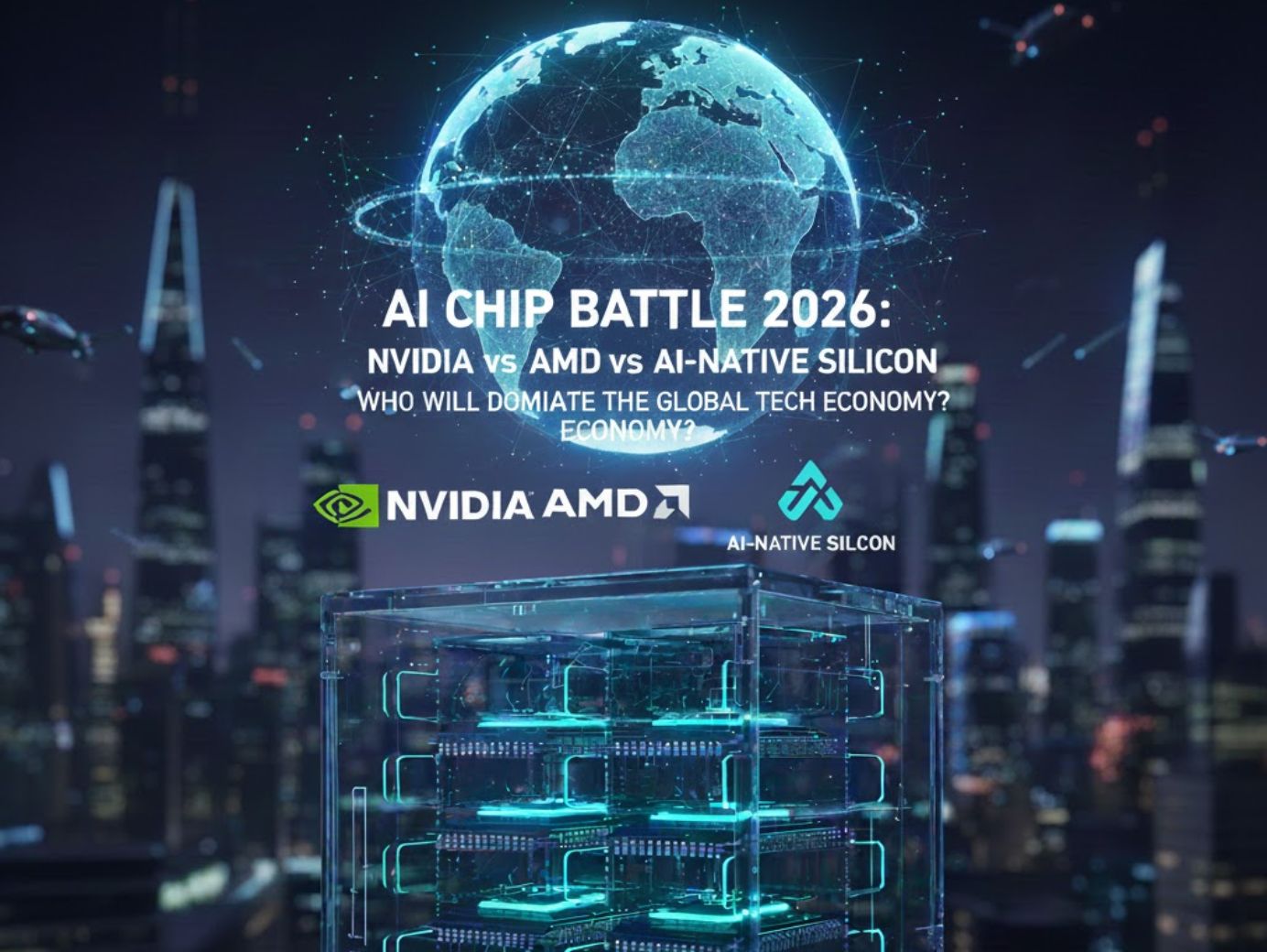
January 2, 2026, marks another milestone in the global AI chip race. NVIDIA, AMD, Broadcom, and emerging Chinese companies like Kunlunxin are making headlines for their strategic moves in the AI infrastructure market. NVIDIA continues to launch next-generation GPUs, AMD strengthens its cloud AI offerings, Broadcom solidifies its networking and interconnect presence, and Chinese AI chip IPOs signal strong regional competition.

These developments confirm that AI chips are no longer just components—they are strategic assets shaping global technology leadership and investment opportunities.
Why AI Chips Matter More Than Ever in 2026
Artificial intelligence is no longer defined solely by software. The real differentiator in 2026 is hardware—the silicon that powers AI models.
For founders, executives, and investors, the choice of AI chip affects product performance, cost efficiency, and global scalability. For nations and cloud providers, chip architecture determines competitive advantage and technology sovereignty.
Global enterprises now ask: Which AI chips provide the best combination of performance, cost, and reliability across regions?
NVIDIA AI Chips 2026: Power and Platform Leadership
NVIDIA remains the dominant force in AI computing in 2026. Its GPUs and software ecosystem continue to be the default for large-scale model training and enterprise AI deployments.
Key strengths:
- Complete platform integration with CUDA and AI libraries
- High-performance GPUs optimized for training and inference
- Strong partnerships with cloud providers in North America and Europe
Founder insight: Startups building AI platforms often choose NVIDIA to minimize development risk and ensure compatibility with global AI tools.
Strategic consideration: NVIDIA faces supply chain and export constraints, creating opportunities for competitors to gain market share in emerging markets.
AMD AI Accelerators 2026: The Cost-Effective Challenger
AMD is rapidly gaining traction as a strong alternative for cost-sensitive AI deployments. Its AI accelerators offer a balance of performance and affordability, especially for cloud-based workloads.
Key advantages:
- Flexible and open ecosystem
- Cost-efficient inference performance
- Growing adoption in Europe and Asia-Pacific
Founder insight: Startups and SaaS companies increasingly adopt AMD chips for hybrid AI workloads where controlling infrastructure costs is critical.
Limitations: AMD still lags NVIDIA in developer tooling and ecosystem depth but is closing the gap quickly.
Broadcom AI Silicon 2026: The Infrastructure Enabler
Broadcom plays a crucial role in AI infrastructure, often behind the scenes. Its networking and interconnect chips ensure that AI data flows efficiently across cloud and enterprise systems.
Key strengths:
- High-speed networking and interconnect solutions
- Essential for large AI data centers
- Supports enterprise-grade AI workloads
Founder insight: Companies building scalable AI platforms rely on Broadcom to ensure performance and reliability at scale.
Chinese AI Chip Surge: Kunlunxin and Biren
China is emerging as a major player in the AI chip market. Baidu’s AI chip division, Kunlunxin, filed confidentially for a Hong Kong IPO, signaling strong investor interest. Biren Technology and other domestic startups are attracting global capital and expanding AI infrastructure capabilities in Asia.
Founder insight: Regional AI chips are critical for reducing dependency on Western suppliers, enhancing supply chain resilience, and meeting local regulatory requirements.
Who Will Lead AI Chips in 2026?
The global AI chip landscape in 2026 will not have a single winner. Instead, leadership will depend on specialization and strategic deployment:
- NVIDIA: Leads in large-scale AI training and enterprise infrastructure
- AMD: Gains adoption in cloud-based and cost-sensitive markets
- Broadcom: Powers critical networking and infrastructure for AI workloads
- Chinese AI chip companies: Drive regional competition and diversification
The real winners will be organizations that strategically combine multiple chip providers to optimize performance, cost, and scalability across global markets. source
Founder and Investor Takeaways
- Diversify AI workloads across multiple hardware platforms
- Consider long-term cost and scalability, not just performance
- Explore partnerships with regional AI chip innovators
- Treat AI infrastructure as a strategic asset influencing product success and market valuation
These approaches are already shaping capital allocation and product strategies in the first days of 2026.
Global Implications
AI chips are defining the future of technology leadership and wealth creation. Companies that understand the ecosystem and deploy AI hardware strategically will gain a significant advantage in both product performance and investor confidence.
The AI chip race is not just about technology. It is about who controls the infrastructure that powers the next decade of innovation.
Stay ahead of AI investment, technology innovation, and global market trends. Follow Welp Magazine for exclusive insights on AI chips, startups, and breakthrough science shaping the next era of global wealth.