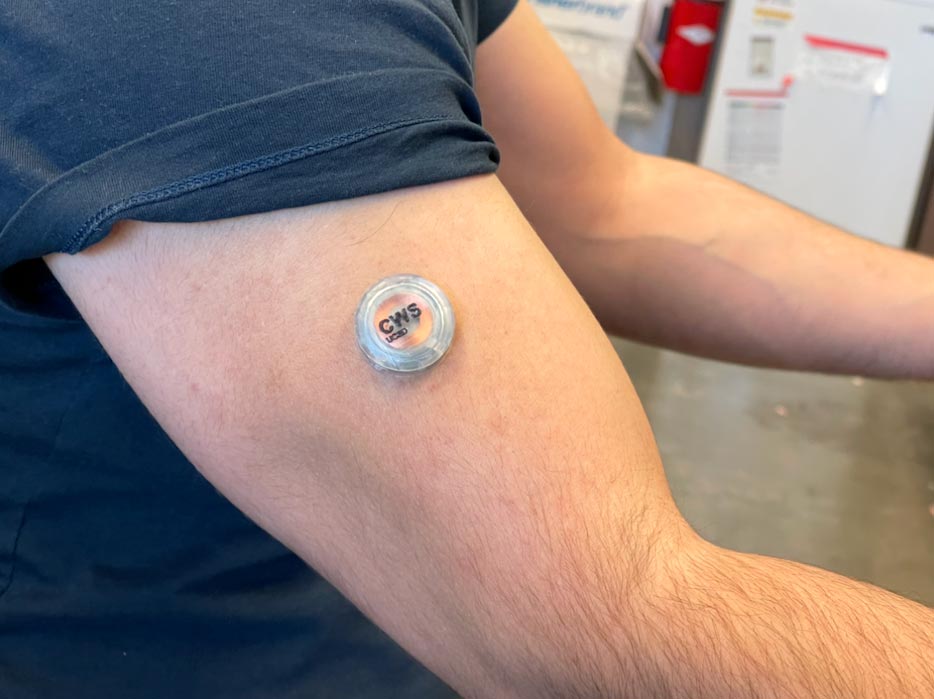
Managing diabetes has always been a struggle constant finger-pricks, costly sensors, and daily discomfort. But in 2025, India is making a breakthrough that could ease that burden for millions. Scientists at IIT Madras have unveiled a diabetic patch that can monitor glucose levels directly on the skin , no needles, no smartphone, and no pain.
This wearable diabetic patch isn’t just a tech invention. It’s a sign of how India’s healthcare innovation ecosystem is solving problems that affect people globally.
A Human-Centered Breakthrough for Diabetes Monitoring
For decades, blood sugar monitoring has relied on invasive testing. Continuous glucose monitors (CGMs) offered a better option, but they remain expensive and inaccessible for most Indian families.
That’s where this new diabetic patch from IIT Madras steps in. Built with microneedle sensors thinner than a human hair, it detects glucose levels from interstitial fluid painlessly. The data is displayed right on the patch itself through a low-power electro-thermochromic screen, eliminating the need for external devices or apps.
In short, it’s simple, affordable, and accurate — designed for the real world, not just hospitals.
How the IIT Madras Diabetic Patch Works
Unlike most CGM devices that require smartphone connectivity, this patch is self-sufficient. It uses a two-part design:
- A disposable microneedle sensor patch that collects glucose data
- A reusable electronic module with an integrated display
Once applied, users can instantly read their glucose levels on the patch itself. No pairing, no syncing — just pure accessibility.
The IIT Madras team has patented the technology, and prototype trials in 2025 have shown reliable accuracy compared to standard glucometers. They are now preparing for clinical validation and industrial collaboration to bring the patch to market.
Why This Breakthrough Matters
India has more than 100 million people living with diabetes, many of whom lack access to continuous monitoring. The low-cost diabetic patch could dramatically change that.
Experts estimate that it could be up to 80% cheaper than current CGM systems, creating opportunities for use in both rural and urban clinics. Beyond India, the same technology could be scaled globally for affordable healthcare innovation.
This breakthrough also demonstrates India’s growing role in biomedical technology leadership, proving that healthcare innovation doesn’t have to come only from Silicon Valley — it can emerge from Chennai too.
Global Context: Wearable Patches Are the Future
Globally, researchers are racing to create needle-free diabetic patches and glucose-responsive insulin patches. While companies in the US and Europe work on advanced sensors, India’s contribution stands out for its focus on cost, comfort, and accessibility.
The IIT Madras diabetic patch sets a benchmark for human-centered health innovation — technology that genuinely understands the needs of people, not just markets.
The Road Ahead
The patch is still in the prototype and testing stage, but the impact is already visible. Its success could inspire more Indian startups to develop practical healthtech solutions for chronic diseases.
When commercialized, this wearable glucose patch could make diabetes monitoring as effortless as checking the time on your wristwatch — no pain, no barriers.
FAQs
Q: What is the diabetic patch developed by IIT Madras?
A wearable, low-cost glucose monitoring patch that measures blood sugar using microneedle sensors and displays readings directly on the patch.
Q: When will it be available in India?
Clinical trials are ongoing in 2025. Experts expect regulatory clearance within 1–2 years.
Q: How much will it cost?
Early estimates suggest the patch could cost up to 80% less than current continuous glucose monitors.
Q: Does it replace insulin injections?
No, this patch monitors glucose levels. However, insulin microneedle patches are also in development.
For more stories on emerging healthcare innovations and scientific breakthroughs, follow Welp Magazine.
Related Post