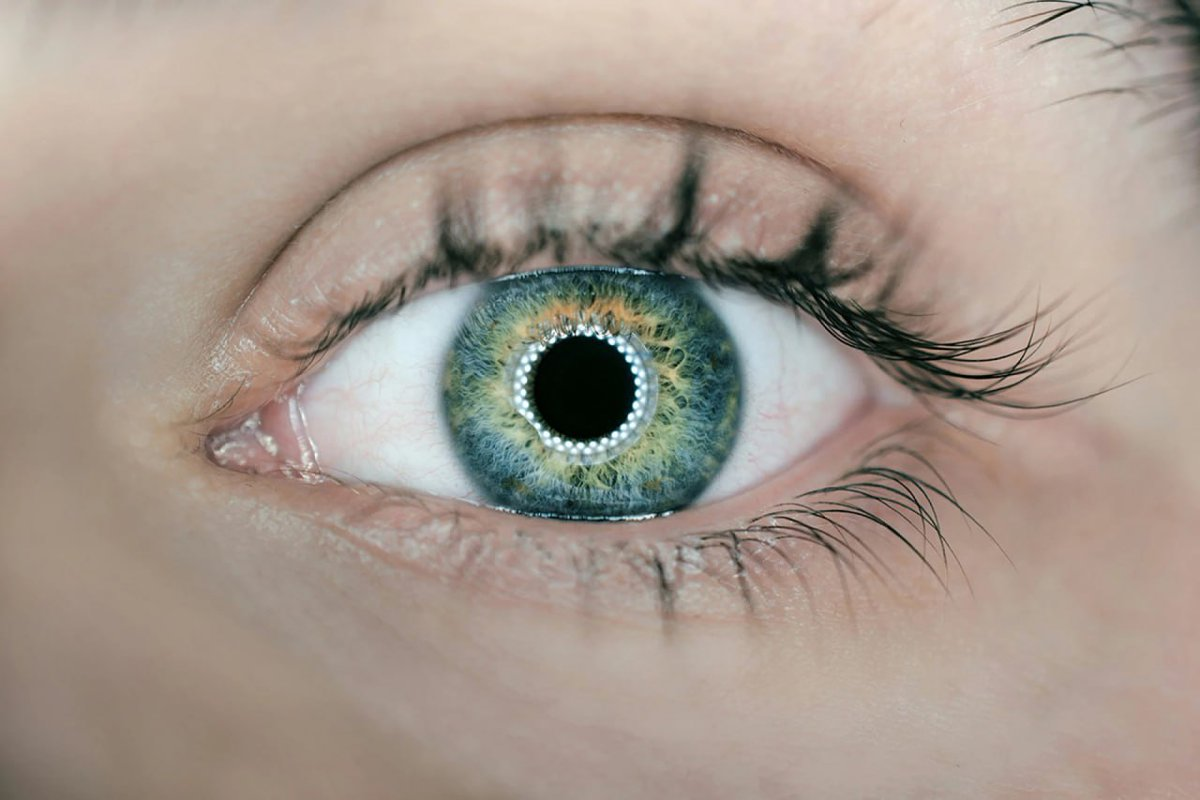
Israel has achieved two breakthroughs in eye care in 2025, positioning the country at the forefront of global ophthalmology. From 3D-printed corneal implants to the first donor-free artificial cornea, these innovations are redefining how preventable blindness can be treated. Together, they promise new solutions for millions facing corneal disease and vision loss.
3D-Printed Cornea Restores Eye Sight to a Legally Blind Patient
In October 2025, Rambam Eye Institute in Haifa successfully restored sight to a legally blind patient using a 3D-printed, cell-based cornea. The implant, developed with regenerative-tech company Precise Bio, was created entirely from living human corneal cells cultured in the lab, eliminating the need for donor tissue.
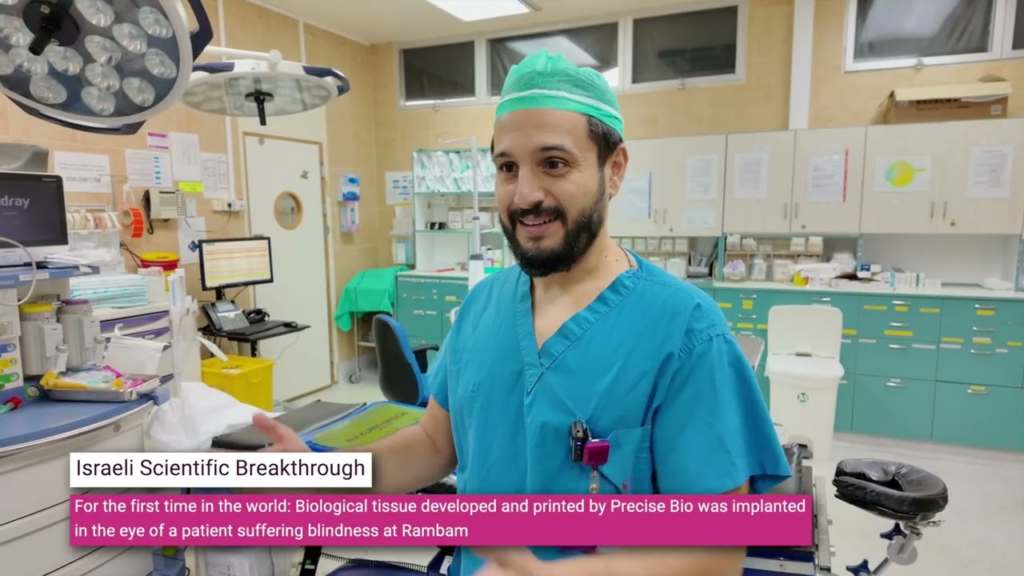
A single donor cornea can now generate nearly 300 bio-printed implants, offering a scalable solution to the global shortage of donor tissue. Patients in regions without robust eye-bank infrastructure, where waiting times for traditional transplants can be years, now have hope for timely and effective treatment.
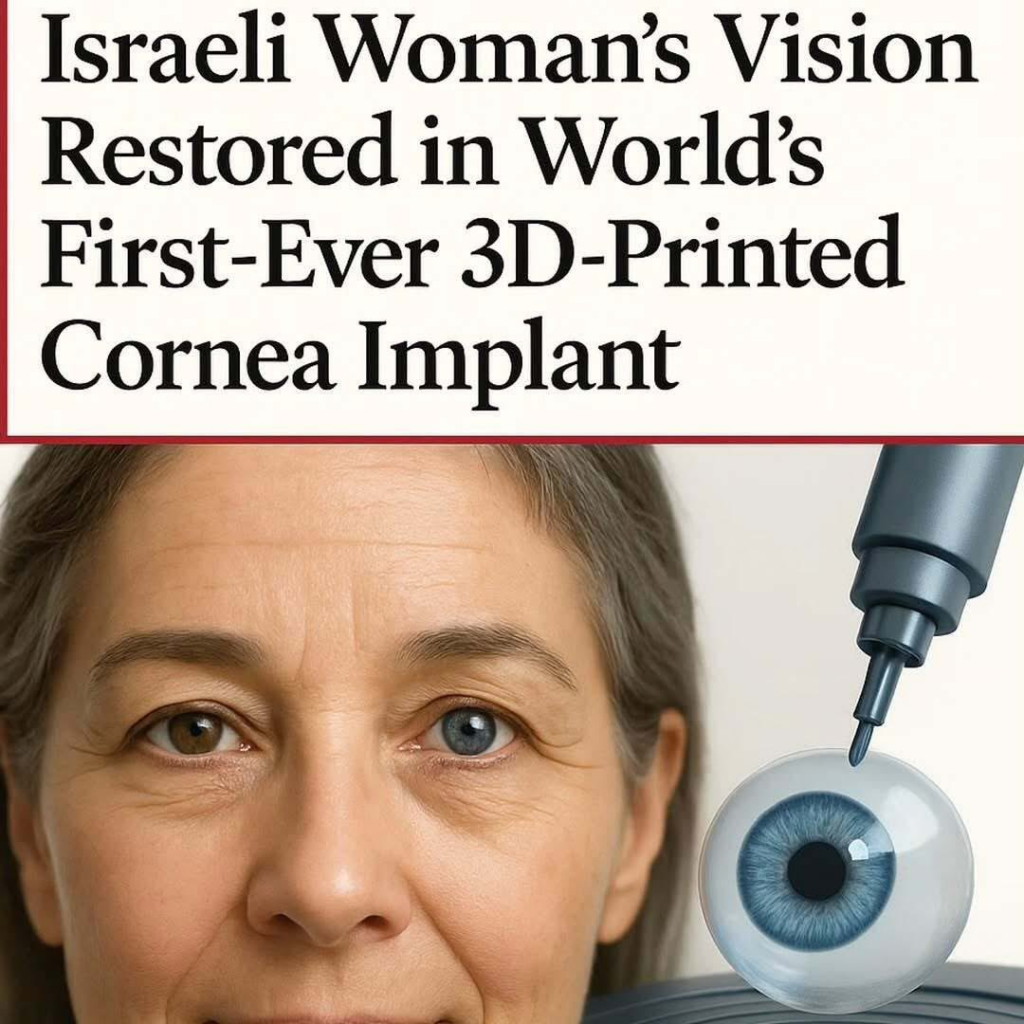
For more details, see the Rambam Health Care Campus announcement on the 3D-printed cornea.
The 3D-printed cornea represents a major leap in regenerative medicine. Beyond ophthalmology, the technology may eventually be adapted to print cardiac tissue, liver, and kidney cells, paving the way for new organ-replacement solutions.
Kaplan Medical Center Performs First Donor-Free EndoArt Implant
Following Rambam’s milestone, Kaplan Medical Center in Rehovot achieved a world-first donor-free artificial cornea transplant using the EndoArt device in November 2025. The patient, who had experienced three prior failed donor transplants, suffered from severe corneal swelling, making traditional surgery impossible.
EndoArt, developed by EyeYon Medical and invented by cornea surgeon Dr. Ofer Daphna, replaces the corneal endothelium, restoring clarity without donor tissue. As a bio-inert implant, it cannot be rejected, and the procedure is short, precise, and minimally invasive. Hundreds of successful EndoArt surgeries worldwide demonstrate long-term improvement in vision and patient quality of life.
Addressing a Global Cornea Shortage
These breakthroughs respond to a critical global challenge: over 13 million people worldwide are waiting for corneal transplants. Rambam’s 3D-printed cornea addresses donor scarcity, while Kaplan’s EndoArt provides a durable solution for patients who cannot undergo traditional transplants.
Together, these innovations offer scalable and reliable treatment options that could dramatically reduce wait times and expand access to cornea care globally.
Future of Eye Care and Regenerative Medicine
Rambam’s bio-printed cornea restores the structural and functional integrity of the cornea, while EndoArt targets the endothelial layer critical for maintaining transparency. This complementary approach enables a broader range of corneal disease treatments than previously possible.
Beyond the immediate impact on ophthalmology, these technologies hint at a future where lab-grown or artificial tissues could become standard solutions across multiple organ systems.
A New Standard in Vision Restoration
Israel’s 2025 breakthroughs in 3D-printed corneas and donor-free EndoArt implants are more than scientific milestones—they represent tangible hope for millions affected by vision loss. By combining regenerative medicine, advanced medical devices, and clinical excellence, these innovations are setting a new standard for global eye care and demonstrating the transformative potential of modern ophthalmology.
Discover More Breakthroughs in Science and Health
Stay ahead of the curve with the latest innovations in technology, medicine, and lifestyle. Read more exclusive reports and expert insights at Welp Magazine and see how global breakthroughs are shaping our world.