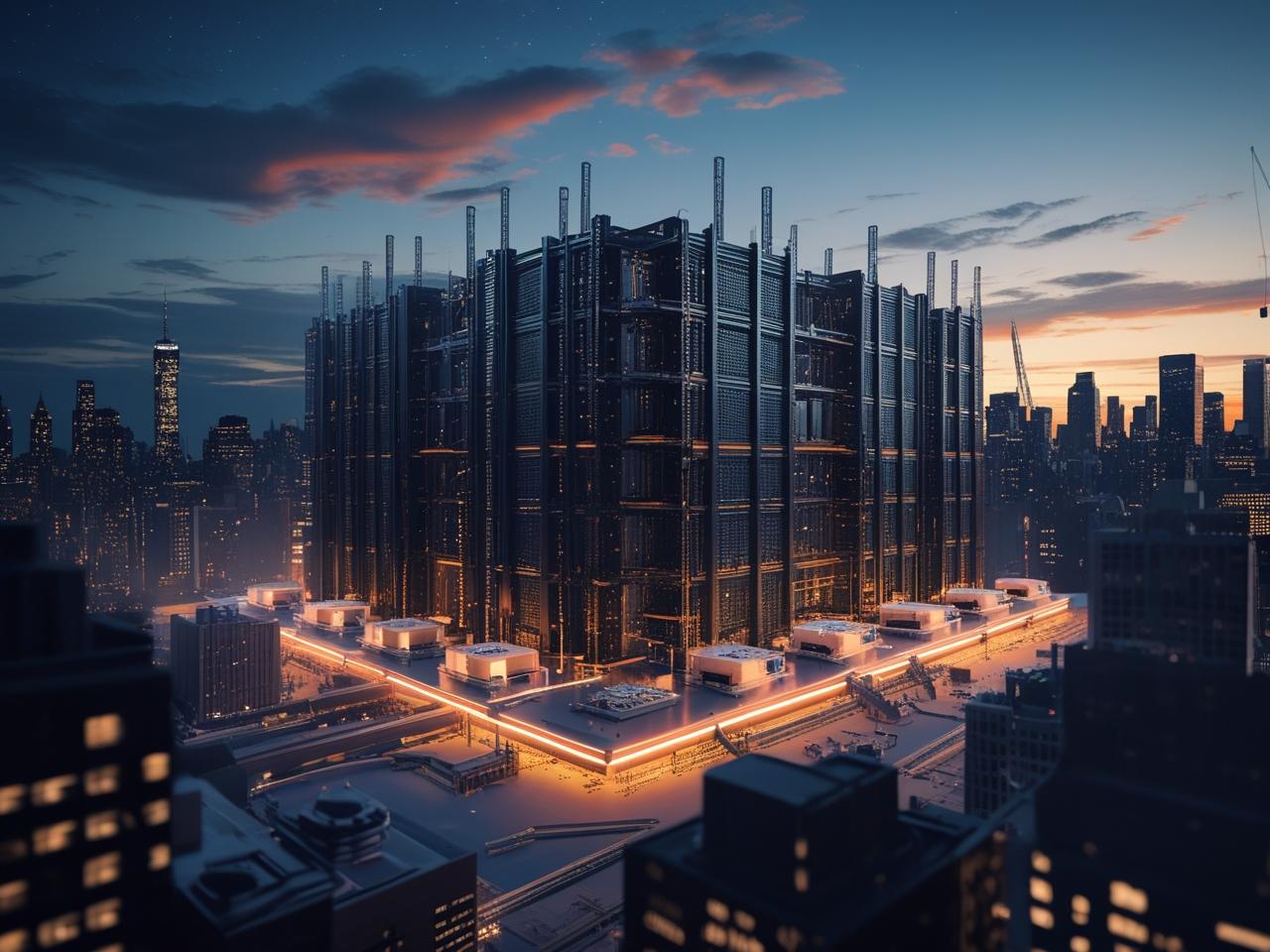
Meta AI data center plans have officially entered the megastructure era. In a recent statement, Mark Zuckerberg confirmed that Meta is building an ultra-massive AI data center, reportedly the size of Manhattan, to power its vision for Artificial General Intelligence (AGI). As AI becomes central to everything from social interaction to enterprise productivity, this massive leap in infrastructure is a loud signal: Meta isn’t just participating in the AI race —it’s trying to lead it.
Why a Manhattan-Sized AI Facility?
The focus keyword, Meta AI data center, reflects a key global trend tech giants scaling infrastructure for frontier AI capabilities. According to Zuckerberg, the new facility will not just support AI models like Llama or future iterations of Meta’s in-house models, but will be designed for agentic AI systems that learn, act, and reason with human-like autonomy.
This strategic buildout is more than hardware it’s Meta’s bid to control the stack, from model to machine. It signals the need for “AGI-native” hardware, moving beyond GPU stacks toward custom AI compute systems optimized for real-time decision-making and model scaling.
Why Now?
Meta’s announcement lands amid a surge in AI infrastructure investments. Nvidia, Microsoft, Google, and Amazon are all ramping up data center development to accommodate the exponential compute demands of generative and agentic AI. But Meta’s plan is unique in its scale and end goal the realization of a general intelligence system trained on massive multimodal data flows from its platforms (Facebook, Instagram, Threads, WhatsApp, and Oculus).
More importantly, it aligns with Meta’s long-term vision: the metaverse + AGI. With an infrastructure base this large, Meta could make its AGI models immersive, embodied, and omnipresent across devices.
Risks and Criticisms
But such power isn’t without scrutiny. Privacy advocates have raised concerns about the kind of data being used to train Meta’s systems. Furthermore, the ecological impact of such massive data centers — in terms of energy consumption, water use for cooling, and e-waste cannot be ignored.
In addition, AGI aspirations bring policy questions. Will the Meta AI data center become a centralized decision-maker in user feeds, political content, and global narratives? Critics argue this could further concentrate digital power and raise algorithmic governance issues.
Context: The AGI Infrastructure Race
For more insight into how AI agents are reshaping work and business, read our in-depth piece: AI Agents Are Quietly Taking Over Your Workflows
To stay ahead, businesses must monitor how companies like Meta, OpenAI, and Anthropic are building real-time AGI systems with cloud-scale backing. Similar efforts are underway at AWS and Oracle, where AI-tailored chips and sovereign data clouds are shaping future digital economies.
Meta’s announcement of its AI data center the size of Manhattan may seem ambitious, but it’s not surprising. This is the infrastructure of the future where intelligence meets scale. As Meta races toward AGI, the world watches a new kind of arms race unfold not of weapons, but of compute, autonomy, and data control.
Want to stay updated on how the tech giants are building tomorrow’s intelligence?
Follow WELP Magazine for deep dives on artificial intelligence, business infrastructure, and disruptive innovations.
Catch more trends on WelpMagazine.com
Explore more agentic AI topics here
External Perspectives from DF Media:
- Claude AI Is Transforming Finance With Real-Time Analyst
- Fed Independence Under Threat? A 2025 Review
- What Happens If Trump Wins Again? — The Economic Scenarios
- Powell’s Monetary Legacy in a Divided America
These external reports show how AI frameworks are already disrupting finance and economic govern