Seoul / Global Desk | January 5, 2026
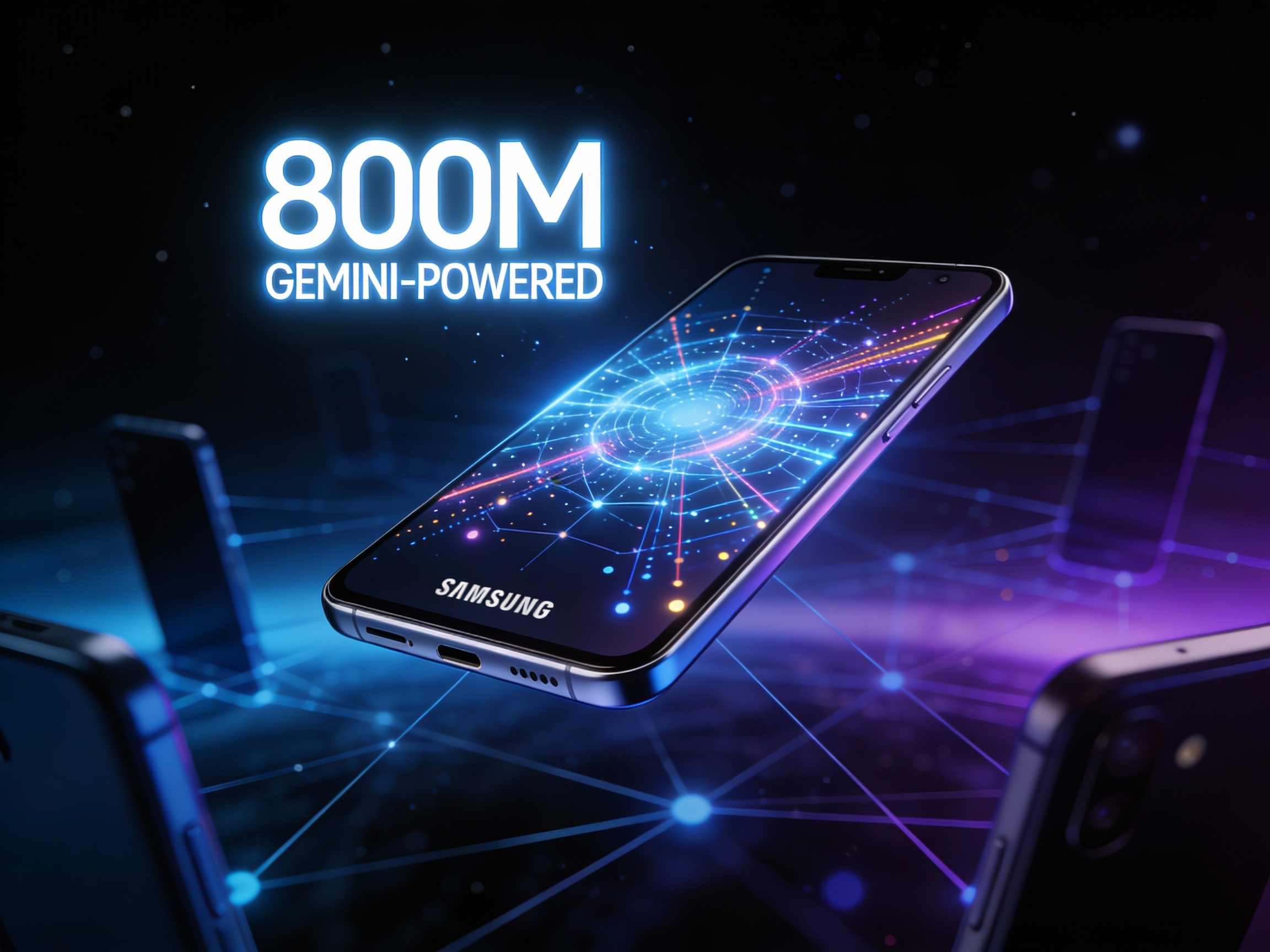
Samsung Electronics is taking a bold leap into the AI-first era, announcing plans to ship 800 million smartphones and tablets powered by AI in 2026. The initiative, built on Google’s Gemini platform and Samsung’s Galaxy AI ecosystem, marks one of the largest global deployments of consumer artificial intelligence ever attempted.
Impact-Site-Verification: 69aac715-2865-4c65-860d-b451e8ff6356
The company had rolled out AI capabilities on roughly 400 million devices last year. Doubling that number demonstrates Samsung’s determination to make AI a core, everyday tool rather than a premium feature.
“Our goal is to integrate AI across all products, services, and functions as quickly as possible,” said TM Roh, Samsung Electronics’ co-CEO.
Galaxy AI and Google Gemini: Scaling Consumer AI
Samsung’s Galaxy AI suite combines Google Gemini’s generative AI with Samsung’s Bixby assistant, delivering capabilities such as smart search, automated translation, image editing, summarisation, and productivity tools.
This scale gives Google a significant boost in the ongoing competition with OpenAI and other AI platform providers. Gemini 3, released in late 2025, set new performance benchmarks, and Samsung’s device expansion ensures mass consumer exposure to the platform.
Competing with Apple and Chinese Rivals
Samsung’s AI push is also a strategic move against Apple and Chinese smartphone makers like Huawei. While Apple continues to focus on tight hardware-software integration, Samsung is betting that AI adoption at scale will be a decisive differentiator for global consumers.
Beyond smartphones, AI will be integrated into televisions, home appliances, and smart home devices, reinforcing Samsung’s position as a full-spectrum consumer technology leader.
Consumer Adoption Surges
Samsung reports that awareness of Galaxy AI jumped from 30% to 80% within a single year, showing rapid consumer interest. Search remains the most popular AI feature, but users are increasingly leveraging generative AI tools for images, translation, summaries, and daily productivity.
“Even if AI feels uncertain today, within a year it will become a natural part of daily life,” Roh said.
Supply Chain Challenges
The announcement comes amid a global memory chip shortage, which has benefited Samsung’s semiconductor division but put pressure on margins in the smartphone business.
Roh confirmed that while rising component costs may lead to some price increases, Samsung is working with partners to minimise long-term supply chain impacts.
Foldables: Patience for the Next Big Thing
Foldable smartphones, pioneered by Samsung in 2019, are growing more slowly than expected due to engineering complexity and limited app optimisation. Yet the company expects foldables to go mainstream within the next 2–3 years. Samsung currently controls nearly two-thirds of the global foldable market, but competition is heating up as Apple prepares to launch its first foldable device.
Quick Bites: Samsung AI Beyond Phones
- Freestyle+ Smart AI Projector: Compact AI-powered projector with 430 ISO Lumens, supporting 180-degree rotation, Samsung TV Plus, OTT apps, and Gaming Hub.
- AI OptiScreen Features: Auto-adjusts display to walls, curtains, or angled surfaces, includes 3D Auto Keystone, real-time focus, and wall calibration.
- Immersive AI Audio: Built-in 360° speaker with Q-Symphony support and Vision AI Companion for conversational Bixby interaction.
- Launched Ahead of CES 2026: Highlights Samsung’s broader push to embed AI across screens and devices.
Read full Freestyle+ coverage
The Bigger Picture
With 800 million AI-enabled devices planned, Samsung is no longer experimenting — it is industrialising AI at planetary scale. The move could define the next era of consumer technology, where smartphones, TVs, and appliances operate as fully AI-integrated platforms.
Stay Ahead in Tech with Welp Magazine
Discover the latest AI innovations, smart devices, and global tech trends before anyone else.
🔹 Read more insights and exclusive coverage here: Welp Magazine