Trump Quantum Executive Order: Key Facts
- Signed: June 22, 2026, two executive orders in the Oval Office.
- Goal 1: A research-grade quantum computer at a national lab by 2028, plus quantum sensors and networks within five years.
- Goal 2: Federal agencies move to post-quantum cryptography by 2031.
- Funding: ~$1B to IBM, $375M to GlobalFoundries, $100M each to D-Wave, Rigetti, and Infleqtion.
- In attendance: Alphabet’s Ruth Porat, IBM’s Arvind Krishna, Infleqtion’s Matthew Kinsella.
The Trump quantum executive order push is now official. On June 22, 2026, President Donald Trump signed two executive orders designed to accelerate American quantum computing and to defend the federal government against future quantum-powered cyberattacks. Standing alongside him in the Oval Office were Alphabet President Ruth Porat, IBM CEO Arvind Krishna, and Infleqtion CEO Matthew Kinsella, a clear signal that the biggest names in tech are backing the effort.
So what does the Trump quantum executive order actually change? In short, it sets hard national goals: build a research-grade quantum computer within two years, deploy quantum sensors and networks within five, and force federal agencies onto quantum-resistant encryption by 2031. Below, we break down both orders, the funding behind them, and why this matters for US quantum leadership and everyday cybersecurity.
What the Trump Quantum Executive Order Does
The Trump quantum executive order is really two orders working together. The first is an offensive play, aimed at making sure the United States builds the most capable quantum machines in the world. The second is a defensive play, aimed at protecting government data before quantum computers become powerful enough to break today’s encryption. Together, they treat quantum technology as both an economic opportunity and a national security priority.
Importantly, this is a coordinated national effort rather than a single grant. The White House framed it as a way to secure US quantum leadership for the next decade, and the presence of IBM, Alphabet, and Infleqtion leadership underlined how closely the government plans to work with private industry.
Order 1: A Research-Grade Quantum Computer by 2028
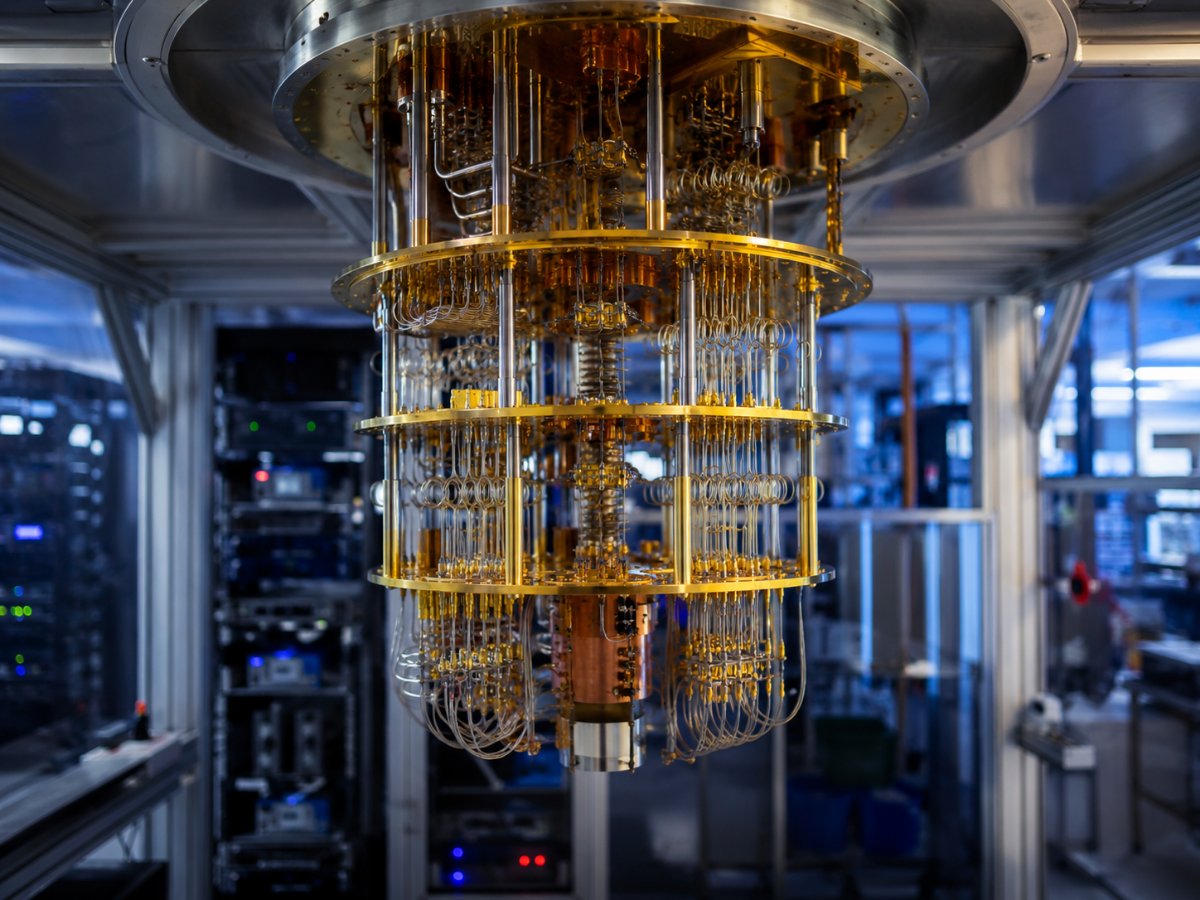
The first executive order sets a cohesive national goal: build a quantum computer powerful enough for serious scientific research, housed in a national laboratory, by 2028. Beyond the computer itself, the order calls for the United States to develop quantum-enabled sensors and networks within the next five years. As a result, the target is not just one headline machine but an entire quantum ecosystem of computing, sensing, and communication.
Why a national lab? Because the earliest useful quantum computers will be rare, expensive, and demanding to run. Therefore, placing the first research-grade system inside a national facility lets scientists across disciplines share access for chemistry, materials science, and other calculations that classical supercomputers struggle with. A separate directive even tasks NASA with planning quantum applications in space, showing how broad the ambitions are.
Order 2: Post-Quantum Cryptography by 2031
The second executive order tackles a quieter but serious threat. A sufficiently powerful quantum computer could one day break the encryption that protects banking, government, and personal data. Consequently, the order requires federal agencies to migrate their high-value assets and high-impact systems to post-quantum cryptography, with deadlines of December 31, 2030 for key establishment and December 31, 2031 for digital signatures.
To keep the effort on track, the Director of the Office of Management and Budget and the National Cyber Director will lead coordination across the federal government. In practice, that means every covered agency needs a plan to swap out vulnerable encryption for quantum-resistant standards. Moreover, by moving early, the government hopes to set an example that encourages wider adoption of these stronger security standards across the private sector.
Quantum Funding: Who Gets What
Money makes the goals real, and the reported funding is substantial. According to early reports, the program directs major investment to a mix of established players and pure-play quantum companies. The table below summarizes the reported allocations.
| Recipient | Reported Funding |
|---|---|
| IBM | ~$1 billion |
| GlobalFoundries | $375 million |
| D-Wave Quantum | $100 million |
| Rigetti Computing | $100 million |
| Infleqtion | $100 million |
For the quantum industry, this is a powerful vote of confidence. Furthermore, spreading funds across large and small firms suggests the government wants both proven manufacturing muscle and the fast-moving innovation that startups provide.
Why Tech Leaders Backed the Order
The guest list told its own story. Alphabet President Ruth Porat, IBM CEO Arvind Krishna, and Infleqtion CEO Matthew Kinsella all attended the signing, and each company has a direct stake in the outcome. IBM has been one of the most visible builders of quantum hardware, Google’s parent Alphabet runs a long-standing quantum research program, and Infleqtion represents the wave of specialized quantum startups now scaling up.
For these executives, government coordination reduces risk and speeds timelines. In contrast to going it alone, a national effort pools funding, talent, and demand. Infleqtion publicly welcomed the order, and the broader industry reaction has been positive, with several publicly traded quantum stocks drawing fresh attention after the announcement.
Why Post-Quantum Cryptography Matters Now
You might wonder why the government is racing to fix encryption for a computer that does not fully exist yet. The answer is a tactic security experts call “harvest now, decrypt later.” Adversaries can steal encrypted data today and simply store it, waiting until a future quantum computer can unlock it. Therefore, sensitive records with a long shelf life, such as health, defense, and financial data, are already at risk even before quantum computers mature.
Migrating to post-quantum cryptography is slow and complex, which is exactly why the order sets firm deadlines. By forcing agencies to start now, the administration aims to close the window before it becomes a crisis. For everyday users, the long-term payoff is encryption that stays trustworthy even in a quantum era.
What It Means for the Global Quantum Race
Quantum technology has become a geopolitical contest, and the United States is not the only country investing heavily. By setting concrete targets and writing large checks, the order is a clear bid to keep US quantum leadership ahead of rivals. Nevertheless, deadlines are ambitious, and a 2028 research-grade machine will require real breakthroughs, not just funding.
Still, the direction is unmistakable. With both an offensive and a defensive track, the Trump quantum executive order treats quantum computing as critical national infrastructure. Whether the timelines hold or slip, the message to scientists, startups, and adversaries alike is that the United States intends to compete hard for the quantum future.
What It Means for Businesses and Consumers
Although the orders target the federal government, the ripple effects will reach far beyond Washington. When agencies set firm deadlines for quantum-resistant encryption, their vendors and contractors usually have to follow, so security teams across healthcare, finance, and defense suppliers should expect new compliance expectations. As a result, companies that handle sensitive data would be wise to start auditing where they rely on vulnerable encryption today.
For founders and investors, the funding signals where momentum is heading. Capital flowing to both giants like IBM and specialized startups suggests a maturing market with room for hardware, software, and security players. Moreover, talent tends to follow money, which means universities and labs near these programs could see a hiring surge in quantum engineering and cryptography.
For everyday consumers, the impact is slower but real. The standards the government adopts now often become the baseline for the apps, banks, and devices people use later. In short, the security upgrades happening behind the scenes today are meant to keep your data safe long after powerful quantum computers arrive. That quiet, preventive work may end up being the most important legacy of this announcement.
For more on the policies and breakthroughs shaping technology, explore Welp Magazine and our technology coverage. We will update this article as agencies publish their post-quantum cryptography migration plans.
Stay Ahead of What’s Next
Welp Magazine covers the policies, tools, and breakthroughs changing how we work and build. From quantum computing to AI, we cut through the hype. Read more on Welp Magazine.