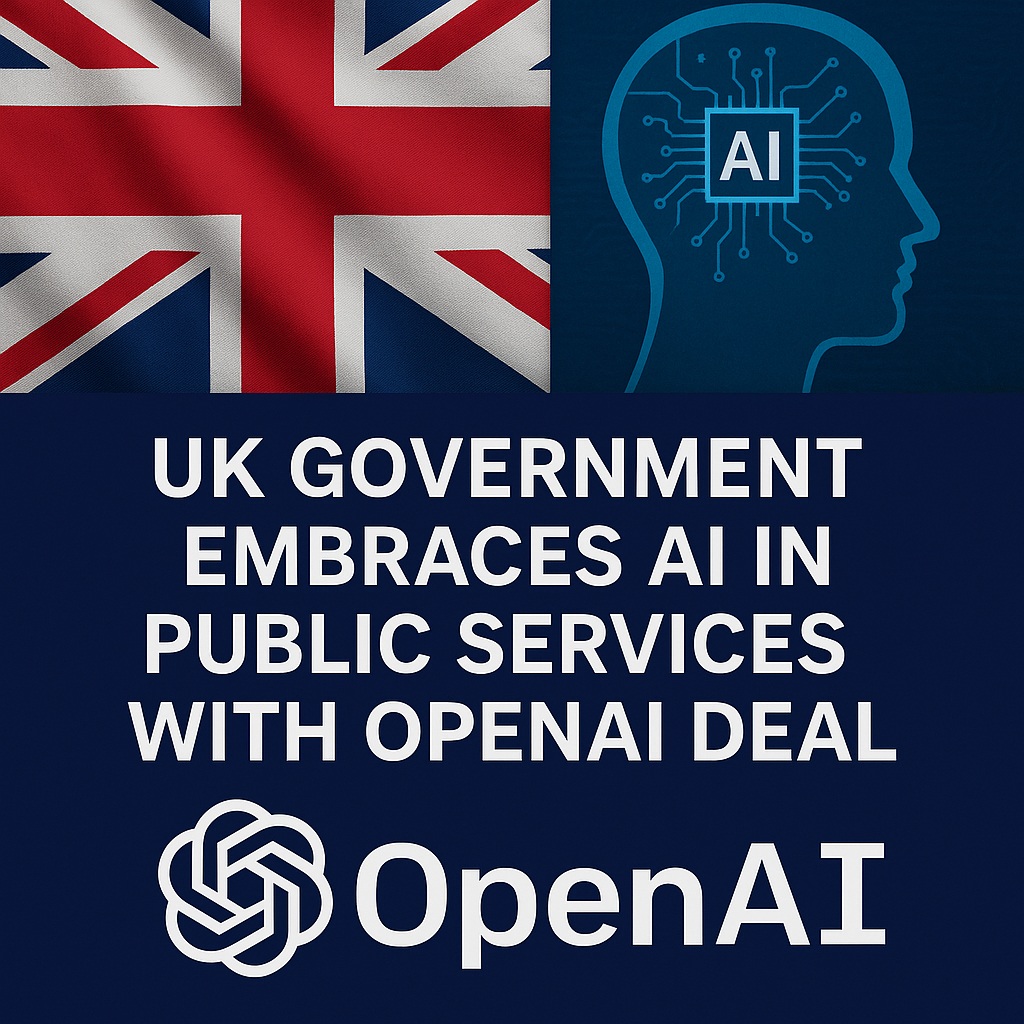
The UK has taken a groundbreaking step toward integrating AI in public services by signing a strategic deal with OpenAI, the creators of ChatGPT. The agreement could open access to government data and introduce artificial intelligence to sectors like education, defence, and justice, potentially revolutionising the way the UK public sector operates.
A Bold Move for UK’s Digital Future
Technology Secretary Peter Kyle stated the goal of the partnership is to increase productivity and drive economic growth through innovation. This UK OpenAI deal is part of a broader strategy to enhance the nation’s stagnant economy by leveraging advanced AI technologies.
While not legally binding, the agreement outlines mutual goals between the UK government and OpenAI. These include an “information sharing programme,” investment in AI infrastructure, and the expansion of OpenAI’s London office, which currently employs over 100 people.
Where Will AI Be Used?
The UK government has indicated that AI will be tested across key public service sectors:
- Education: Enhancing curriculum design and automating administrative tasks.
- Security and Defence: Supporting real-time decision-making through predictive analytics.
- Justice System: Streamlining case handling and document processing.
- Civil Service: AI-powered tools like “Humphrey” are already being used to improve workflow efficiency.
OpenAI’s CEO, Sam Altman, said the goal is to deliver “prosperity for all” by freeing up civil servants to focus on complex, high-value tasks.
Transparency and Ethics Concerns
However, not everyone supports the initiative. Digital privacy groups like Foxglove have criticised the deal for being too vague and potentially compromising citizens’ data privacy. Co-executive director Martha Dark warned that public data could be used to train commercial AI models without public consent.
Critics argue that while the ambition is commendable, the UK government must develop clear safeguards to protect democratic values and ensure data transparency.
Industry Perspective on the Collaboration
Dr Gordon Fletcher, associate dean at the University of Salford, said the collaboration is promising but must be ethically grounded. “The real test will be whether the deployment of AI in public services can be done with minimal reliance on sensitive public data,” he noted.
This is not the first time the UK has engaged with AI leaders. Earlier this year, the government also signed similar exploratory deals with Google DeepMind and Anthropic, showing a strong interest in anchoring AI innovation within British borders.
AI and Economic Strategy
The agreement aligns with Prime Minister Keir Starmer’s AI Opportunities Action Plan, launched earlier this year. The plan aims to position the UK as a global AI leader. Still, some industry voices have warned against placing too much power in the hands of Big Tech players without stronger support for homegrown startups.
Despite the criticism, the government’s AI adoption strategy is gaining momentum, with clear implications for job roles, data use, and public engagement in the coming years
This UK–OpenAI partnership could redefine how the nation delivers AI in public services, but success depends on responsible implementation, robust ethics, and public trust elements the UK must now prioritise.
Stay tuned with us for more insights only on Welp Magazine.
As AI in government continues to evolve, its role in improving the UK public sector is only set to grow. For more insights into how finance and tech are shaping public policy, visit DF Media.
Related Readings:
• The Automation Leap: Are No-Code Tools Killing Entry-Level Jobs?
• Digital Nomad Visas Are the New Work Perk in 2025