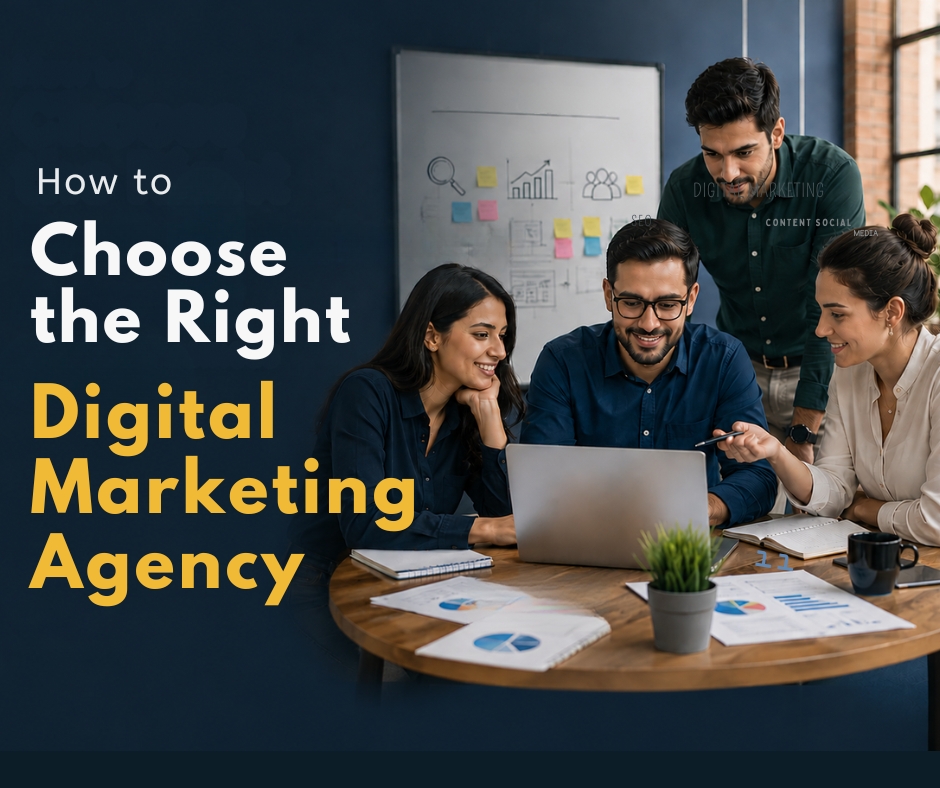
Hiring a digital marketing agency is one of the highest-leverage decisions a business owner can make. The right agency becomes an extension of your team, filling gaps in your skills and turning your marketing budget into steady, measurable growth. The wrong one burns through that budget, buries you in vanity metrics, and leaves you further behind than when you started. With so many agencies promising the same results, knowing how to tell them apart has never mattered more. This guide walks you through exactly what to look for so you can choose with confidence.
Why the Agency You Choose Matters More Than Ever
The marketing landscape in 2026 is more competitive and more complex than it has ever been. Search engines are smarter, paid advertising is more expensive, and customers now discover businesses through channels that barely existed a few years ago, from AI assistants to short-form video. Keeping up with all of this while running your business is nearly impossible on your own. That is why so many owners bring in outside help.
But the gap between a great agency and a mediocre one is enormous. A strong partner drives real revenue and can prove it. A weak one hides behind clicks and impressions that never turn into customers. Because you are trusting this company with both your budget and your reputation, the selection process deserves real attention rather than a quick decision based on a slick sales pitch.
Get Clear on Your Goals Before You Start Looking
Before you evaluate a single agency, get clear on what you actually want to achieve. Marketing goals vary widely, and the right agency for one goal may be a poor fit for another.
Ask yourself what success would look like six months from now. Are you trying to generate more phone calls, fill an appointment calendar, sell more products online, or build awareness in a new market? Do you need help with search engine optimization, paid advertising, social media, content, or all of the above? A business that needs local phone calls has very different requirements from one selling nationwide through an online store.
When you know your goals, you can judge each agency against them instead of being swayed by whatever service that agency happens to be best at selling. Clarity on your end also makes the entire relationship smoother, because both sides are working toward the same finish line from day one.
Generalist or Specialist: Which One Fits Your Business?
One of the most important choices you will make is whether to hire a generalist agency or a specialist that focuses on your industry.
Generalists work across many industries and can be a fine choice for straightforward needs or for businesses that want a single provider to handle a bit of everything. Specialists, on the other hand, focus on a narrow niche and know it deeply. They already understand your customers, your competitors, your regulations, and the seasonal patterns that shape your demand. That head start means you are not paying for someone to learn your industry on your dime.
The value of a specialist is easiest to see in fields where trust and timing are everything. A funeral home, for example, needs marketing that reaches grieving families with compassion at the exact moment they are searching for help. A generalist that also handles restaurants and gyms is unlikely to get the tone or the strategy right. That is why funeral professionals so often seek out the best funeral home marketing agency rather than a jack-of-all-trades. The same logic applies to law firms, medical practices, contractors, and any business where the buying decision is sensitive, high-value, or highly local. The more specialized your work, the more a specialist agency is worth.
Questions to Ask Before You Sign Anything
Once you have a shortlist, the sales conversation is your best opportunity to separate the serious agencies from the ones coasting on marketing buzzwords. A few pointed questions will tell you most of what you need to know.
How do you measure success?
The answer to this question reveals almost everything. A strong agency talks about outcomes that affect your bottom line, such as qualified leads, phone calls, booked appointments, and closed sales. A weaker one leans on clicks, impressions, and page views, which feel impressive but rarely translate into revenue. If an agency cannot connect its work to actual business results, keep looking.
Who will actually be working on my account?
Many agencies win business with senior talent and then quietly hand your account to a junior team you never met. Ask who your day-to-day contact will be, how experienced they are, and how often you will hear from them. You want a partner who communicates clearly and consistently, not one that disappears after the contract is signed.
What happens if it is not working?
No campaign performs perfectly from the start. What matters is how the agency responds when results lag. A good partner monitors performance closely, tells you the truth when something is not working, and adjusts quickly based on real data. Be cautious of anyone who guarantees dramatic results with no caveats, because that is a promise no honest marketer can make.
Red Flags That Should Make You Walk Away
Some warning signs should end the conversation quickly. Be wary of agencies that lock you into long contracts before they have proven any value, since confident agencies are usually comfortable earning your business month to month. Watch out for vague pricing, hidden fees, or markups on your advertising spend that make it impossible to know where your money is going. Pay attention to communication during the sales process, because an agency that is slow to respond while trying to win you over will not suddenly become attentive later. Finally, if an agency badmouths every one of its past clients, expect to be talked about the same way once your relationship ends.
Look at Reporting and Transparency
Transparency is where good agencies truly stand apart. You should always know what you are paying for, what results it is producing, and how those results compare to your goals. The best agencies give you clear, regular reporting that a non-marketer can understand, and they are happy to walk you through the numbers rather than hiding behind jargon.
Ask to see a sample report before you commit. If it is packed with confusing metrics and light on real outcomes, that tells you how the agency thinks. If it clearly shows leads, calls, and return on investment, you are looking at a partner that takes accountability seriously. The ability to distinguish the results the agency created from the business you would have earned anyway is a sign of a mature, honest operation.
Start Small and Scale What Works
You do not have to bet everything at once. Whenever possible, start with a smaller engagement or a defined trial period before committing to a large, long-term contract. A short initial project lets you see how the agency communicates, how it handles challenges, and whether it delivers on its promises, all without major risk. If the partnership proves itself, you can expand with confidence. If it does not, you have lost far less than you would have otherwise.
Final Thoughts
Choosing a digital marketing agency is not about finding the loudest pitch or the lowest price. It is about finding a partner whose expertise matches your goals, whose values match your own, and whose results you can actually measure. Take the time to define what you want, ask hard questions, watch for red flags, and favor transparency at every step. Do that, and the agency you choose will not just spend your marketing budget. It will grow your business for years to come.