What Is Meta Muse Image
Meta Muse Image is the first AI model Meta has built specifically to generate and edit images. Meta released it this week, and the team behind it, Meta Superintelligence Labs under Alexandr Wang, built the model to power image creation inside the Meta AI app, Instagram, WhatsApp, and Meta’s advertising tools. It’s a clear move to stop leaning on outside vendors like Midjourney and Black Forest Labs for image and video features.
Muse Image was originally codenamed Mango internally. It’s the second major release from Meta Superintelligence Labs since the group introduced Muse Spark back in April, the large language model that took over from Meta’s old Llama lineup. Put the two together and it becomes clear Meta wants full control over the AI running its most popular products instead of licensed technology from someone else.
Table of Contents
What Muse Image Actually Does
At its core, Meta Muse Image generates and edits photos and graphics from text prompts, the same basic idea behind OpenAI’s GPT Image 2 or Google’s Nano Banana. What Meta is emphasizing is a reasoning layer built into the model. It can look at an existing image, understand what’s in it, and make targeted edits, swap out a style, or produce several on brand variations rather than starting from scratch every time.
That distinction matters more for advertisers and professional creators than casual users. A model that remembers context from a source image needs fewer prompts to get a usable result, which saves real production time.
Where People Can Use It
Muse Image is free right now through the Meta AI app and website, WhatsApp direct messages, and Instagram Stories. Facebook and Messenger support is coming later this year. Free users get a set number of generations before hitting a limit.
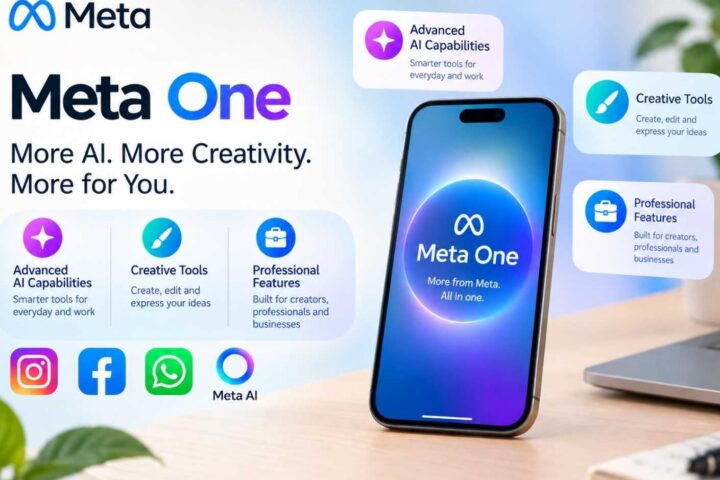
Once someone hits that limit, they can wait for it to reset or sign up for one of Meta’s Meta One subscription plans, which started in May at 7.99 dollars a month. Those paid tiers unlock higher volume and more advanced editing tools for people who create images regularly.
How It Fits Into Meta’s Ad Business
The bigger story here is advertising. Muse Image now powers Advantage Plus, Meta’s AI ad creative suite, giving brands a way to produce and adjust campaign visuals without commissioning a new design for every variation.
Meta told advertisers the model can adjust elements, swap styles, and build variations directly from existing creative, which should mean higher quality, on brand ad variants without as many rounds of back and forth. Agencies and advertisers should start seeing Muse Image show up in their ad variants over the next few weeks.
This lines up with what Meta has already been doing with its AI automated advertising push, where more of the creative process keeps shifting from human designers to models.
Meta Muse Image vs GPT Image 2 and Nano Banana 2
Meta shared its own benchmark numbers alongside the release, and they are not a clean sweep. By Meta’s account, Muse Image trails OpenAI’s newest model lineup overall, but it beats Google’s Nano Banana 2, the follow up to the Nano Banana model that became a genuine hit with consumers last fall, specifically on editing tasks involving one or several images.
That is a real claim considering how far ahead Google’s image tools have felt to a lot of users. It puts Meta squarely in competition with both the Gemini powered products coming out of Google and OpenAI’s newest multimodal models.
Part of a Bigger Build Out
Muse Image did not show up in a vacuum. It follows Meta’s acquisition of Moltbook, the AI only social network, by just a few months, and it comes while Meta keeps building out the Manhattan sized, 30 billion dollar AI data center it is counting on to compete in the AGI race through 2030.
Meta has relied on outside partners like Midjourney and Black Forest Labs for image and video features in its own apps for a while now. Bringing that work in house with Meta Muse Image is a straightforward way to cut licensing costs and keep control of the roadmap, the same logic playing out across the industry as companies like Anthropic build their own tools, such as Claude Tag for Slack, instead of depending on outside integrations.
What Comes Next: Muse Video
Meta also confirmed a companion model called Muse Video is in development, though there is no release date yet. According to Meta’s technical blog, it performs well on prompt adherence, visual fidelity, and temporal consistency, the same three benchmarks people use to judge video models like OpenAI’s Sora or Google’s Veo.
Why Meta Muse Image Matters
Meta is under real pressure to show that its massive AI infrastructure spending is actually turning into products people use, not just research announcements. Advertising is still almost all of Meta’s revenue, and Meta Muse Image is a bet that faster, cheaper ad creative can become a new growth lever, one that does not rely on convincing people to pay for a chatbot subscription.
Whether Muse Image actually closes the gap with OpenAI and Google will come down to results advertisers see in their campaigns, not benchmark charts. That is the test Meta set for itself over the coming weeks.
Frequently Asked Questions
What is Meta Muse Image?
Is Muse Image free to use?
How does Muse Image compare to GPT Image 2 and Nano Banana 2?
Can advertisers use Muse Image?
When is Muse Video launching?
Want the next AI product launch explained this clearly? Follow Welp Magazine’s AI coverage for regular breakdowns of the tools changing business, marketing, and creative work.