Claude Tag: Key Facts
- What it is: Anthropic’s AI agent that lives inside Slack channels.
- How to use it: Type @Claude in a channel to delegate a task the whole team can see.
- Launched: June 23, 2026, in beta for Claude Enterprise and Team customers.
- Engine: Powered by Claude Opus 4.8, with an asynchronous “ambient” mode.
- Controls: Scoped identities, channel-level permissions, audit logs, and token caps.
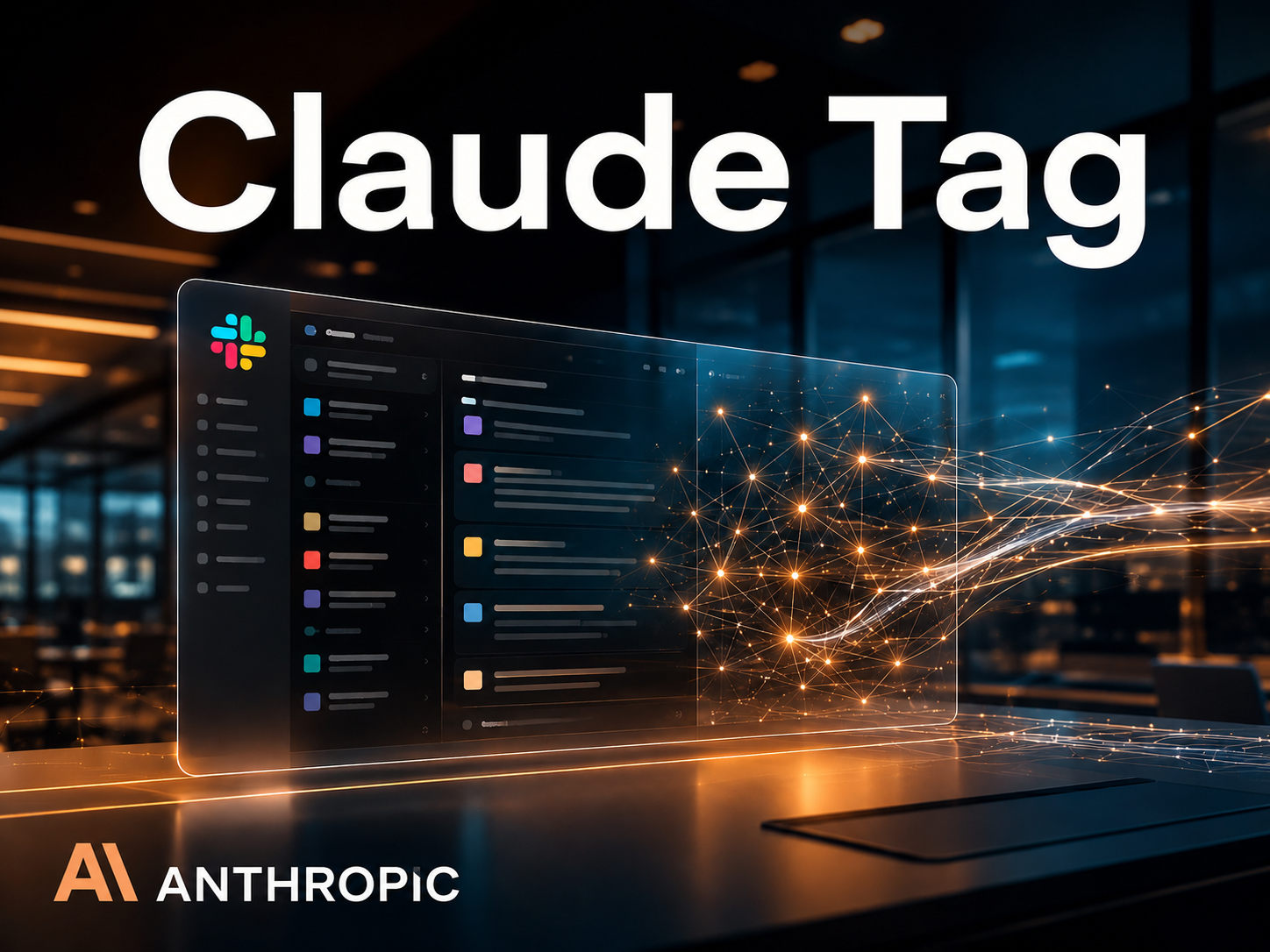
Claude Tag is Anthropic’s boldest move yet to put AI where teams actually work. Instead of a private chat window, Claude Tag drops the company’s AI model straight into shared Slack channels, where anyone can type @Claude to hand off a task. Launched in beta on June 23, 2026 for Claude Enterprise and Team customers, it turns Claude into something closer to a coworker you can tag than a tool you open in a separate tab.
So how does Claude Tag work, what can it actually do, and is it safe to give an AI agent the run of your Slack?
This guide breaks down the mechanics, the use cases, the enterprise controls, and the real trade-offs. Most importantly, it explains why this shift toward shared workplace AI agents matters for how teams will work in 2026 and beyond.
What Is Claude Tag?
Claude Tag is an AI agent from Anthropic that operates inside Slack rather than in an isolated chat box. The headline change is visibility. Because Claude Tag works in the open thread, every member of a channel can delegate a task, review the output, and pick the conversation back up later. In contrast to a private back-and-forth, the model’s work happens where the team can see it.
That shared model also changes how context travels. Claude Tag logs its task status directly in the channel and builds a contextual history from the threads it watches. As a result, teammates do not have to keep retyping the same company background or project scope. “The form factor of being able to tag it the same way that you would a coworker is really powerful,” Cat Wu, head of product for Claude Code, told Reuters.
How Claude Tag Works in Slack
Under the hood, Claude Tag runs on Anthropic’s Opus 4.8 engine. When you assign it a request, the model breaks the job into sequential steps and pulls from connected corporate databases, tools, and code repositories to finish it. Furthermore, it posts its live execution steps in the thread, so multiple people can monitor progress in real time.
The bigger leap is autonomy. Claude Tag can work asynchronously without constant human prompting. When an administrator switches on its “ambient” mode, the agent monitors threads and tracks tasks on its own.
For example, it checks inactive conversations, surfaces priority notifications from connected apps, and keeps tabs on unresolved assignments across multi-day stretches. Consequently, it behaves less like a chatbot and more like a teammate quietly working in the background.
What Claude Tag Can Do
Anthropic is aiming Claude Tag well beyond engineering teams. Early customer deployments span both technical and non-technical work. Here is what the agent can take on inside Slack:
- Write and ship code using connected repositories and developer tools.
- Query database metrics and pull the numbers a team needs on demand.
- Parse analytics data and summarise it in plain language.
- Process IT support tickets and route internal requests.
- Triage email when connected to an inbox, flagging urgent items and alerting you in Slack.
- Track multi-day tasks and chase unresolved assignments in ambient mode.
The impact on software work is already visible inside Anthropic itself. The company says its internal product group now generates about 65% of its code through a private version of Claude Tag. For everyday office teams, the promise is similar: less manual status-tracking and faster answers to routine questions, all without leaving the chat window.
Enterprise Controls and Security
Putting an autonomous agent inside company chat demands serious guardrails, and Anthropic built several in. To limit data access, administrators create scoped Claude identities tied to specific teams or workflows. In addition, all local memories and tool integrations stay confined to the channels the IT department approves, so a marketing channel’s agent cannot reach into finance data.
On top of access control, management portals provide full audit logs of user queries and let admins set organisational caps to regulate monthly token costs. Therefore, IT teams get both a record of what the agent did and a lever to keep spending predictable. These controls are the price of admission for trusting an always-on assistant with real company data.
Why It Matters: Anthropic’s Enterprise Momentum
The timing is not an accident. Claude Tag arrives as Anthropic rides a wave of enterprise momentum. In May 2026, the company raised a $65 billion Series H round at a $965 billion post-money valuation, pushing it past rival OpenAI’s $852 billion mark. According to corporate spend platform Ramp’s May 2026 AI Index, Anthropic’s enterprise adoption reached 34.4%, edging past OpenAI’s 32.3%.
Against that backdrop, the fight for placement inside business software is intense, and Slack is prime real estate. By embedding Claude where teams already coordinate, Anthropic is trying to make its model a default part of the workday rather than a destination people have to visit. In short, Claude Tag is as much a distribution strategy as it is a product.
The Trade-Off: Autonomy vs Governance
The upside is easy to see. By centralising information inside active threads, Claude Tag can lower task friction, carry context across changing project teams, and cut the time spent on manual status updates. For routine knowledge work, that is a meaningful productivity gain.
However, handing cross-app workflows to background agents introduces real risk. Letting an automated system read chat histories, connect to email, and modify code repositories expands a company’s data-exposure surface. If access boundaries are misconfigured, sensitive context could spill into the wrong channel. Moreover, autonomous execution removes a human check from intermediate steps, which leaves teams exposed if the model misreads an instruction mid-task. Nevertheless, the controls Anthropic ships are designed to keep those risks manageable.
Who Should Use Claude Tag
For engineering-heavy teams and data-driven offices already living in Slack, Claude Tag is worth piloting now, ideally in a few tightly scoped channels with audit logging switched on. For organisations with strict compliance needs, the smarter move is a careful, limited rollout while security teams test the access boundaries. Ultimately, decision-makers have to weigh the productivity gains against the auditing and configuration work required to govern an always-on agent safely.
How It Compares to Other Workplace AI
Plenty of assistants already plug into Slack, from built-in summaries to third-party bots. The difference here is the multiplayer model. Most tools still treat AI as a private helper that each person queries alone, then copies the answer back into the channel. By contrast, this agent works in the shared thread, so the request, the steps, and the result all stay visible to the team. That openness is what makes it feel less like a bot and more like a colleague.
The asynchronous “ambient” mode widens the gap further. Many assistants only respond when prompted, whereas this one can keep watch over threads and chase open items on its own. For teams drowning in unread messages and half-finished tasks, that always-on quality is the real selling point, provided the guardrails are set correctly.
Getting Started Safely
If you want to pilot the tool, start small. First, pick one or two non-sensitive channels and connect only the tools the team genuinely needs, rather than wiring up every integration at once. Second, turn on audit logging from day one so you have a record of every action the agent takes. Third, set a monthly token cap so a runaway task cannot quietly burn through budget.
From there, expand gradually as your security team validates the access boundaries. Most importantly, treat the rollout like onboarding a new hire: give it a clear scope, review its early work closely, and widen its responsibilities only once it has earned trust. Handled that way, the productivity upside arrives without the governance headaches that scare IT leaders.
For more on the tools reshaping how teams work, explore Welp Magazine and our technology coverage. We will update this article as Claude Tag moves from beta to general availability.
Stay Ahead of What’s Next
Welp Magazine covers the AI tools and platforms changing how teams build, ship, and collaborate. We test the hype so you do not have to. Read more on Welp Magazine.