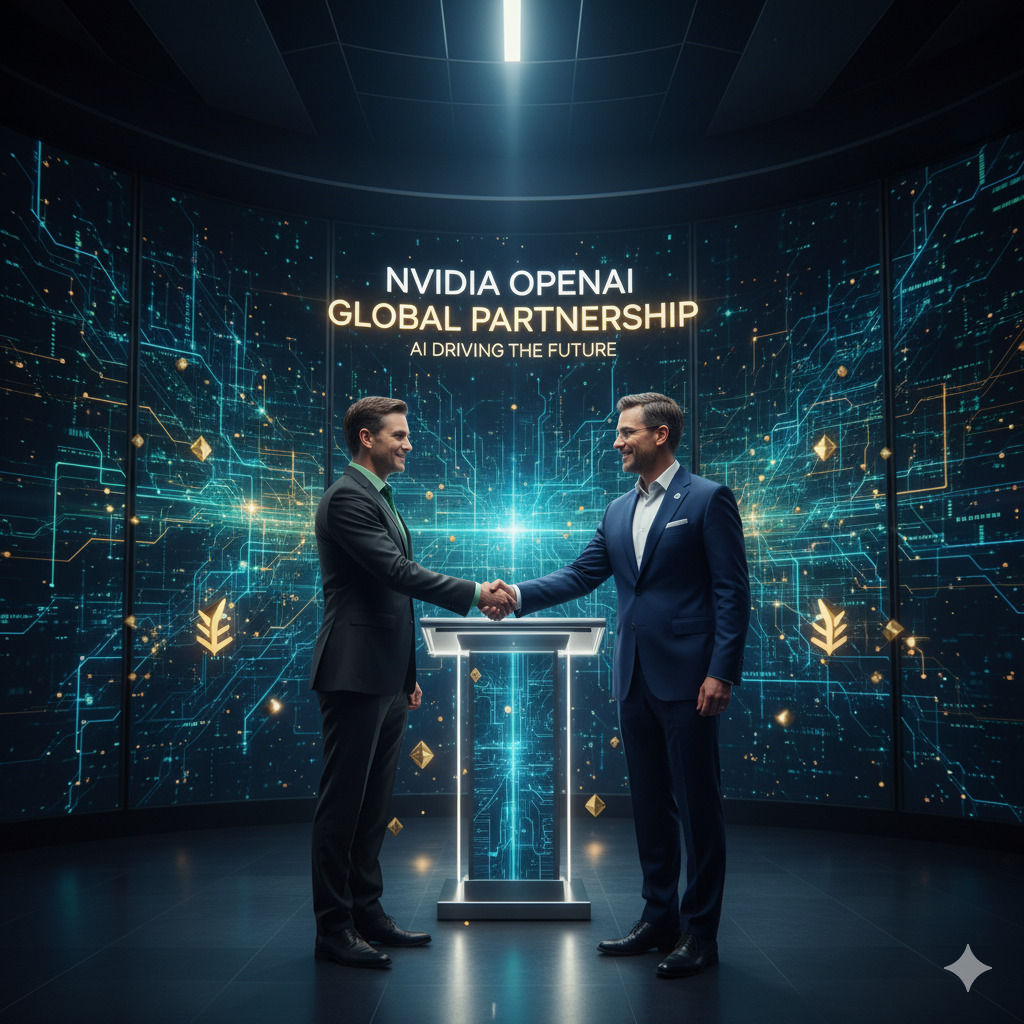
A Bold Step in the AI Race
The Nvidia OpenAI partnership marks one of the boldest bets in the history of artificial intelligence. With a staggering $100 billion commitment, Nvidia and OpenAI are joining forces to build a global network of AI factories massive data centers designed to deliver 10 gigawatts of computing capacity by 2026.
This isn’t just another corporate deal. It represents a seismic shift in the global distribution of compute power, setting new standards for scale, infrastructure, and partnerships in the technology industry.
Why the Nvidia OpenAI Partnership Matters
AI models are only as powerful as the compute behind them. Every breakthrough — from conversational AI like ChatGPT to advanced robotics — requires enormous computational resources.
The Nvidia OpenAI partnership aims to:
- Expand capacity: Build AI factories that exceed current global benchmarks for scale.
- Integrate hardware and software: Align Nvidia’s GPU and networking platforms with OpenAI’s training needs.
- Accelerate timelines: Deliver the first gigawatt deployment on the upcoming Vera Rubin platform in late 2026.
By positioning Nvidia as the preferred compute and networking partner, OpenAI secures reliable access to the world’s most advanced AI chips while ensuring rapid growth in model capabilities.
A Shift in Project Management Strategy
Traditionally, large-scale technology projects were measured by deadlines and budgets. Now, companies like Nvidia and OpenAI are shifting toward value optimization — prioritizing tangible outcomes such as customer satisfaction, sustainability, and market impact.
This partnership highlights that trend. The goal isn’t just to deliver servers on time; it’s to create a sustainable, scalable infrastructure capable of supporting the next era of AI innovation.
Opportunities Created by the Deal
The Nvidia OpenAI partnership unlocks opportunities across several fronts:
- Innovation at Scale: Training larger, more capable models with greater efficiency.
- Economic Growth: Local regions hosting data centers will see job creation and new tech ecosystems.
- Energy Solutions: Pressure to innovate in renewable energy and advanced cooling systems for massive facilities.
- Global Leadership: Nvidia cements its position as the central hardware provider for the AI industry.
Risks and Challenges Ahead
No bold strategy comes without risks. The Nvidia OpenAI partnership faces critical challenges, including:
- Energy Consumption: Running 10 GW of data centers will demand unprecedented power.
- Sustainability Pressure: Regulators and activists will demand eco-friendly solutions.
- Supply Chain Strains: The global GPU supply could become tighter, impacting other industries.
- Regulatory Scrutiny: Antitrust bodies may closely watch Nvidia’s dominance in AI hardware.
How these issues are addressed will determine whether the partnership becomes a long-term success story or faces hurdles along the way.
Global Implications
The effects of the Nvidia OpenAI partnership go beyond two companies:
- Geopolitical Influence: Countries will compete to host new AI factories.
- Strategic Advantage: Regions with renewable energy will attract more data center investments.
- New Industry Standards: Future AI projects may be judged not just by innovation, but by their ability to deliver sustainable infrastructure at scale.
This partnership signals a world where compute power becomes a national asset, shaping economic and political influence as much as technology itself.
Related Trends in AI Partnerships
The Nvidia OpenAI partnership isn’t happening in isolation. In recent months, we’ve seen:
- Oracle and SoftBank teaming with OpenAI on the $500B “Stargate” data center project.
- Microsoft investing heavily in cloud infrastructure for AI workloads.
- Google advancing its TPU-based data centers to compete with Nvidia’s GPU dominance.
These moves confirm one thing: the future of AI won’t be built by single companies, but by strategic partnerships that blend capital, compute, and vision.
The Nvidia OpenAI partnership is more than just a business deal — it’s a statement about the future of technology. By investing $100 billion in AI factories, these two companies are shaping the infrastructure that will define the next generation of intelligence.
As the first gigawatt deployment arrives in 2026, the world will be watching closely.
Will it accelerate progress toward general AI? Will it redefine global power structures?
Read more details from The Verge’s coverage of this historic deal.
Follow Welp Magazine for updates on technology, business strategies, and global innovation stories shaping tomorrow.