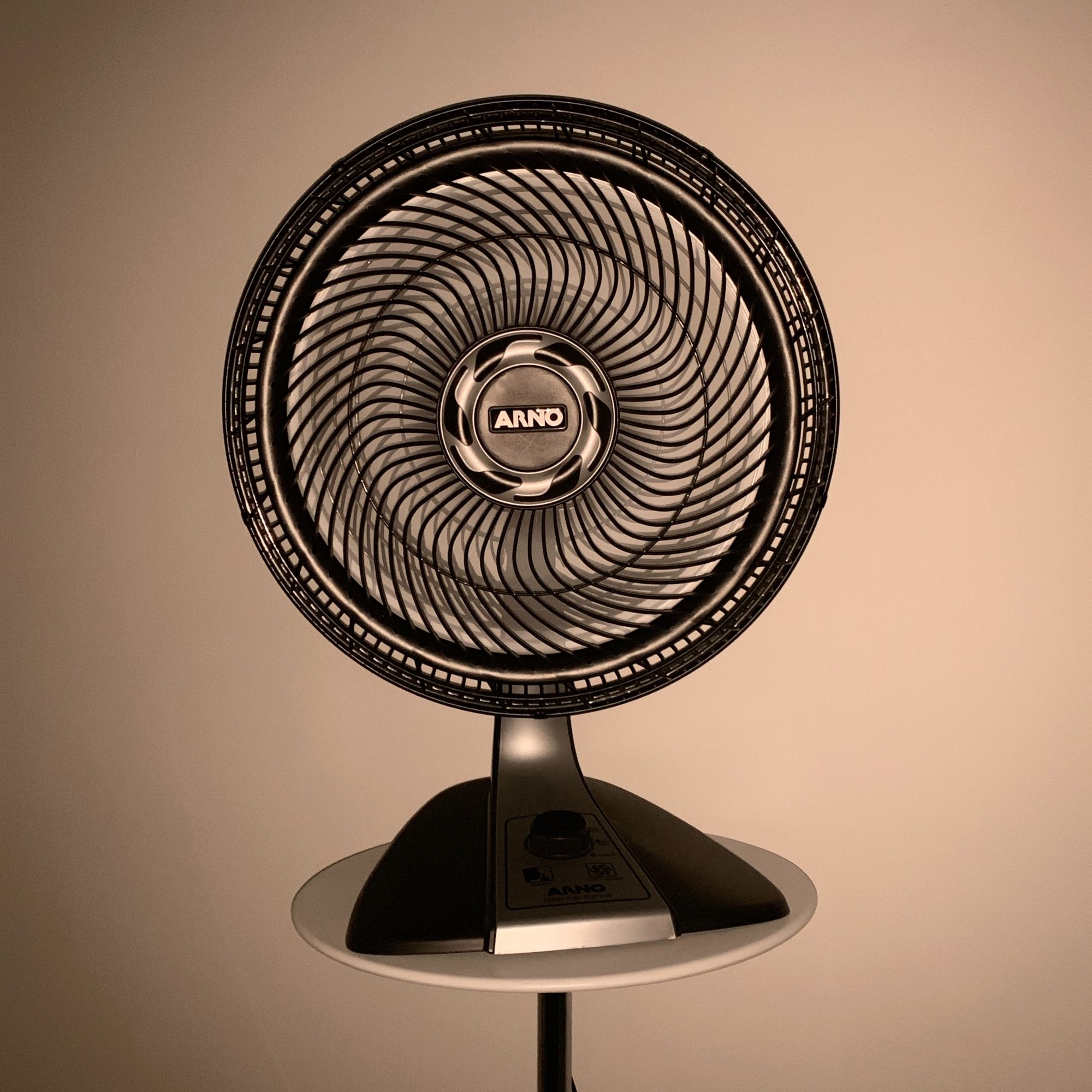
A stuffy office kills focus faster than almost anything else, and central air conditioning rarely reaches every desk evenly. A good personal fan solves that problem without the noise or bulk of older box fans. In 2026, the best desk and office fans blend quiet airflow, compact design, and smart features like app control or bladeless safety, so you can stay cool without cluttering your workspace. Whether you sit in an open-plan floor with shared thermostats or a home office that runs warm in the afternoon, the right fan can make the difference between a productive stretch of work and a distracted one. Here’s a look at some standout brands worth considering for your desk or office this year.
Dyson Cool
Dyson’s bladeless fans remain the benchmark for stylish, safe desk cooling. Using Air Multiplier technology, they draw in air and amplify it through a loop amplifier with no exposed blades, which makes them a safer pick around cables and curious hands in a shared office. Many models offer oscillation, multiple airflow settings, and a sleek profile that looks at home on a desk or credenza. They run quieter than most conventional fans at lower speeds, and the smooth housing is easy to wipe down, which matters in an office that gets dusty. The higher price tag is the main tradeoff, but the design and durability tend to justify it for anyone who wants a fan that also looks like considered office decor, and some models double as heaters or purifiers for year-round use.
Vornado Personal Fans
Vornado has built its reputation on vortex airflow that circulates air around a whole room rather than blasting it in a single direct line. Its compact personal and desk models, like the flippi series, use deep-pitched blades to move a surprising amount of air for their size. They’re a favorite in office supply roundups because they’re simple, sturdy, and backed by a well-known warranty program that covers many models for years. Unlike some flashier options, Vornado’s desk fans are mostly manual dial or button controlled, which appeals to people who want reliable airflow without an app or Bluetooth pairing. For anyone who just wants steady, whole-desk cooling without fuss, Vornado remains a dependable, no-frills choice.
Honeywell TurboForce
Honeywell’s TurboForce line is built around efficient airflow at an accessible price point. The pivoting head lets you angle air exactly where you need it, whether that’s across your keyboard or up toward your face on a hot afternoon. These fans are widely sold through major retailers, which makes replacement parts and accessories easy to find. They tend to run louder on the highest setting than premium bladeless models, but on low or medium they’re office-appropriate. Honeywell also offers small clip and mini USB-powered fans for people who want something that tucks onto a monitor arm or shelf, which is handy in tighter cubicle setups where desk space is limited.
Lasko Desktop Wind Tower
Lasko has long specialized in tower-style fans that take up minimal desk footprint while still moving air vertically across a wider area. Its compact towers use a slim vertical housing so they don’t crowd a keyboard or monitor stand, and several models include a built-in timer, useful if you want the fan to run only during peak afternoon heat. Lasko fans are generally priced for budget-conscious offices, and while they lack the smart-home integrations of pricier brands, they’re an easy, no-fuss option for outfitting an entire floor of desks without a big spend, and replacement units are cheap enough to keep spares on hand.
Govee Smart Desk Fans
Govee has expanded from smart lighting into smart small appliances, including desk fans that connect to a companion app for scheduling, speed control, and sometimes voice assistant integration through Alexa or Google Home. This is a good option for hybrid offices where people want to control airflow remotely or set a fan to turn on before they arrive. The app-based scheduling is the standout feature, letting a fan pre-cool a desk area before the workday starts. As with most connected devices, it does mean setting up a Wi-Fi connection and an account, a small tradeoff for the added convenience and the ability to group fans with other smart office devices.
Ozeri Ultra Wind
Ozeri’s Ultra Wind desk fans take a different approach with a fully adjustable, folding design that lets the fan head tilt and swivel almost anywhere, then fold flat for storage or travel. That flexibility makes them popular with people who move between desks or work from different rooms during the week. The multi-speed, whisper-quiet motors are tuned for close-range personal cooling rather than filling a whole room, which fits a single desk well. They’re USB-powered on several models, so they can run off a laptop or power bank without hunting for a wall outlet, which is a small but genuinely useful detail for a modern, less cable-cluttered desk setup.
The right desk fan comes down to how you work. If you want a striking, safe design for a shared space, a bladeless Dyson is hard to beat. If you’d rather keep things simple and durable, Vornado and Lasko both deliver reliable airflow at a lower cost, while Honeywell splits the difference on price and power. For anyone building a smarter, more connected office setup, Govee’s app-controlled fans are worth a look, and Ozeri is worth considering if you need something foldable and portable. Whichever you choose, pairing it with the rest of a well-planned workspace makes a real difference — see our guide on office refurbishment tips and our piece on how an ergonomic chair can improve productivity for more ways to upgrade your desk this year.
Are bladeless fans actually quieter than regular desk fans?
At low to medium speeds, bladeless fans like the Dyson Cool are generally quieter than conventional fans because there are no spinning blades chopping air. At their highest settings the difference narrows, but for typical office background cooling they tend to be less distracting.
What size desk fan is best for a small cubicle?
Compact models such as Vornado’s flippi series, Honeywell’s mini clip fans, or a folding Ozeri unit work well in tight spaces since they have a small footprint and can be angled or clipped to avoid taking up desk surface area.
Do smart desk fans need Wi-Fi to work?
Most smart fans, including Govee’s models, can run as a normal fan without Wi-Fi, but you need a network connection and the companion app to access scheduling, remote control, and voice assistant features.
How often should office desk fans be cleaned?
A quick wipe-down every few weeks helps, especially for bladed fans that collect dust on the grille. Bladeless designs are easier to maintain since there’s no blade cage to disassemble.