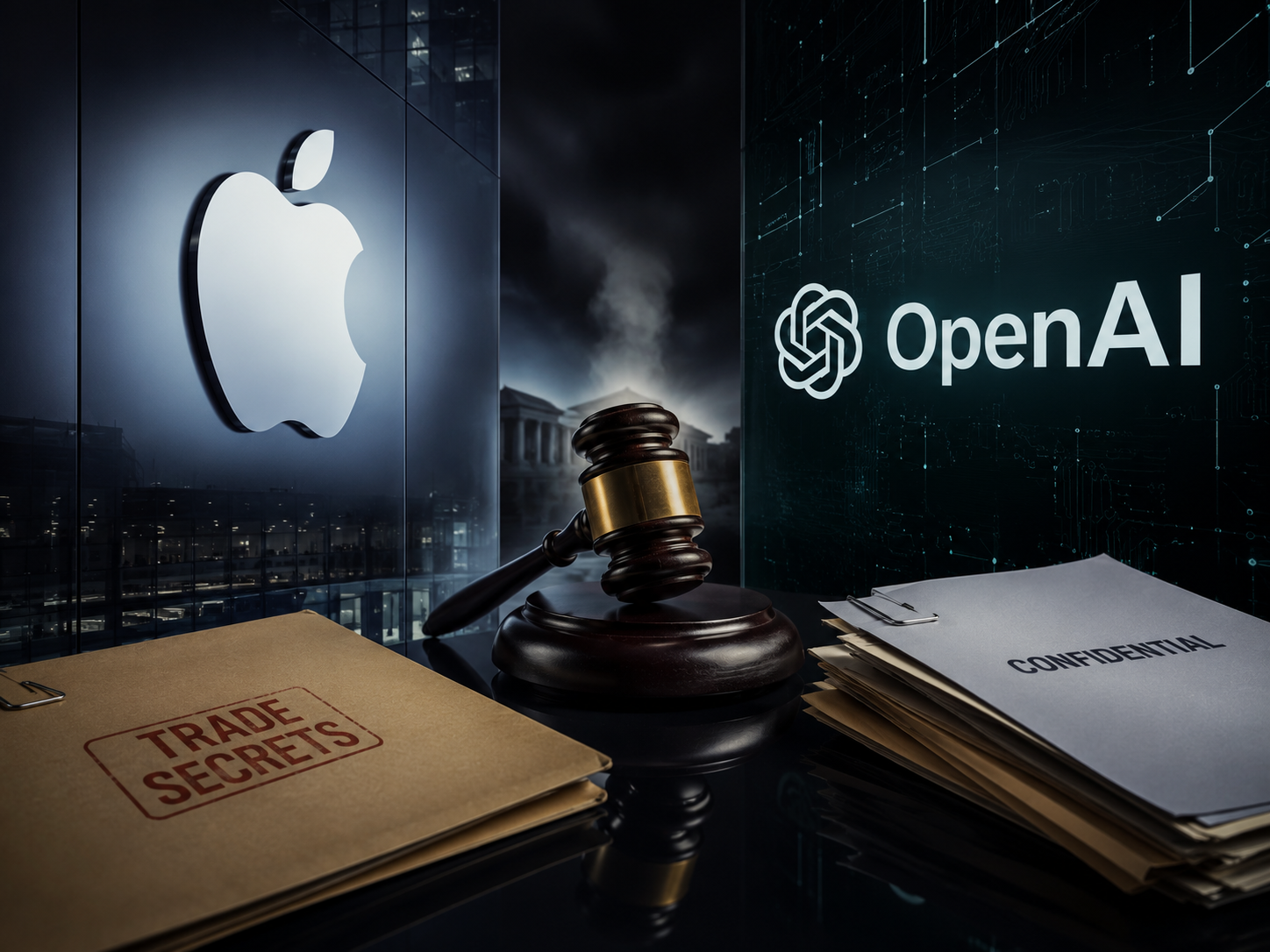
The Apple OpenAI lawsuit is now the biggest flashpoint in Silicon Valley. Apple has filed a lawsuit against OpenAI accusing the ChatGPT maker of orchestrating a systematic campaign to steal trade secrets tied to Apple’s unreleased hardware, marking the most dramatic rupture yet between two companies that were, until recently, close partners.
The complaint alleges that OpenAI’s effort to build its own consumer AI hardware has depended, “at every level, from members of its Technical Staff to its Chief Hardware Officer,” on confidential information lifted from Apple. Apple says more than 400 of its former employees now work at OpenAI, and it frames the pattern as evidence of a deliberate recruiting and retention strategy designed to extract institutional knowledge about product design, manufacturing processes, and supply chain relationships that Apple has spent years building.
What Apple Is Alleging
According to the filing, Tang Tan — who ran design for the iPhone and Apple Watch before leaving Apple in late 2023 — used Apple’s internal project code names during OpenAI recruiting conversations and asked candidates still employed at Apple to bring “actual parts” from unreleased products to interviews for “show and tell” sessions. Apple also alleges that Tan solicited details about unannounced products from candidates as part of the hiring process.
The second named individual, Chang Liu, is accused of downloading a compilation of technical files “over a thousand pages” long detailing his work at Apple before departing, and of physically taking an Apple laptop with him. Apple’s complaint further claims that OpenAI coached departing employees on how to evade the company’s standard offboarding and security review procedures, which are designed to catch exactly this kind of data exfiltration.
Apple’s language in the filing is unusually blunt for corporate litigation. “OpenAI’s nascent hardware business now rests on the shakiest of foundations, rotten to its core by its illegal reliance on misappropriated trade secrets,” the company said in a statement accompanying the suit.
Apple is seeking damages in an amount to be determined at trial, along with an injunction barring OpenAI from possessing, using, or disclosing the material it allegedly took. The filing was first reported by CNBC and confirmed by TechCrunch.
OpenAI’s Response to the Apple OpenAI Lawsuit
OpenAI pushed back within hours of the suit becoming public. “We have no interest in other companies’ trade secrets. We remain focused on building innovative technology that empowers people everywhere,” said Drew Pusateri, OpenAI’s director of strategic communications, in a statement carried by multiple outlets. The company has not yet filed a formal response to the complaint in court, and it did not address the specific allegations involving Tan and Liu.
Why This Is Happening Now
The lawsuit lands at a pointed moment. OpenAI and Apple built a high-profile partnership in 2024 when ChatGPT was integrated directly into iOS as part of Apple Intelligence, giving OpenAI a privileged position on the world’s most valuable consumer hardware platform.
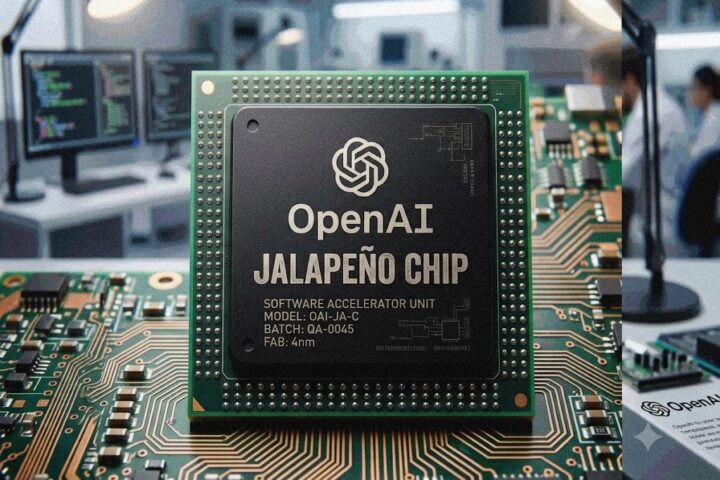
That relationship has cooled steadily since OpenAI signaled ambitions to build its own devices, a push that accelerated when it bought Jony Ive’s io Products for $6.4 billion in 2025. Ive, who spent nearly three decades defining Apple’s industrial design language, is now working directly on what OpenAI has described as a new category of AI-native hardware. The Apple OpenAI lawsuit is unfolding just as OpenAI pursues other major hardware bets — including its own custom silicon strategy, which underscores how central hardware has become to its roadmap.
That project has become a magnet for Apple hardware and design talent, which is precisely what Apple’s suit puts at issue. Poaching engineers is routine in Silicon Valley and not, on its own, illegal. What turns talent migration into a legal problem, in Apple’s telling, is if departing employees carried confidential product plans, components, or manufacturing details with them — and if their new employer actively solicited that material rather than simply hiring for skill and experience.
The case also arrives as OpenAI works to finalize its own consumer hardware roadmap and reportedly prepares for a future public listing, adding commercial stakes to what would otherwise be a straightforward trade-secrets dispute. A drawn-out legal fight, or an injunction limiting what OpenAI’s hardware team can use, could directly affect the timeline for the devices Ive and Tan are building.
What Happens Next
As the Apple OpenAI lawsuit moves through the Northern District of California, trade secret cases of this scale typically move slowly. Apple will need to identify specific trade secrets with enough precision for a court to evaluate the claims, and OpenAI is expected to contest both the characterization of its hiring practices and the scope of Apple’s injunction request. Discovery, if the case proceeds past early motions, could surface internal communications from both companies’ hardware and recruiting teams, likely with the two sides negotiating confidentiality protections given how sensitive unreleased product information is on both sides.
For now, the dispute is a reminder that the AI hardware race is no longer just about who ships the most compelling device — it is also about who owns the talent and know-how required to build one, and how far a company can go to acquire both. The Apple OpenAI lawsuit is likely just the opening round.
Frequently Asked Questions
What is Apple’s lawsuit against OpenAI about?
Apple alleges that OpenAI engaged in a coordinated effort to steal Apple trade secrets — including product designs, manufacturing processes, and supply chain information — to accelerate development of its own consumer AI hardware.
Who are Tang Tan and Chang Liu?
Tang Tan is OpenAI’s chief hardware officer and a former Apple vice president who led design for the iPhone and Apple Watch. Chang Liu is a former Apple systems electrical engineer who later joined OpenAI. Both are named as individual defendants in Apple’s suit.
How has OpenAI responded to the lawsuit?
OpenAI said it has “no interest in other companies’ trade secrets” and remains focused on building its own technology, but it has not yet filed a detailed court response addressing the specific allegations.
What is io Products and why is it named in the suit?
io Products is the hardware startup OpenAI acquired for $6.4 billion from former Apple design chief Jony Ive. It is the vehicle for OpenAI’s push into consumer AI devices and is named as a corporate defendant alongside OpenAI Foundation and OpenAI Group PBC.
What is Apple seeking from the lawsuit?
Apple is seeking monetary damages in an amount to be determined at trial, plus an injunction barring OpenAI from possessing, using, or disclosing the trade secrets it allegedly misappropriated.
How does this affect the Apple-OpenAI ChatGPT partnership?
The lawsuit does not appear to immediately affect the existing ChatGPT integration in Apple Intelligence, but it signals a serious deterioration in the companies’ relationship as OpenAI pushes further into hardware that could compete with Apple’s core business.