Table of Contents
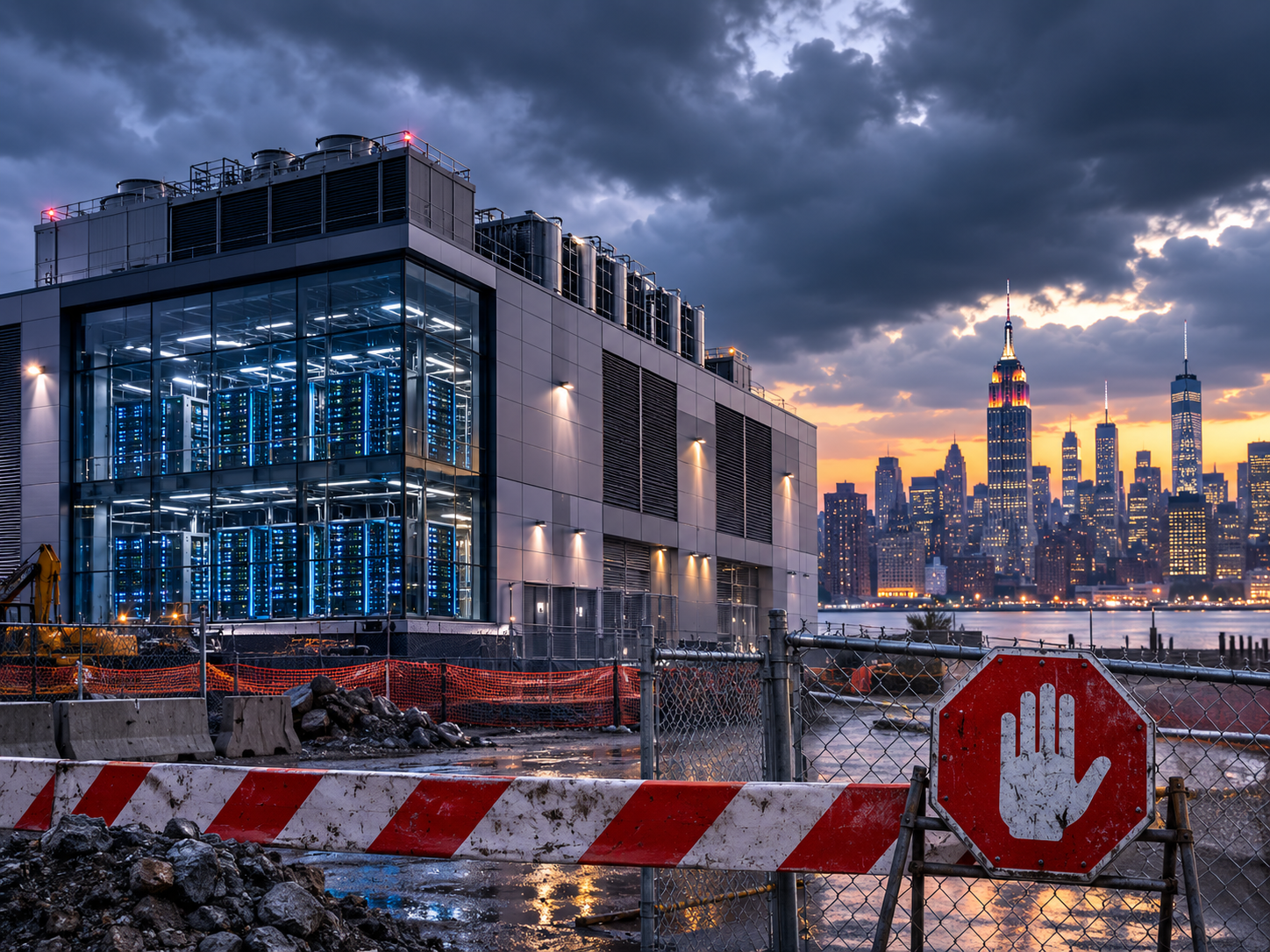
New York has become the first state in the country to hit pause on hyperscale AI infrastructure. On July 14, 2026, Governor Kathy Hochul signed an executive order that puts a one year data center moratorium on new large scale facilities across the state, detailed in the official executive order announcement, a move that lands right in the middle of the biggest AI buildout in tech history.
The order stops the Department of Environmental Conservation from issuing new discretionary permits to data centers that draw 50 megawatts of power or more. That threshold covers exactly the kind of hyperscale campuses that OpenAI, Microsoft, Google, Amazon, and Meta have been racing to build to keep pace with AI model training and inference demand.
What the New York Data Center Moratorium Actually Does
The executive order directs the states Department of Public Service to build a Generic Environmental Impact Statement covering data center energy demand, water use, and air quality. Until that review wraps, expected to take up to a year, the pause stays in place. Once the standards are finalized, new projects can move forward if they meet the states rules along with local zoning approval.
Hochul is also pushing legislation to repeal sales tax exemptions that have made New York attractive to data center developers, and she has directed Empire State Development to publish a Community Investment Framework within 60 days. That framework is meant to give local governments leverage to negotiate benefits like infrastructure upgrades, child care investment, and prevailing wage requirements before a project breaks ground.
A new Grid Acceleration Fund is also under consideration. It would require data center operators to help pay for upgrades to New Yorks aging power grid rather than passing those costs on to ordinary ratepayers through their electric bills.
Why Hochul Pulled the Trigger Now
The pressure had been building for months. New Yorkers have watched utility bills climb as data center proposals multiplied across the state, and lawmakers had already passed the Responsible Data Center Development Act before the legislative session ended. Governor Hochul framed the moratorium as a way to make sure companies that benefit from operating in New York do not do so at the expense of the people who live there.
State Senator Kristen Gonzalez, who sponsored the underlying legislation, said the goal is giving the state time to plan so that development does not come at the expense of residents and the environment. Assemblymember Didi Barrett called the order a timely first step that responds directly to what constituents have been asking for since the bill passed.
How This Fits the Bigger AI Infrastructure Story
New Yorks move does not happen in a vacuum. AI companies have been signing power deals and racing to secure compute at a pace that is straining electric grids nationwide. Amazons roughly 200 billion dollar AI infrastructure push is one example of just how much capital is chasing data center capacity right now, and that kind of spending is exactly what regulators in Albany say they want to slow down long enough to study properly.
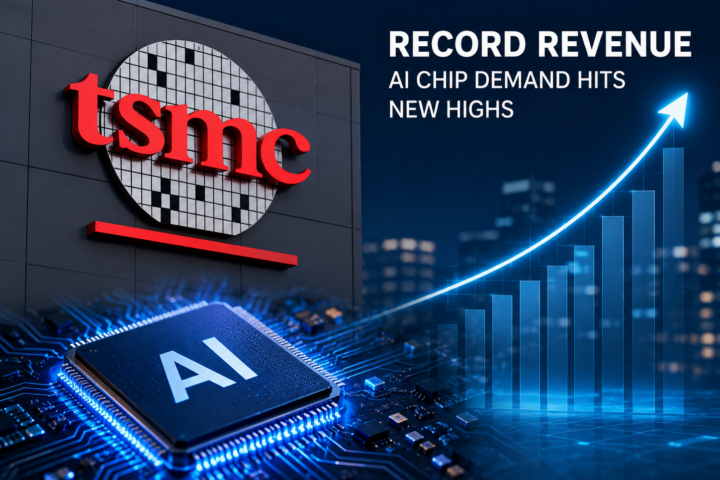
Chipmakers are feeling the same demand from the other direction. TSMC recently posted record revenue on the back of AI chip orders, and the broader fight over who supplies the silicon powering these facilities is reshaping the entire semiconductor industry, as we covered in our look at which companies are positioned to dominate AI chips in 2026.
Some companies are even looking past Earth for capacity. Our coverage of orbital data centers being developed to run AI workloads in space shows just how far the industry is willing to go to sidestep exactly the kind of power and permitting bottlenecks New York just formalized into law.
Reaction From Lawmakers and Industry
Environmental justice advocates who pushed for the Responsible Data Center Development Act welcomed the order as recognition that unchecked growth was starting to outpace the states ability to manage it responsibly. Utility watchdogs have pushed for a data center moratorium for more than a year, warning that demand was on track to push residential electricity rates higher across the Northeast.
Data center developers and cloud providers have not publicly detailed how the pause changes their New York plans, though projects already deemed complete before the order are expected to proceed under existing rules. Companies with facilities in earlier stages of planning now face a year of uncertainty while the state finalizes its new framework.
What Happens After the Year Is Up
Once the Generic Environmental Impact Statement is finished, the moratorium lifts and new data centers can move forward under the standards it sets. That means the pause is not a permanent ban, it is closer to a structured timeout designed to let regulators catch up with a construction boom that outran the rules meant to govern it.
Other states are watching closely. Several have floated similar restrictions as AI companies expand their physical footprint, and New Yorks approach, pairing a temporary data center moratorium with a formal community benefits framework, could become a template other governors reach for if their own grids start showing the same strain.
Frequently Asked Questions
New Yorks data center moratorium is one of the clearest signs yet that the AI infrastructure boom has run into real world limits of power, water, and public patience. For more coverage of how AI companies are racing to build and power the next generation of computing, keep following Welp Magazine as this story and others in AI infrastructure continue to develop. Read more on how tech giants shaped the AI buildout in 2025 for additional context.